
Beautiful Plants For Your Interior
Beautiful Plants For Your Interior
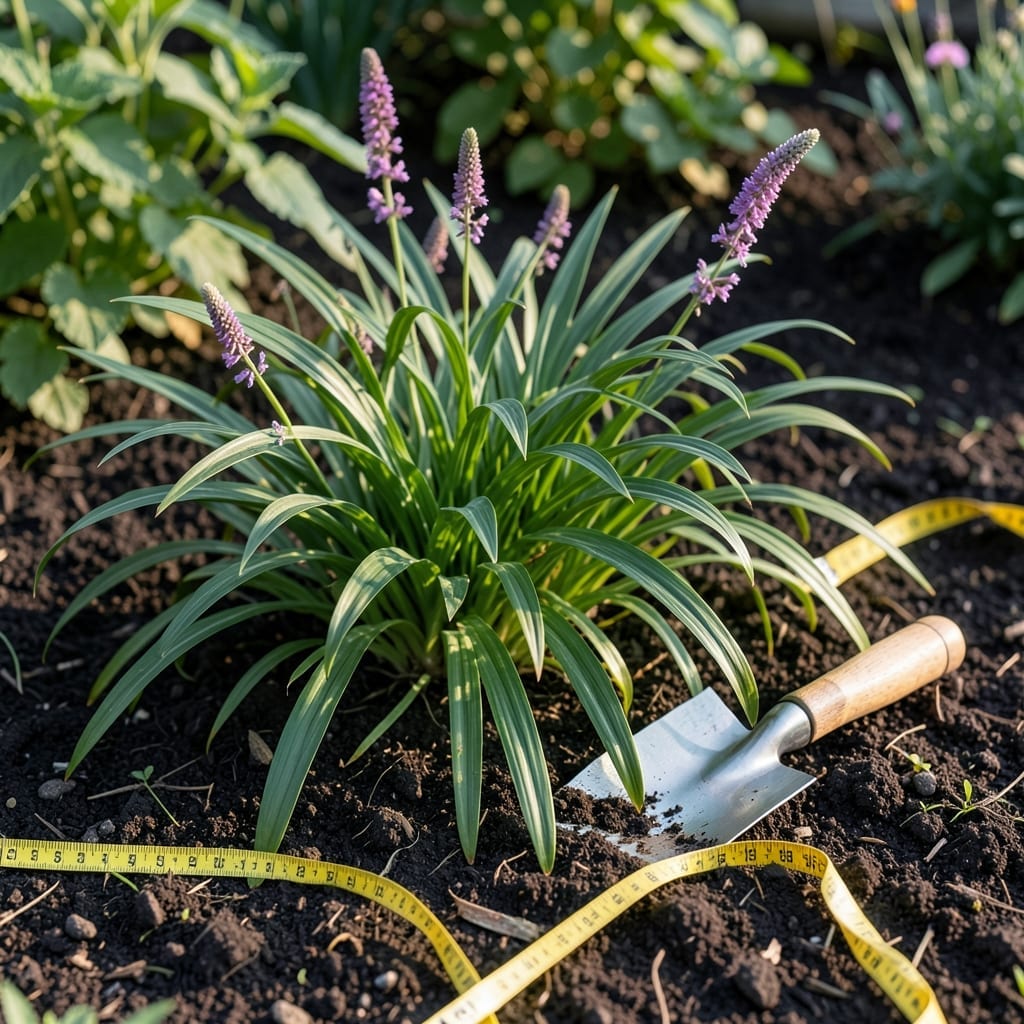
Achieving that perfect, weed-smothering carpet of Liriope 🌿 starts with one critical decision: how far apart to plant it.
Get it wrong, and you’ll either end up with stunted plants or embarrassing gaps for years. I’ve seen both scenarios play out in gardens across zones 5-10.
The good news? There’s a simple formula that works whether you’re creating a border or mass planting. It all comes down to understanding your variety’s mature spread.
Let me walk you through the exact spacing that transforms sparse patches into that lush, continuous look you’re after.
Getting the spacing for liriope right means the difference between a sparse patch and a lush carpet of green. I’ve seen both outcomes in my own garden, and trust me, proper distance is key.
The ideal planting distance depends on your liriope variety and garden goal. Whether you’re creating a ground cover or a border edge, spacing impacts fill-in time and maintenance.
| Variety | Purpose | Recommended Spacing | Mature Spread |
|---|---|---|---|
| Muscari | Ground Cover | 12-15 inches | 12-18 inches |
| Muscari | Border | 10-12 inches | 12-18 inches |
| Spicata | Ground Cover | 15-18 inches | 18-24 inches |
| Spicata | Mass Planting | 18-24 inches | 18-24 inches |
| Big Blue | Accent | 24-36 inches | 24-36 inches |
For Liriope muscari, the most common variety, I recommend 12-15 inches apart for a dense ground cover. This spacing allows the plants to fill in within 1-2 growing seasons.
If you’re using Liriope spicata, which spreads more aggressively, 15-18 inches works well. This variety can handle drier conditions and will fill gaps faster in partial shade.
For border planting, tighten the spacing to 10-12 inches for a neat, uniform edge. This creates a clean line along walkways or garden beds.
In mass plantings, I’ve found that 18-24 inches apart gives a natural, flowing look. The plants will gradually spread to form a continuous mat without overcrowding.
Remember that soil quality and sunlight exposure affect growth rate. In rich, well-draining soil with partial shade, liriope spreads more quickly, so you can plant further apart.
For sloped areas, use closer spacing (12 inches) to prevent erosion and ensure good coverage. The root system will help stabilize the soil over time.
I always advice my gardening friends to measure twice and plant once. Use a tape measure or a spacing template to maintain consistent distances between plants.
With the right spacing for liriope, you’ll have a low-maintenance, weed-resistant ground cover that thrives for years 🌿
Even experienced gardeners sometimes get liriope spacing wrong. The most common mistake is planting too far apart, which leaves bare patches for years. I’ve seen this happen when gardeners underestimate how slowly liriope fills in.
On the flip side, overcrowding liriope leads to competition for nutrients and water. This results in stunted growth and a weak, sparse appearance. Balance is key for healthy, lush coverage.
⚠️ Watch Out!
Placing liriope plants more than 18 inches apart can leave gaps for 2-3 years. For quick coverage, stick to 12-inch spacing in ideal conditions.
If you’ve already planted too sparsely, don’t despair. You can fill in gaps by adding new plants between existing ones. This speeds up the process without disturbing the established root systems.
For overcrowded liriope, thin out the plants in early spring. Dig up every other clump and replant them elsewhere. This gives the remaining plants room to thrive and spread naturally.
Another mistake is ignoring light conditions. In full sun, liriope may need slightly closer spacing to compensate for slower spread. In deep shade, it can handle a bit more distance between plants.
Finally, remember that soil quality affects fill-in rate. Rich, well-draining soil encourages faster growth, so you can space plants a little farther apart. Poor soil? Stick to tighter spacing for best results. 🌿