
Beautiful Plants For Your Interior
Beautiful Plants For Your Interior
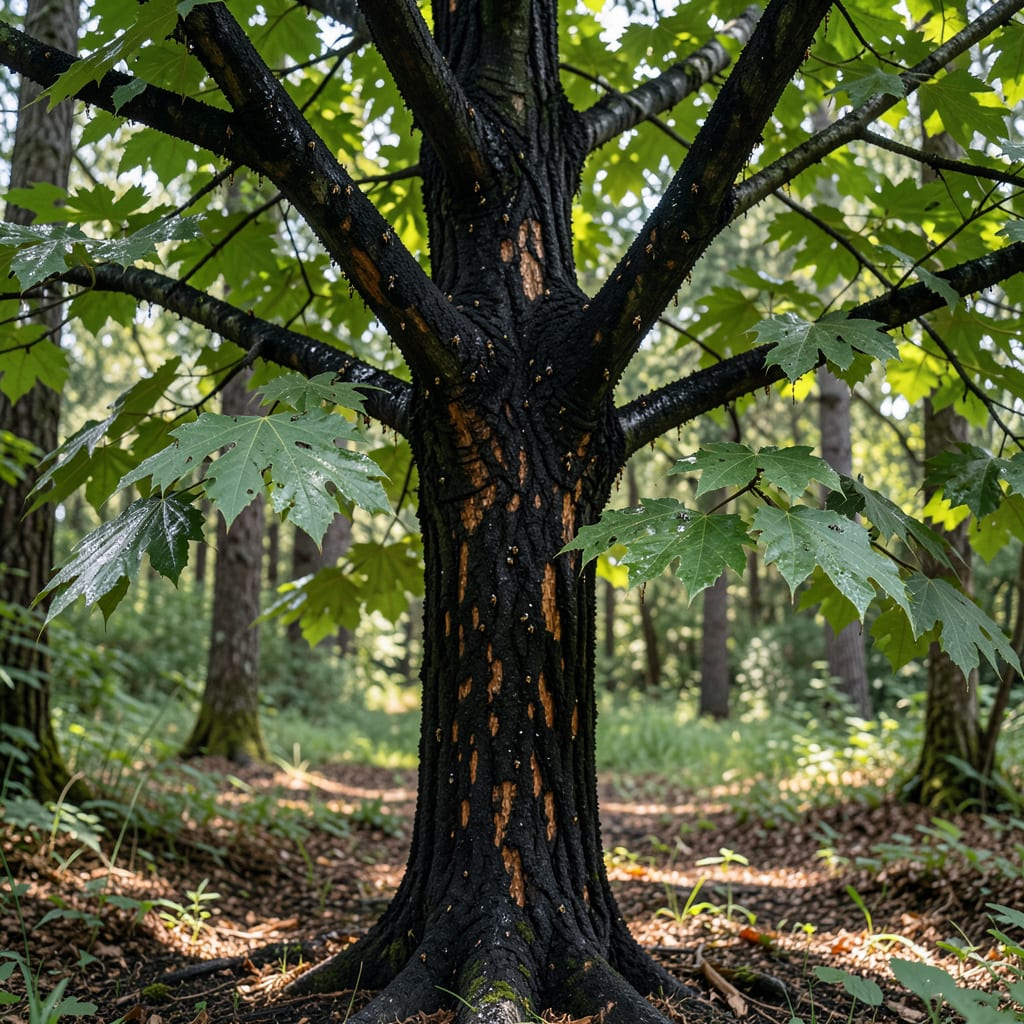
Blackened bark on your maple isn’t just dirt—it’s a red flag. Sooty bark disease sneaks up, coating trunks in dark fungus that chokes the tree’s ability to breathe and grow.
I’ve saved several maples by catching it early. The fix starts with identifying the underlying cause (usually pests) and treating both the symptoms and the root problem. Your tree can bounce back with the right approach.
📚 In This Guide
Here’s the method I use to restore maples affected by this unsightly but manageable condition.
First, confirm the black, soot-like coating on the bark is actually sooty mold, not a different issue. This fungus grows on the honeydew excreted by aphids, scale, or other sap-sucking pests. I check the branches and undersides of leaves for signs of these insects—tiny bumps, sticky residue, or white cottony clusters are dead giveaways.
Assess how widespread the coating is. If it’s limited to a few branches, the infestation is likely recent. If the entire trunk is covered, the pests have been active for a while. Either way, the tree itself isn’t directly harmed by the mold, but the underlying pest problem needs immediate attention to keep the tree healthy.
For small infestations, I start with the simplest approach: blasting pests off with a strong stream of water from a garden hose. Focus on the undersides of leaves and the branches where pests congregate. A few thorough sessions over 1-2 weeks can significantly reduce their numbers without chemicals.
For larger infestations, use a soft-bristled brush or cloth dipped in soapy water to physically remove pests from the bark. This is tedious but effective, especially for scale insects that cling tightly to the tree. Dispose of the pests in a sealed bag to prevent them from reinfesting the tree or spreading to others.
If mechanical methods aren’t enough, I use horticultural oil or insecticidal soap to target the remaining pests. Mix according to the product instructions and apply on a dry, overcast day when temperatures are below 90°F to avoid burning the tree.
Spray thoroughly, covering all surfaces of the leaves, branches, and trunk where pests are present. Reapply every 7-10 days as needed, especially after rain, which can wash away the treatment. These products smother or disrupt the pests’ cell membranes, reducing their numbers without harming the tree.
Once the pests are under control, the sooty mold will no longer have a food source and will gradually fade. To speed up the process, I gently scrub the affected bark with a soft brush and a solution of mild dish soap and water. Avoid using harsh chemicals or abrasive tools, as these can damage the bark.
Rinse the tree thoroughly with clean water after scrubbing to remove any soap residue. The bark may take a few weeks to return to its natural color, but the tree will begin to look healthy again as the mold disappears. Monitor the tree regularly to ensure pests don’t return.
Prevention is key to keeping your maple healthy and free of sooty bark disease. I start by maintaining tree vigor through proper watering, mulching, and fertilization. A strong tree is better able to resist pest infestations.
Introduce natural predators like ladybugs or lacewings to your garden, as they feed on aphids and other sap-sucking pests. Regularly inspect your tree for early signs of pests or mold, and address any issues promptly to prevent them from becoming widespread. With consistent care, your maple will thrive for years to come.
Here’s what I’ve learned through trial and error to keep your maple thriving.
Identification Tip: Don’t confuse sooty mold with other bark issues. In Step 1, look for the sticky honeydew residue—this is the key sign that pests are feeding on your tree. If you only see black coating without the sticky substance, it might be a different problem entirely.
Timing Matters: For Step 2, those 1-2 weeks of water blasting sessions are critical. I’ve found that skipping even a few days allows pests to rebound. Consistency is what breaks their lifecycle.
Temperature Caution: When applying horticultural oil or insecticidal soap in Step 3, never exceed 90°F. I once applied treatment on a hot afternoon and ended up with leaf scorch. Early morning or overcast days are your safest bet.
Gentle Cleaning: In Step 4, resist the urge to scrub aggressively. A soft brush and mild dish soap solution won’t damage the bark while effectively removing the mold. I ruined a section of bark once by using a wire brush—lesson learned the hard way.
Sooty bark disease is caused by the fungus Cryptostroma corticale, which thrives in stressed or injured maples, especially those weakened by drought, poor soil, or physical damage.
Look for dark, soot-like stains on the bark, wilting leaves, and branch dieback. The fungus often appears as black or dark brown patches under peeling bark.
Treat in early spring or late fall when the tree is dormant. Prune infected branches and apply fungicides during dry weather for best results.
If left untreated, it can weaken the tree significantly, making it susceptible to other pests and diseases, potentially leading to death. Early intervention is key!
Yes! Improve tree health with proper watering, mulching, and soil aeration. Neem oil or copper-based sprays can also help manage the fungus naturally.
