
Beautiful Plants For Your Interior
Beautiful Plants For Your Interior
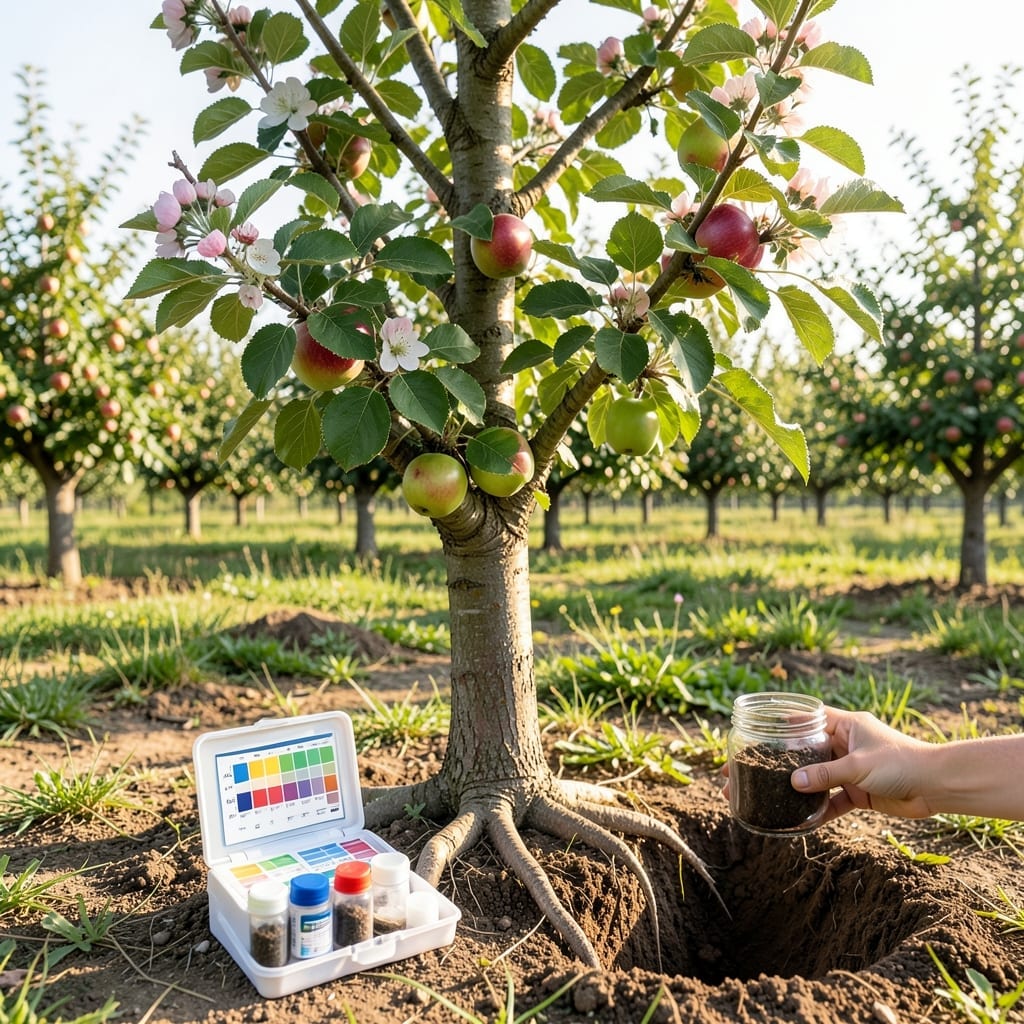
Healthy apple trees start with healthy soil, and a proper soil test is your roadmap to thriving orchards. Without testing, you might be missing critical nutrient deficiencies or pH imbalances that stunt growth.
The 🍎 Apple Tree thrives in USDA Zone 6, but even perfect conditions won’t help if your soil is off. Testing reveals exactly what your trees need to produce the best fruit.
I’ll show you how to conduct a soil test and interpret the results. Discover the simple steps to give your apple trees the perfect foundation for growth.
Testing your soil is the first step to ensuring your apple trees get the nutrients they need. I always recommend testing in early spring or fall, before planting or fertilizing.
You’ll want to collect samples from multiple spots around your tree’s root zone, about 6-12 inches deep. This gives you a complete picture of your soil’s health.
A lab test is more accurate but takes longer, while a home test kit gives quick results. Both work well for apple trees.
For home kits, follow the instructions carefully. Most involve mixing soil with water and comparing the color to a chart.
If using a lab service, check that they test for pH levels, nitrogen, phosphorus, potassium, and micronutrients like zinc and boron.
Apple trees thrive in slightly acidic to neutral soil with a pH of 6.0-7.0. If your test shows a pH outside this range, you’ll need to amend it.
For low pH, add lime to raise it. For high pH, use sulfur to lower it. Always follow the recommended rates based on your test results.
Testing your soil isn’t just about fixing problems. It helps you maintain ideal conditions for years of healthy growth and abundant fruit production.
🌳Apple trees need specific soil conditions to thrive. The ideal pH range is 6.0-7.0, slightly acidic to neutral. This range ensures nutrients are available to the roots.
Your soil should also have balanced macronutrients: nitrogen for growth, phosphorus for roots, and potassium for fruit. Micronutrients like zinc and boron are equally important for tree health.
| Condition | Ideal Level | Amendment |
|---|---|---|
| pH | 6.0-7.0 | Lime (raise) or sulfur (lower) |
| Nitrogen | Medium-High | Compost or organic fertilizer |
| Phosphorus | Medium | Bone meal |
| Potassium | Medium-High | Potassium sulfate |
If your test shows low organic matter, add compost or well-rotted manure. This improves soil structure and nutrient retention for your apple trees.
For compacted soil, aerate the area around the roots. This allows water and nutrients to penetrate deeply, encouraging strong root development.
Remember, soil amendments take time to work. Test your soil every 2-3 years to track improvements and make adjustments as needed.
Healthy soil leads to healthy trees and better harvests. With the right conditions, your apple trees will reward you with vibrant growth and delicious fruit. 🌳