
Beautiful Plants For Your Interior
Beautiful Plants For Your Interior
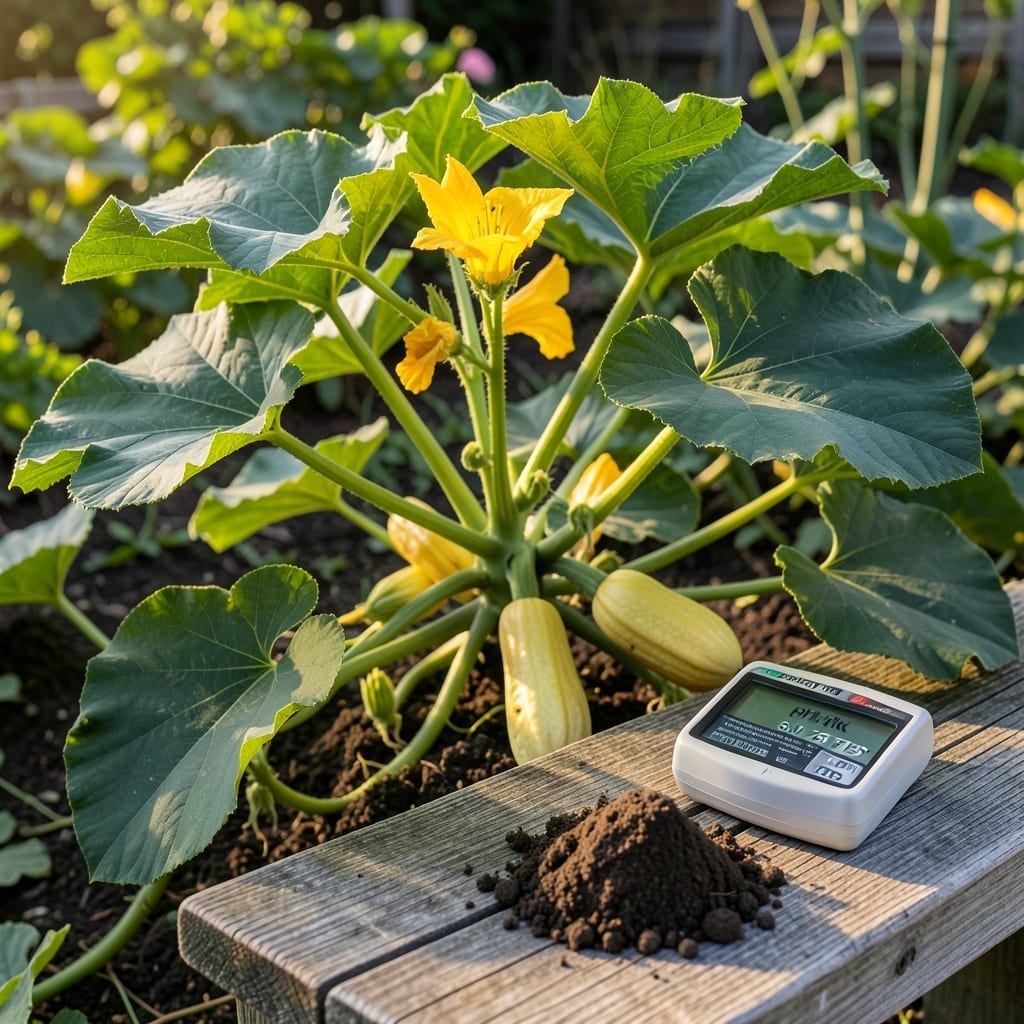
Growing healthy 🎃 Squash plants starts with the soil, and one of the most overlooked factors is pH balance. The right conditions can mean the difference between a thriving harvest and stunted, yellowing plants.
I’ve seen firsthand how even small adjustments to soil acidity can transform a struggling garden. Whether you’re planting in Zone 6 or elsewhere, getting this right is the key to success.
You’ll discover exactly what pH range Squash needs and why it matters so much for nutrient absorption. No complex chemistry – just practical advice that works.
Let me walk you through the simple steps to test and adjust your soil. Your Squash plants will thank you with healthier growth and bigger harvests.
When I grow squash plants, I always check the soil pH first. The ideal range is between 6.0 to 7.5, which is slightly acidic to neutral. This range helps nutrient absorption and supports healthy growth.
If the soil pH is too low (acidic), squash may struggle to take up essential nutrients like phosphorus and calcium. On the other hand, highly alkaline soil can lock out iron and manganese, leading to yellowing leaves and poor fruit development.
| Requirement | Specification |
|---|---|
| Ideal pH Range | 6.0 – 7.5 |
| Soil Type | Well-draining loam |
| Testing Method | DIY kit or lab test |
| Adjustment Time | 2-3 months before planting |
| Best Season to Test | Spring or fall |
I recommend testing your soil before planting. A DIY soil pH test kit is affordable and easy to use. For more accuracy, send a sample to a local extension office for professional analysis.
In my experience, squash thrives in neutral soil. If your test shows a pH below 6.0, adding garden lime can help raise it. For pH above 7.5, sulfur or peat moss can lower it effectively.
Remember that organic matter like compost can naturally buffer pH and improve overall soil structure. I always mix in plenty of compost when preparing my squash beds each spring.
It’s also important to retest your soil periodically, especially if you notice stunted growth or leaf discoloration. These can be signs that your pH has shifted over time due to rainfall, fertilizers, or organic decomposition.
For best results, aim to adjust your soil pH 2-3 months before planting. This gives amendments time to fully integrate and stabilize. I’ve found that last-minute adjustments often don’t provide the consistent environment squash needs.
Finally, keep in mind that while pH is crucial, it’s just one part of the equation. Your squash will also need full sun, consistent moisture, and rich soil to truly flourish. But getting that pH right is the foundation for all other care.
🌱Getting your soil pH for squash in the ideal range starts with knowing your current levels. I always recommend testing first with a home pH kit or sending a sample to your local extension office for precise results.
Once you have your baseline, adjustments are straightforward. For acidic soil below 6.0 pH, add garden lime to raise it. For alkaline soil above 7.5 pH, use elemental sulfur or peat moss to lower it.
Timing matters when adjusting pH. I apply lime in fall for spring planting, as it takes 3-6 months to fully integrate. For quicker fixes, peat moss works faster but may need reapplication.
Organic matter like well-rotted compost helps buffer pH and improves soil structure. I mix in 2-3 inches of compost annually to maintain a stable environment for my squash plants.
Remember that over-adjusting pH can be as harmful as leaving it unbalanced. Aim for gradual changes and test frequently to avoid swinging too far in either direction.
Finally, monitor your squash plants for signs of improvement. Healthy green leaves, strong vine growth, and abundant fruit set indicate you’ve hit the sweet spot for soil pH. 🌱