
Beautiful Plants For Your Interior
Beautiful Plants For Your Interior
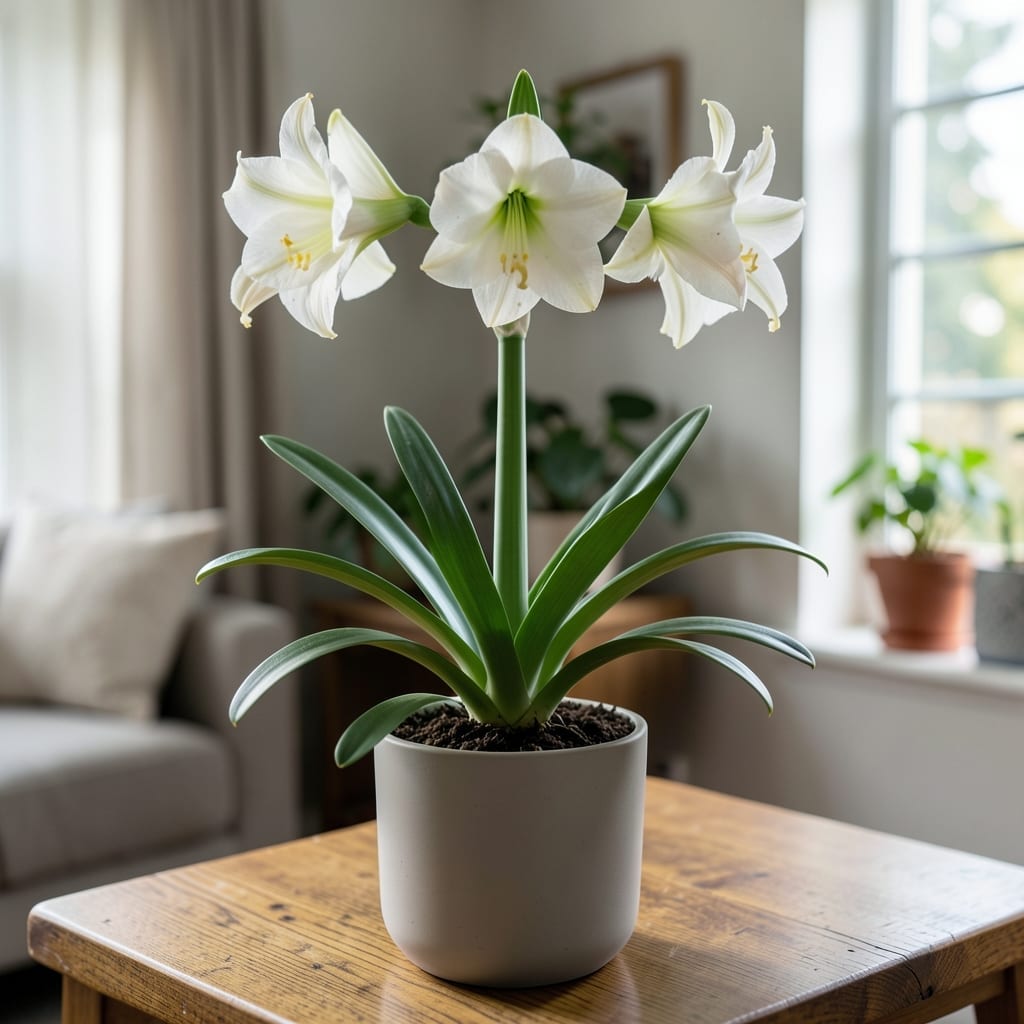
Winter’s dreariest days need a Snow White Amaryllis showstopper. I’ve grown these dramatic white blooms for years, and their elegance against gray skies never fails to impress.
This project asks for bright, indirect light, well-draining soil, and a 6-8 week rest period after blooming to recharge. Get it right, and you’ll have bold, striking white flowers returning every season.
📚 In This Guide
Here’s the method I rely on to coax these elegant blooms from dormancy to full, stunning display.
After the previous blooming cycle concludes, reduce watering gradually as the foliage begins to yellow. Once leaves have completely died back, cease watering entirely and move the bulb to a cool, dark location with temperatures around 50-55°F for 8-10 weeks. This dormancy period is essential for the bulb to reset and store energy.
I check the bulb occasionally to ensure it’s not shriveled or developing mold. A healthy dormant bulb should feel firm to the touch. This resting phase mimics the natural cycle the plant would experience in its native habitat, triggering the internal processes needed for reblooming.
When new growth appears at the top of the bulb—usually a small green shoot—it’s time to repot. Select a container only 1-2 inches wider than the bulb diameter, as amaryllis prefer slightly crowded conditions. Use a well-draining potting mix, planting the bulb so that one-third remains above the soil line.
Place the pot in a location with bright, indirect light and maintain temperatures between 60-70°F. At this stage, the bulb will begin actively growing new leaves and preparing for its next blooming cycle. I always use a pot with drainage holes to prevent waterlogging, which can rot the bulb.
Begin watering sparingly when new growth appears, increasing moisture as the plant develops. Water deeply when the top inch of soil feels dry to the touch, but ensure the pot drains completely to prevent bulb rot. Once leaves are fully established, water regularly to maintain even moisture without waterlogging.
Feed with a balanced liquid fertilizer every 2-3 weeks during the active growth phase. This provides the nutrients needed for robust foliage and spectacular blooms. I switch to a high-phosphorus fertilizer just as flower buds begin to form to encourage larger, more vibrant flowers.
As flower stalks emerge and grow taller, they may need support to prevent toppling. Use a small stake or decorative support to keep the stalk upright, especially as the heavy blooms begin to open. Each stalk typically produces 4-6 magnificent white flowers that can reach 4-6 inches across.
Place your plant where you can enjoy its striking display. The blooms last longest in cool temperatures (around 60-65°F) away from direct heat sources. I rotate the pot occasionally to ensure even growth and prevent the stalk from leaning toward the light.
Once flowers fade, remove them promptly to prevent seed formation, which can drain the bulb’s energy. Continue caring for the foliage with regular watering and fertilizing for 5-6 months after blooming. This allows the plant to rebuild its energy reserves for the next dormancy cycle.
When leaves begin to yellow again, gradually reduce watering to signal the start of another dormancy period. This cycle of growth, blooming, and rest can be repeated for many years, with each season’s display potentially becoming more impressive as the bulb matures and stores more energy.
Here are the key insights I wish I had known when starting my own amaryllis journey.
The Dormancy Factor: That 8-10 week rest period at 50-55°F isn’t just downtime—it’s when the bulb rebuilds its energy stores for next season’s blooms. I learned the hard way that skipping or shortening this phase results in weak, sparse flowers. A firm bulb during dormancy means you’re on the right track.
Repotting Precision: When you see that first green shoot in Step 2, resist the urge to upgrade to a large pot. The bulb thrives in snug quarters, so stick to the 1-2 inch wider guideline. Planting too deeply (more than one-third above soil) can rot the neck, while too shallow planting causes toppling.
Watering Wisdom: In Step 3, that “top inch dry” rule is your best friend. I ruined my first bulb by keeping the soil consistently moist. Amaryllis hate soggy roots. Water deeply, then let it dry—this mimics their native conditions and prevents rot while encouraging strong root growth.
Bloom Longevity Secret: Those 60-65°F temperatures in Step 4 aren’t just comfortable for you—they extend bloom life significantly. I keep mine on a cool windowsill away from heating vents. Higher temps make the flowers open faster but fade quicker, while cooler spots let you enjoy those 4-6 inch white blooms for weeks.
Plant in well-draining soil, keep in bright indirect light, and water sparingly until growth appears. Once blooming, water more frequently but avoid soggy soil.
Plant bulbs indoors 6-8 weeks before the desired bloom time, typically in fall for winter holidays. This ensures vibrant blooms by Christmas or New Year’s!
Lack of light, overwatering, or insufficient dormancy can delay blooms. Ensure a cool, dark rest period for 8-10 weeks before re-potting.
Yes, but only in warm climates (USDA zones 9-11). Plant after frost risk passes and bring indoors before cold weather returns.
Try ‘Apple Blossom’ or ‘Red Lion’ amaryllis for bold colors, or paperwhite narcissus for fragrant winter blooms.