
Beautiful Plants For Your Interior
Beautiful Plants For Your Interior
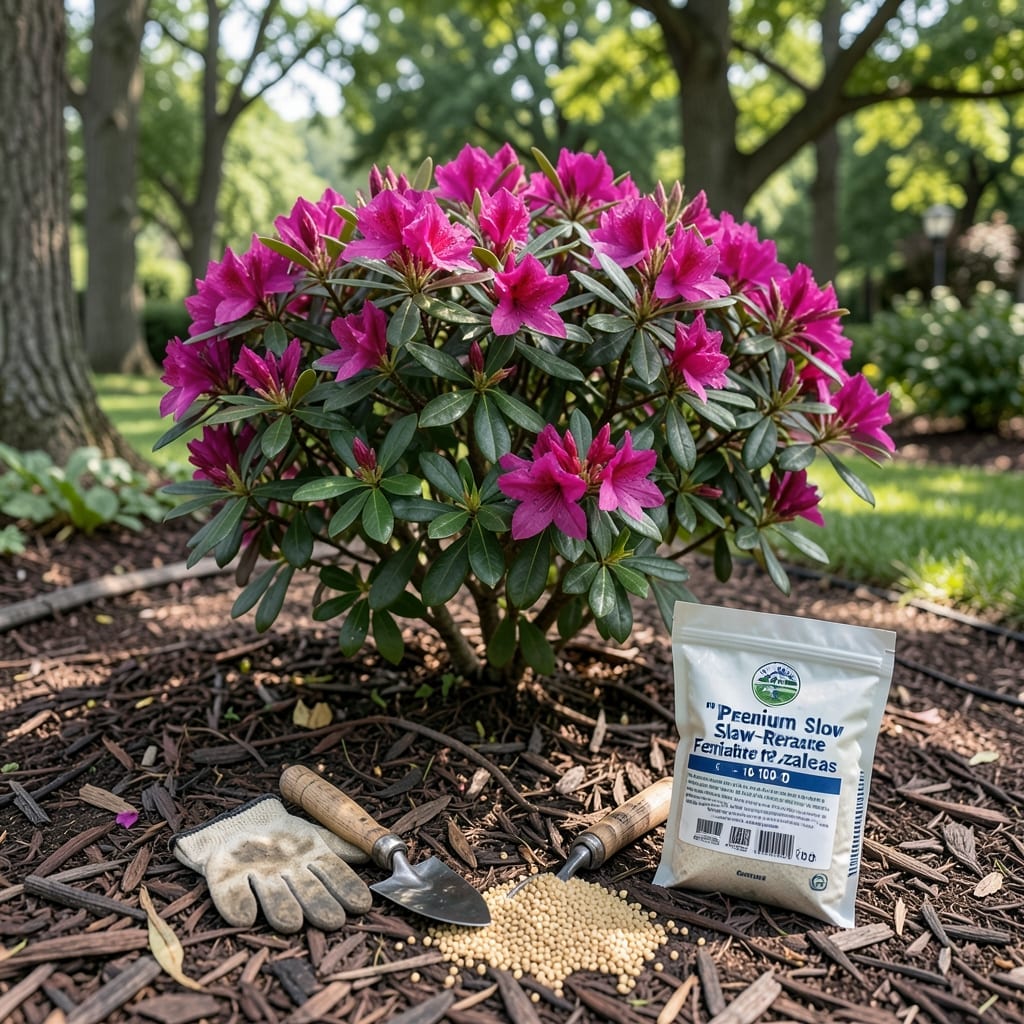
I’ve learned that Azalea 🌸 shrubs demand more than just occasional watering to truly thrive. These acid-loving plants need consistent, balanced nutrition to produce those stunning blooms we all love.
That’s where the magic of steady feeding comes in. Without it, you might notice weaker growth or fewer flowers, and nobody wants that in their garden.
Let me walk you through how to provide the perfect nutritional support for your azaleas, ensuring they stay vibrant and healthy all season long.
I’ve found that azaleas are particular about their food. These acid-loving shrubs demand a steady, balanced diet to thrive, not the boom-and-bust cycle of quick-release options. Their roots simply can’t handle sudden nutrient spikes.
Slow release fertilizer mimics nature’s way, delivering consistent nourishment over weeks or months. This prevents the leaf scorch and root burn that often plagues azaleas with traditional fertilizers.
| Requirement | Specs |
|---|---|
| Ideal pH | 4.5-6.0 |
| Nitrogen Need | High |
| Phosphorus Need | Low |
| Release Duration | 8-12 weeks |
| Application Frequency | 2-3 times/year |
The magic happens in the soil microbiome. Slow release formulas feed beneficial microbes that help azalea roots absorb nutrients efficiently. This symbiotic relationship is crucial for vibrant blooms and healthy foliage.
I notice quick-release fertilizers often cause rapid but weak growth. Azaleas might look lush initially, but the stems become spindly and more susceptible to pests. Slow release avoids this by promoting strong cellular structure in the plant.
Another key benefit is reduced leaching. Traditional fertilizers often wash away with the first rain, wasting money and potentially polluting waterways. Slow release granules stay put, feeding your azaleas not the storm drain.
For established azaleas, I recommend applying slow release fertilizer in early spring before new growth starts. This gives the plant a steady supply of nutrients during its most active growing period.
Don’t forget that azaleas have shallow root systems. Slow release granules work perfectly because they dissolve gradually at the root zone level, right where the plant needs them most.
I’ve seen the difference firsthand. Azaleas fed with slow release fertilizer develop deeper green leaves and produce more abundant flowers with richer colors. The improvement in overall plant vigor is undeniable.
Remember, these plants are acid lovers. Choose a slow release fertilizer specifically formulated for acid-loving plants to maintain the proper soil pH that azaleas require to thrive. 🌸
I always start by checking the NPK ratio on the label. For azaleas, look for a high nitrogen and low phosphorus formula like 12-6-6 or 10-5-4. This matches their natural growth needs perfectly.
The best products also contain acidifying agents like sulfur or ammonium sulfate. These help maintain the 4.5-6.0 pH range azaleas love, preventing chlorosis from developing.
I prefer organic slow release options like cottonseed meal or alfalfa pellets. They break down naturally while improving soil structure and feeding beneficial microbes.
Synthetic polymers work too, but I watch for salt index. High salt content can burn azalea roots. Always check the label for low salt formulations.
Granular types are easiest to apply. I sprinkle them around the drip line and lightly scratch into the soil surface. This prevents nutrient runoff during heavy rains.
For container azaleas, I use slow release spikes. They’re perfect for pots because they deliver nutrients directly to the root zone without washing away.