
Beautiful Plants For Your Interior
Beautiful Plants For Your Interior
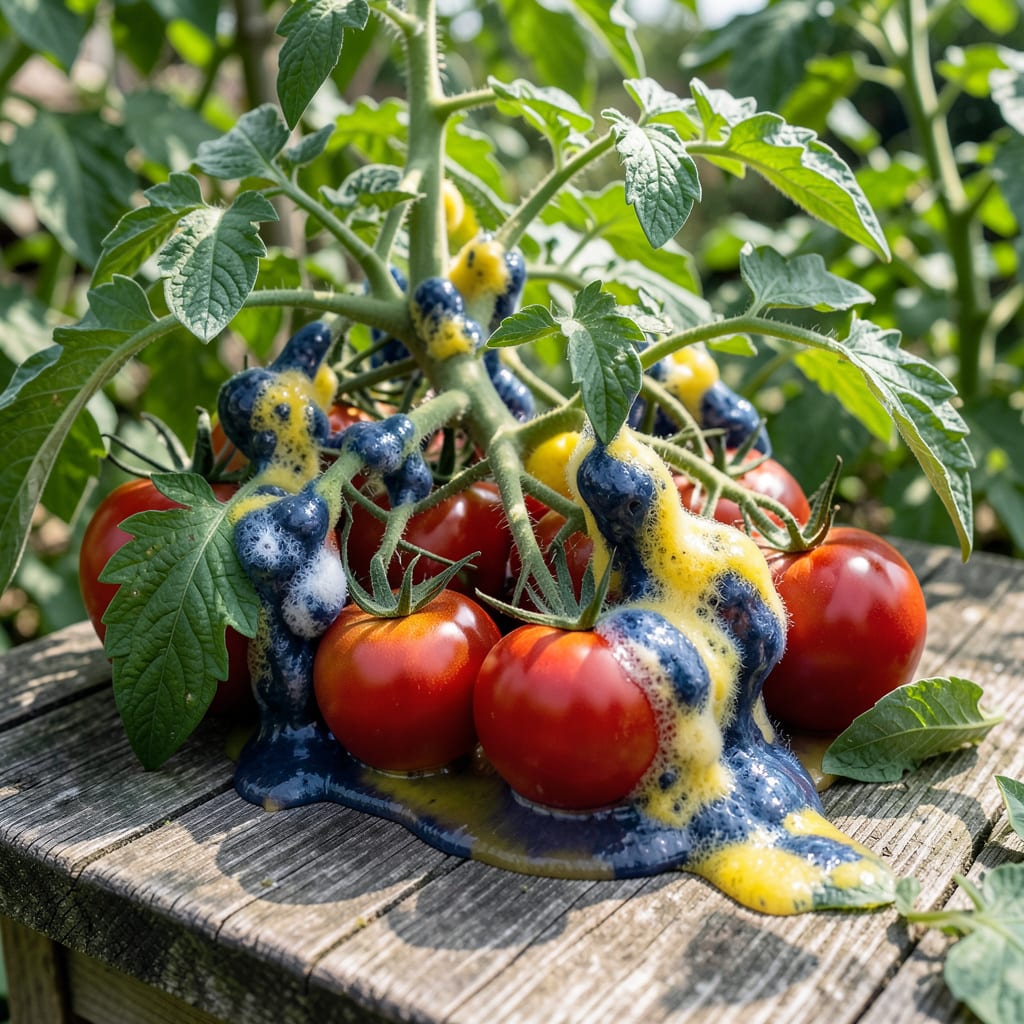
That yellowish-orange goo on your tomato leaves isn’t a fungus—it’s slime mold. I first spotted it last summer after a stretch of wet weather, and the plants bounced back once I took action.
Slime mold thrives in damp conditions, spreading quickly across mulch and lower leaves. It looks alarming but won’t kill your plants if you act fast. The key is improving air circulation and removing the visible growth.
I removed the affected areas with a paper towel and adjusted my watering schedule. Within 48 hours, new growth started pushing through. The plants recovered completely in about a week.
Works for both container and in-ground tomatoes. Here’s the step-by-step approach that saved my crop.
Slime mold thrives in specific conditions, often catching gardeners off guard. Here’s why it appears on your tomato plants:
Slime mold loves damp environments. Overwatering, poor drainage, or frequent rain can create the perfect breeding ground. Tomato plants in consistently wet soil or with dense foliage that traps moisture are especially vulnerable. Reduce watering frequency and ensure your garden has proper drainage to discourage growth.
Decaying plant matter, like fallen leaves or mulch, provides food for slime mold. If your tomato bed has an accumulation of organic debris, it’s essentially a buffet for these organisms. Regularly clear away dead leaves and old mulch to remove their food source and disrupt their lifecycle.
Slime mold is most active in warm (60–80°F), humid conditions. These are also ideal conditions for growing tomatoes, which is why the problem is so common. While you can’t control the weather, improving airflow around plants with proper spacing or pruning can help reduce humidity at the soil level.
Compacted or nutrient-poor soil can stress tomato plants, making them more susceptible to slime mold infestations. Additionally, slime mold often indicates an imbalance in soil microbiota. Amend your soil with compost to boost beneficial microbes and improve overall plant resilience.
Slime mold thrives in damp, shaded conditions, but you can tackle it with a few simple steps. Below are practical solutions for each common cause, along with prevention tips to keep your tomato plants healthy.
Slime mold loves wet soil and mulch. To fix this, reduce watering frequency and ensure your tomato beds have proper drainage. If the soil stays soggy, mix in compost or sand to improve its structure. Prevention tip: 💡 Water your plants early in the day so the soil has time to dry before evening.
Thick layers of organic mulch (like wood chips or straw) can trap moisture and create a perfect home for slime mold. Rake back mulch to expose the topsoil to air and sunlight, which discourages mold growth. Prevention tip: ✨ Use a thinner layer of mulch (1-2 inches) and opt for inorganic options like gravel in problem areas.
Shady, crowded plantings are prime spots for slime mold. Trim back overgrown foliage to let light and air reach the soil. Space tomato plants at least 18-24 inches apart for better airflow. Prevention tip: 🎯 Rotate your crops yearly to avoid recurring issues in the same spot.
If you spot slime mold, gently scrape it off with a stick or gloved hand and dispose of it in the trash (not compost). For stubborn patches, replace the top layer of mulch or soil. Prevention tip: 🌡️ Keep your garden tools clean to avoid spreading spores to other areas.
With these fixes, your tomato plants will bounce back quickly—and stay mold-free!
Yes, the fruit itself remains safe to eat. Slime mold only affects the surface of soil and leaves, not the tomatoes. Just wash them thoroughly before consuming to remove any potential spores.
Chemical fungicides aren’t effective against slime mold as it’s not a true fungus. Stick to physical removal and environmental adjustments like improving drainage and reducing moisture.
With proper treatment, visible slime mold typically disappears within 2-3 days. The key is removing the mold and addressing the underlying moisture or debris issues.
It can spread to nearby plants if conditions remain damp and debris accumulates. Isolate affected areas and improve airflow to prevent it from moving to other garden beds.
