
Beautiful Plants For Your Interior
Beautiful Plants For Your Interior
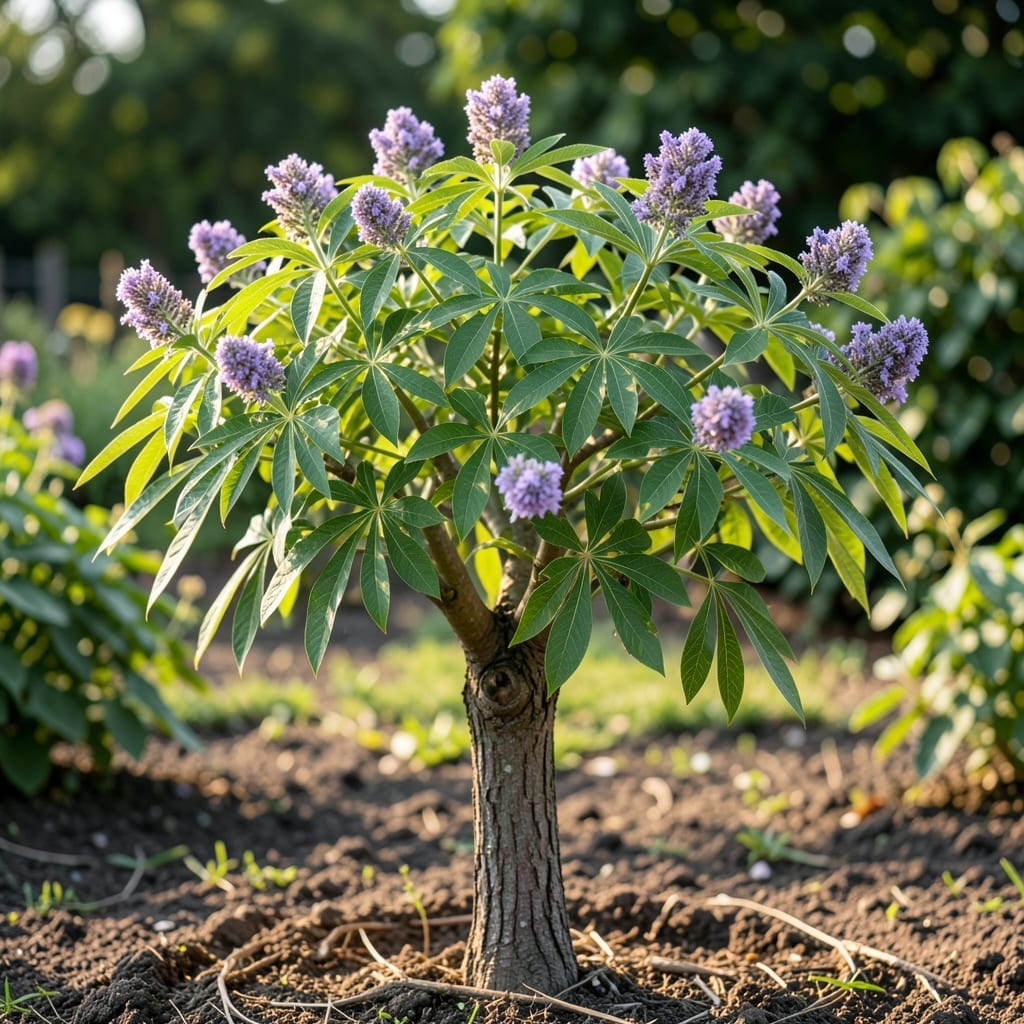
That first vitex I grew looked more like a wild shrub than a tree. Pruning it properly changed everything, turning it into a single-trunk stunner with strong vertical growth.
It took me a few seasons to get the timing right—early spring, before new growth starts. The key is removing competing shoots at the base and thinning out crowded branches. The result is a cleaner shape and a plant that stands tall and proud.
📚 In This Guide
Here’s the method I use to train vitex into a single trunk with strong vertical growth.
Start in early spring before new growth appears. Look for the strongest, straightest stem in the center of your vitex plant—this will become your main trunk. I usually choose one that’s already slightly taller and thicker than the others, as it has the best chance of developing the strength you need.
Remove any competing stems at the base by cutting them flush with the ground using clean pruners. Don’t leave stubs, as they can invite disease. This step looks harsh, but it’s necessary to direct all the plant’s energy into that single leader.
As the growing season progresses, regularly prune side branches that emerge from the lower 2-3 feet of your chosen trunk. I remove these when they’re still young and flexible, which is less stressful for the plant than cutting thicker, woody branches later.
Leave the upper branches intact for now—they’ll provide the foliage needed for photosynthesis while your trunk thickens. Watch for suckers (fast-growing shoots from the base) and remove them immediately, as they’ll divert energy from your main stem.
Young vitex stems can be flexible and may bend under wind or their own weight. Drive a sturdy 6-foot wooden stake about 6 inches from the base of your plant, then loosely tie the main stem to it using soft tree ties or old nylon stockings.
Check the ties monthly and loosen them as the trunk thickens to prevent girdling. I’ve found that plants staked early grow straighter and taller faster than those left to their own devices.
Once your trunk reaches 4-5 feet tall, allow 3-4 well-placed branches to develop at the top. These will form the framework for your future canopy. I select branches that grow outward at 45-degree angles for the best structure.
Each spring, prune back these main branches by about one-third of their length to encourage bushier growth. Remove any inward-growing branches or those that cross each other. This opens the center for better air circulation and sunlight penetration.
Throughout the growing season, keep an eye out for any new shoots emerging from the trunk below your desired canopy line. Remove these immediately when they’re small—about 2-3 inches long—by snapping them off with your fingers or cutting just above a leaf node.
I make this a weekly habit during active growth periods. The key is consistency: the more diligent you are with removal, the less energy the plant wastes on unwanted growth, and the stronger your single trunk will become.
These practical insights will help you avoid setbacks while training your vitex into a strong single trunk.
Selection Strategy: In Step 1, choosing the dominant stem is critical. Look for one that’s not just tall but also has the thickest diameter at the base—this indicates strength. I’ve found that stems with a slight natural curve toward vertical growth work best for long-term straightness.
Pruning Precision: When removing competing stems in Step 1, use sharp pruners and cut at a slight angle away from the chosen trunk. This prevents water pooling on the cut surface, which can lead to rot. Also, in Step 2, pruning side branches early—when they’re pencil-thin—minimizes stress on the plant.
Staking Smarts: For Step 3, avoid using wire or anything rigid to tie the trunk to the stake. Soft materials like tree ties or old stockings prevent girdling as the trunk expands. Check ties monthly, especially during rapid growth periods in spring and early summer.
Consistency is Key: In Step 5, weekly checks for new shoots are non-negotiable. I set a calendar reminder to walk my garden every Sunday during the growing season. Removing shoots at 2-3 inches keeps the plant’s energy focused upward rather than outward.
Prune suckers at the base early and consistently to direct energy upward. Remove competing stems to strengthen the main trunk.
Late winter or early spring, before new growth starts, is ideal. Avoid pruning in fall, as it may trigger tender growth vulnerable to cold.
Yes! Gradually remove side branches over 2-3 seasons to avoid stressing the plant. Focus on cutting back 1/3 of unwanted growth annually.
Persistent suckers? Check for root damage or improper cuts. Apply a thin layer of mulch (not touching the trunk) to suppress new shoots.
Multi-trunk vitex offers a natural, bushier look with less maintenance. Both styles thrive, so choose based on your landscape goals!