
Beautiful Plants For Your Interior
Beautiful Plants For Your Interior
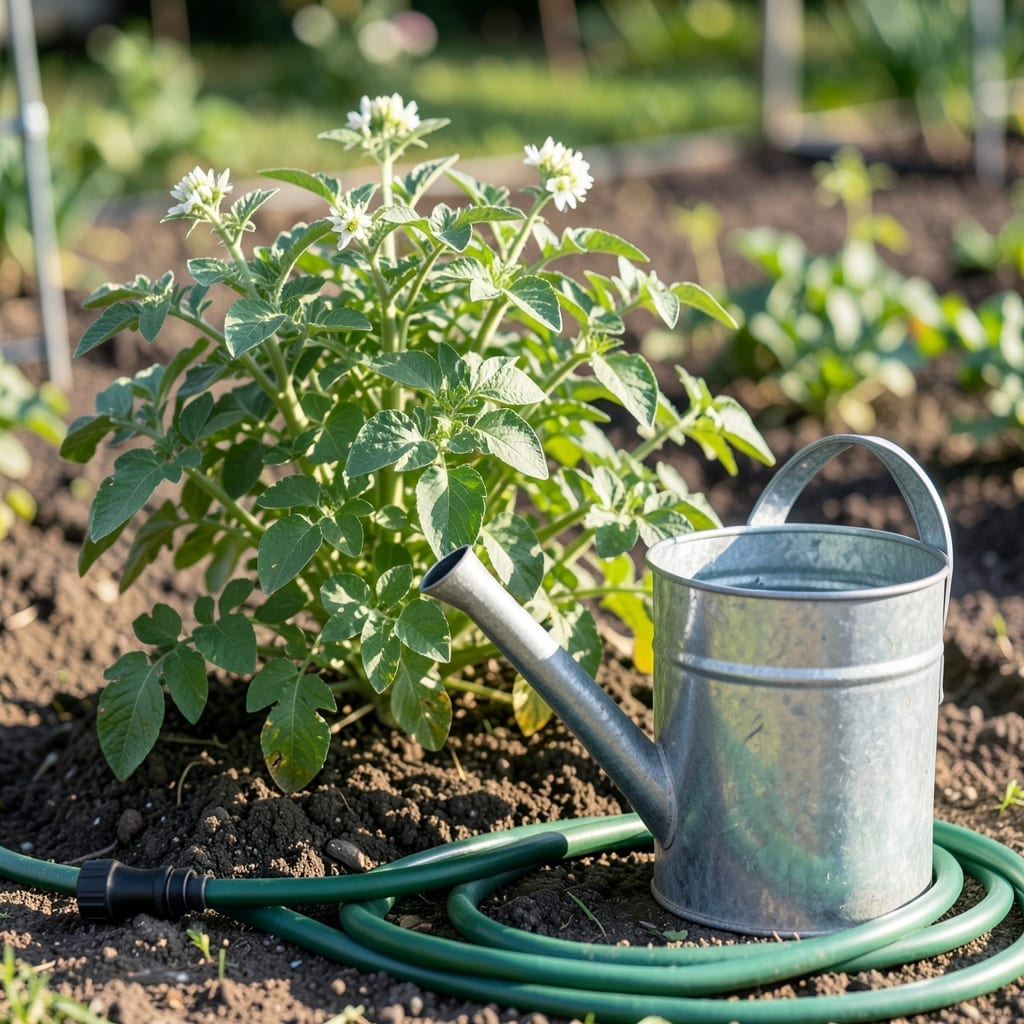
Watering your 🥔 Potato plants daily might seem like the right approach, but it can actually do more harm than good. Too much water leads to rot and disease, while too little stunts growth.
Finding that perfect balance is what separates a mediocre harvest from an abundant one. It’s all about understanding your plant’s needs at each stage.
Let me guide you through the best practices for keeping your Potato soil just right – not too dry, not too soggy. Your future self will thank you at harvest time.


I get asked this a lot: should you water potatoes daily? The short answer is no. Daily watering often leads to soggy soil and root rot, which can ruin your crop.
Potatoes thrive with consistent moisture, but they need time for the soil to dry slightly between waterings. This encourages strong root growth and prevents disease.
| Growth Stage | Water Frequency | Key Notes |
| Planting | Light watering | Keep soil moist but not wet |
| Vegetative | Every 5-7 days | 1-2 inches per week |
| Tuber Formation | Every 7-10 days | Increase if soil is dry |
| Maturity | Reduce watering | Stop 2 weeks before harvest |
In my experience, early morning watering works best. It gives the plants time to absorb moisture before the heat of the day. Always water at the base of the plant to keep foliage dry.
Sandy soils drain quickly, so you might need to water more often. Clay soils hold moisture longer, so less frequent watering is better. Always check the top inch of soil before watering.
If you’re growing in containers, they dry out faster. Check daily, but only water when the topsoil feels dry. Overwatering in pots is a common mistake.
During hot spells, you may need to water every 3-4 days. But remember, it’s better to water deeply and less often than a little every day.
I’ve found that using mulch around plants helps retain moisture. A 2-3 inch layer of straw or grass clippings works wonders.
The key is consistency. Potatoes don’t like to swing between bone dry and waterlogged conditions. Find a rhythm that works for your climate and soil. 🌱
Remember, underwatering causes small tubers, while overwatering leads to rot. It’s all about that sweet spot in between. Your plants will thank you with a bountiful harvest. 🪴
Recognizing the signs of overwatering and underwatering in potato plants is crucial for their health. Many gardeners struggle with this balance, but your plants will show clear signals.
I’ve seen yellowing leaves and wilting foliage confuse many growers. These could mean either too much or too little water, so you need to look closer.
| Condition | Signs | Solution |
|---|---|---|
| Overwatering | Yellow leaves, mushy stems, rotten smell | Stop watering, improve drainage |
| Underwatering | Dry soil, drooping leaves, small tubers | Water deeply, add mulch |
| Fungal Disease | Brown spots, mold, stunted growth | Reduce water, increase airflow |
Overwatered potatoes often have soft, mushy tubers that may split open. The soil will feel soggy and smell foul from root rot. I’ve learned this the hard way!
Underwatered potatoes show cracked, dry soil pulling away from the plant. The leaves may feel crispy or brittle. Tubers will be small and underdeveloped.
A simple test I use is the finger test. Stick your finger 2 inches into the soil. If it’s dry, it’s time to water. If it’s damp, wait another day.
Remember, consistent moisture is key. Potatoes need steady watering during tuber formation, but never let them sit in standing water. The right balance leads to healthy plants and great harvests. 🌿