
Beautiful Plants For Your Interior
Beautiful Plants For Your Interior
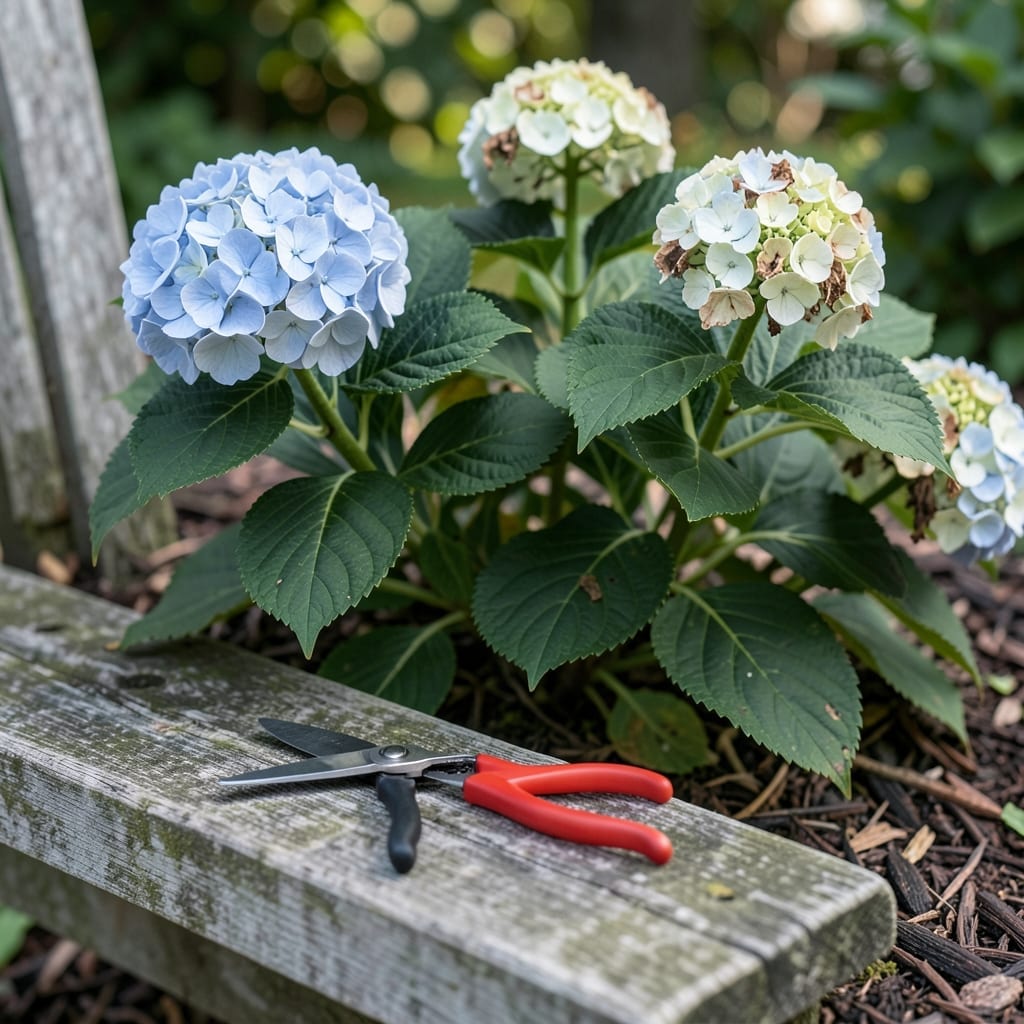
Those faded hydrangea blooms aren’t just unsightly—they’re stealing energy from next year’s flowers. I learned this the hard way after a season of sparse blooms on my once-thriving bushes.
The solution is simpler than you think: a clean cut at the right time with the right tools. Pruning dead blooms redirects the plant’s focus to new growth, resulting in bigger, healthier flowers the following season.
You’ll notice the difference within weeks—fresh buds forming where old ones once lingered. The process takes 10 minutes per plant and requires only basic pruners.
Works for all hydrangea varieties, though timing varies slightly by type. Here’s how to do it right.
Understanding why hydrangea blooms die helps you decide whether to prune them. Here are the most common causes:
Hydrangea blooms, like all flowers, have a finite lifespan. Most Hydrangea macrophylla (bigleaf) and Hydrangea paniculata (panicle) blooms last 2–4 weeks before wilting. This is a natural process driven by ethylene gas, a plant hormone that triggers aging and eventual death of the flowers.
Extreme heat, drought, or excessive sunlight can accelerate bloom death. Hydrangeas thrive in partial shade (4–6 hours of morning sun). When exposed to full afternoon sun or temperatures above 90°F (32°C), petals scorch and dry out faster due to transpiration stress—where the plant loses water faster than it can absorb it.
Overwatering or underwatering disrupts nutrient uptake, weakening blooms. Root rot (from soggy soil) prevents the plant from absorbing essential minerals like phosphorus (critical for flower health), while drought causes cellular collapse in petals. Aim for 1–1.5 inches of water per week, adjusting for rainfall.
A lack of phosphorus (P) or potassium (K) can lead to weak, short-lived blooms. Phosphorus supports flower production, while potassium strengthens cell walls. Test your soil—if pH is too high (above 6.5 for bigleaf hydrangeas), phosphorus becomes less available. Amend with bone meal or a balanced fertilizer (10-10-10) to restore nutrients.
If your hydrangeas have dead or fading blooms, don’t toss them just yet! With the right approach, you can encourage healthier growth and more vibrant flowers next season. Here’s how to tackle the most common issues:
If the blooms are brown or wilted, deadhead them by snipping just above the first set of healthy leaves or buds. For bigleaf and oakleaf hydrangeas (which bloom on old wood), avoid heavy pruning after summer—wait until late winter. For panicle and smooth hydrangeas (new wood bloomers), you can prune more aggressively in early spring. Prevention tip: 💡 Deadhead regularly to redirect energy into new blooms rather than seed production.
Drooping or weak stems often signal poor soil fertility or insufficient water. Boost your hydrangeas with a balanced, slow-release fertilizer (10-10-10) in early spring. Mulch around the base to retain moisture and regulate soil temperature. Prevention tip: ✨ Water deeply once a week (more in extreme heat) and avoid overhead watering to prevent fungal issues.
If your hydrangea isn’t flowering, you might’ve pruned at the wrong time. Old wood bloomers (like mopheads) need their flower buds protected over winter—prune these right after blooming. New wood bloomers (like ‘Annabelle’) can be cut back in late winter or early spring. Prevention tip: 🎯 Identify your hydrangea type first—this determines when (and how much) to prune!
Small adjustments now can lead to a bigger, brighter bloom season next year—so grab those shears and get to work!
For bigleaf and oakleaf types, deadhead immediately after blooming. Panicle and smooth varieties can be pruned in late winter or early spring.
The plant wastes energy on seed production instead of new growth. This often results in fewer, smaller blooms next season.
Old wood bloomers (like mopheads) form buds in fall for next year. New wood types (like ‘Annabelle’) produce buds in spring.
Use clean, sharp pruners for best results. Regular scissors can crush stems and introduce disease. Always sterilize tools first.