
Beautiful Plants For Your Interior
Beautiful Plants For Your Interior
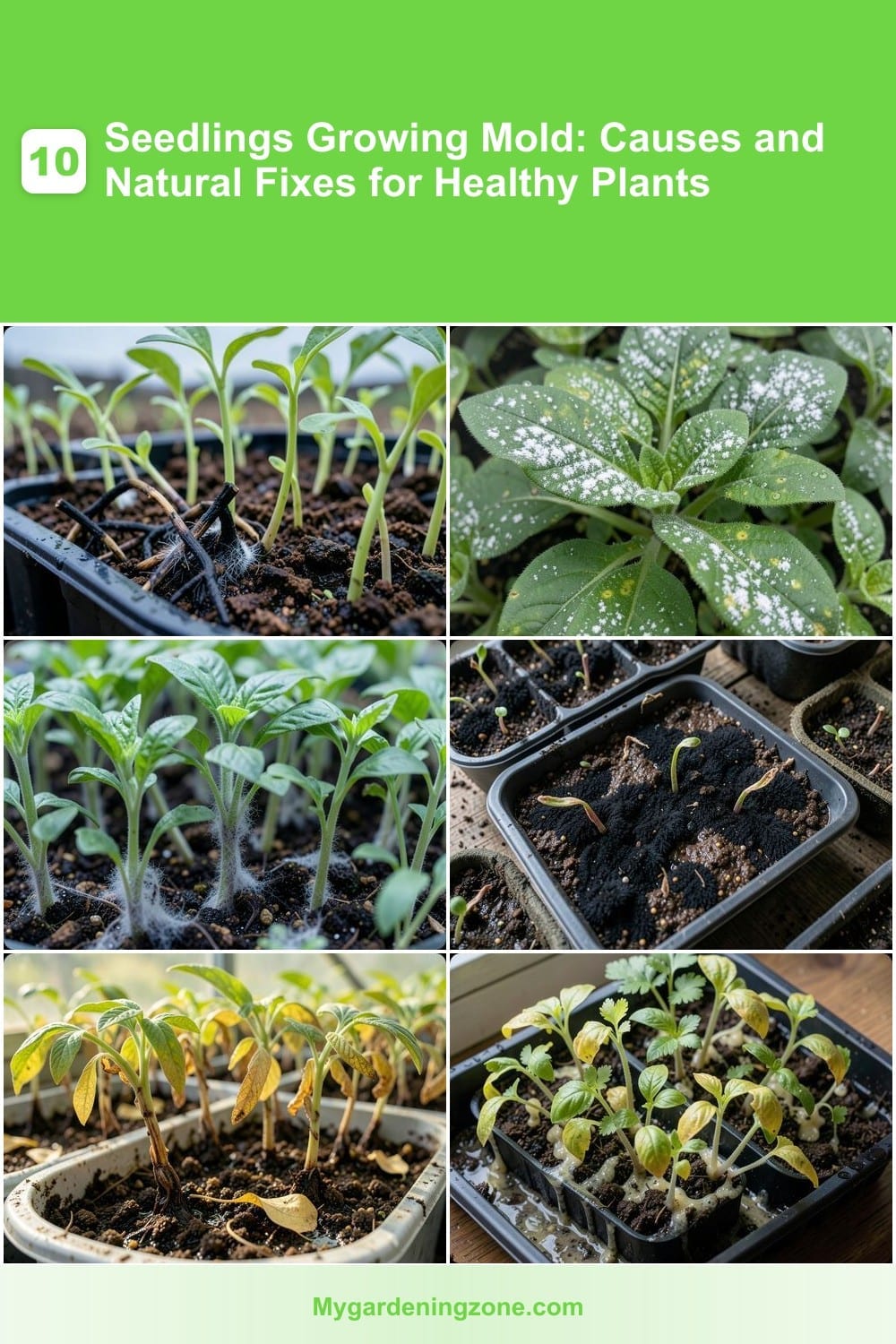
Mold on seedlings can devastate your garden before it even starts. This guide identifies the 10 most common mold issues affecting young plants and provides natural, chemical-free solutions to rescue your crop and prevent future outbreaks.
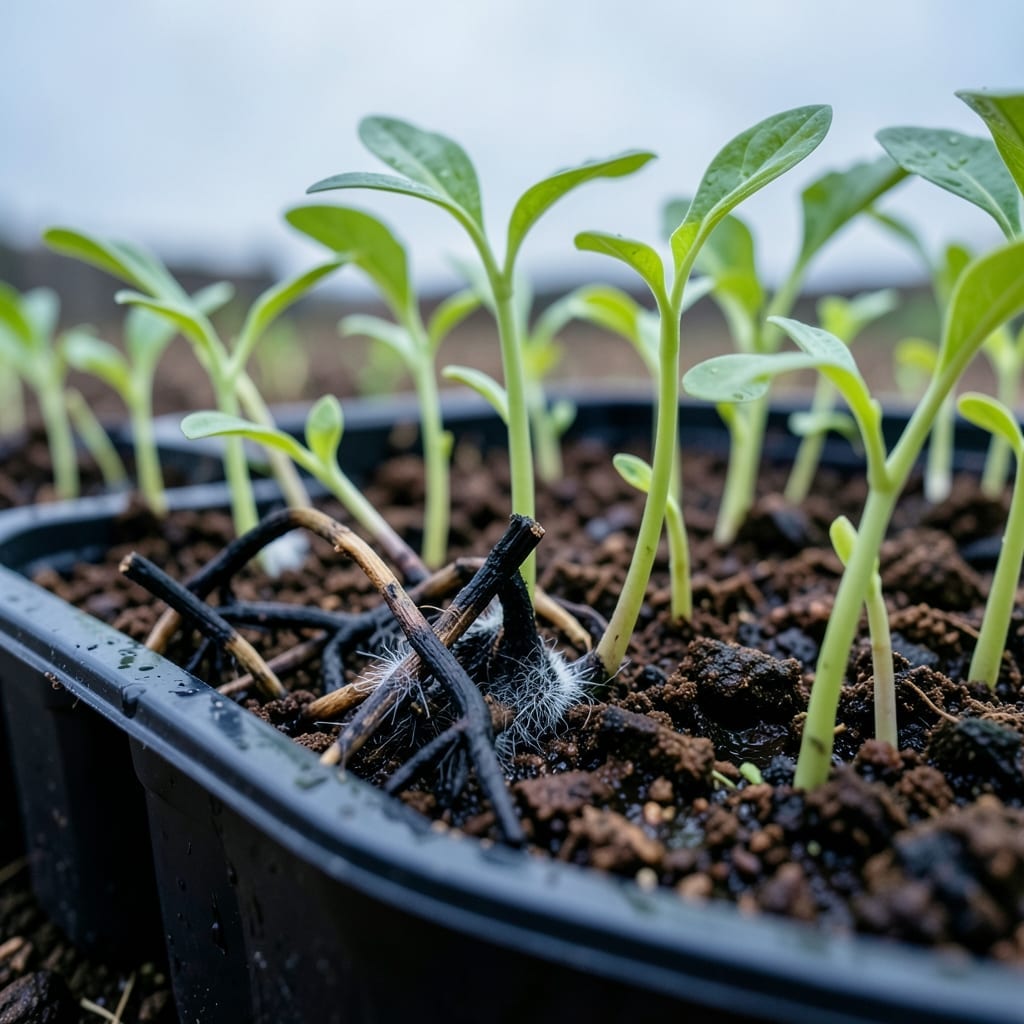
Your seedlings were thriving yesterday—today they’re toppled over at the soil line. This is the devastating work of damping off fungus, a soil-borne disease that rots stems overnight, often before you notice the first sign of trouble.
It flourishes in cool, wet conditions with poor air circulation, making indoor seed starters and greenhouse growers especially vulnerable. Prevent it by using sterilized seed mix, avoiding overwatering, and ensuring good airflow with a small fan. Early detection is key—look for soft, water-soaked stems. 🌱
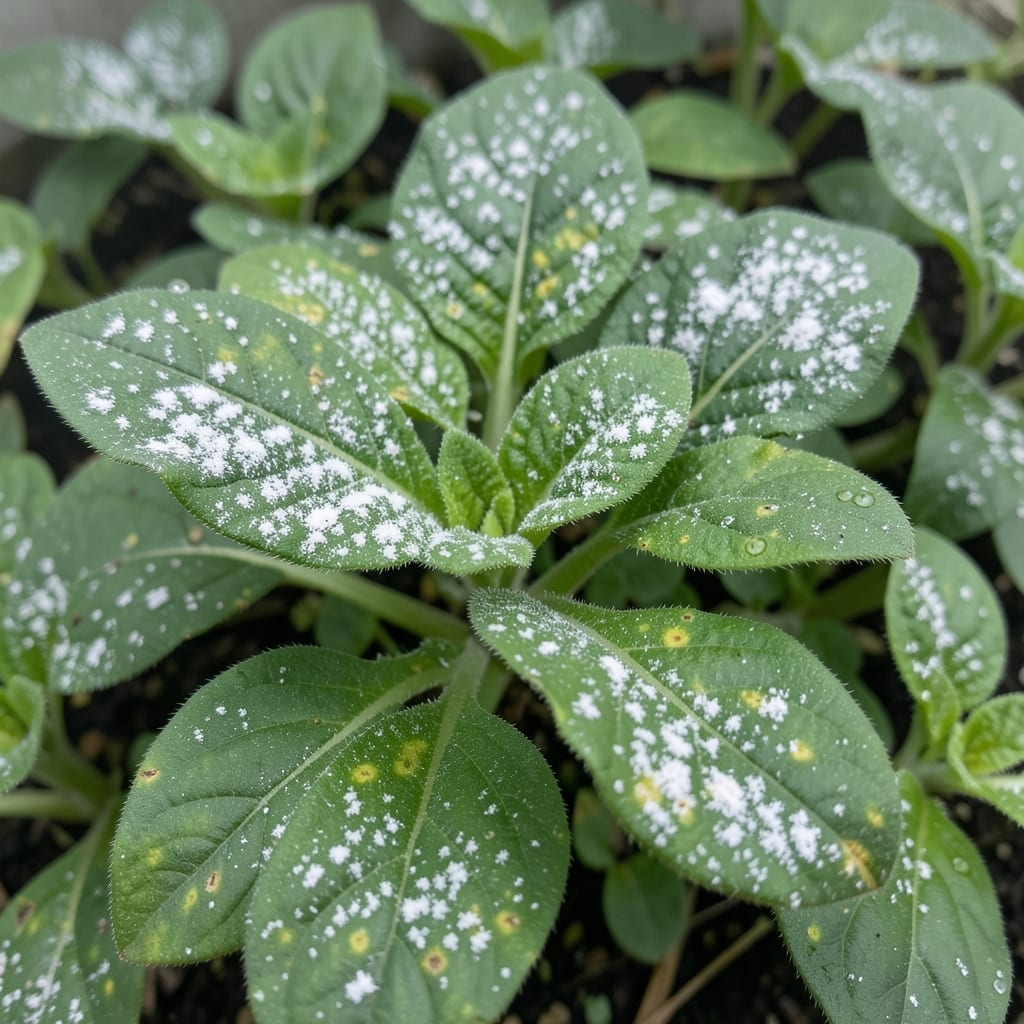
Those white powdery spots on your seedling leaves aren’t dust—they’re the calling card of powdery mildew, a sneaky airborne fungus that thrives in humid conditions and poor airflow.
Unlike soil-borne diseases, this one spreads through spores floating in the air. Combat it by improving ventilation with a small fan, watering at the soil level to keep leaves dry, and applying a baking soda spray (1 tsp baking soda, 1 quart water, a drop of soap) as a safe, organic treatment.
Gardeners in damp climates or those with crowded seed trays will see the fastest results by catching it early and acting quickly. 🌱
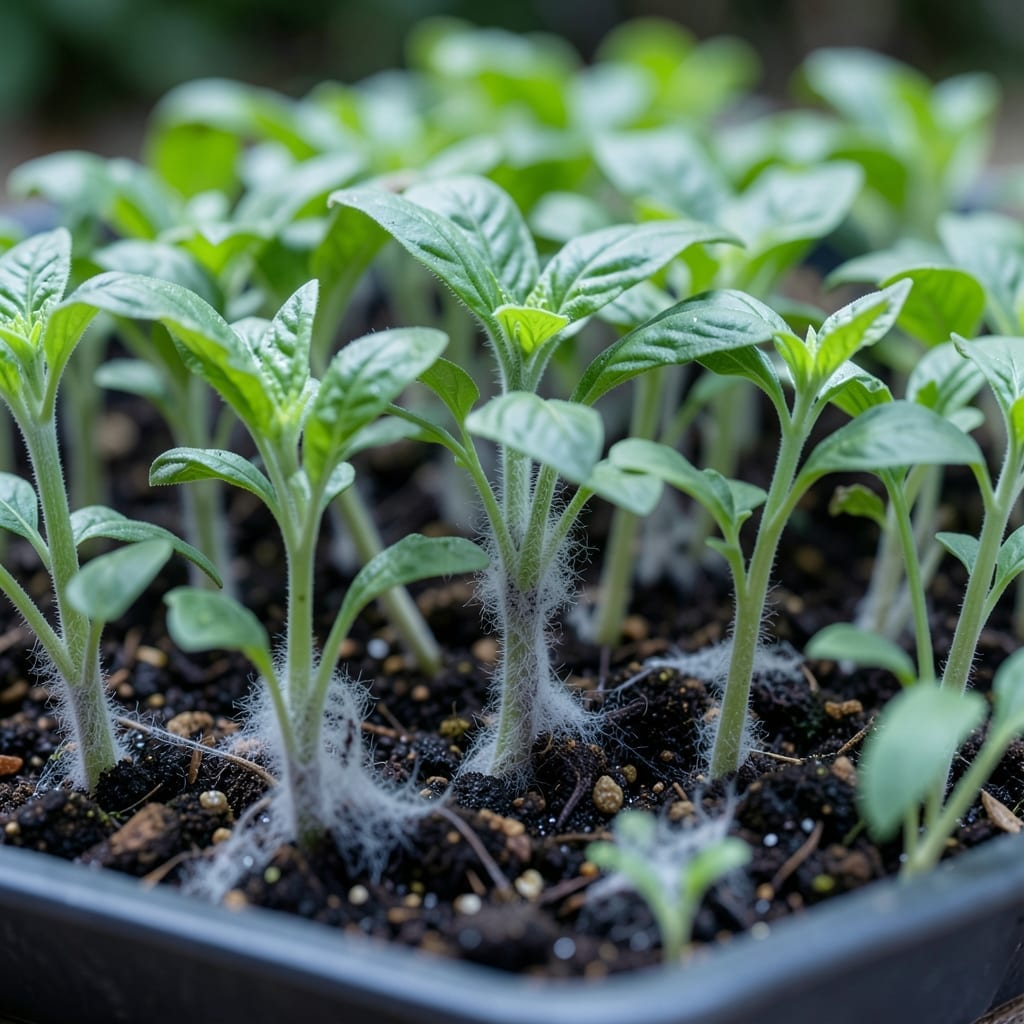
That fuzzy gray coating on your seedling stems and soil isn’t dirt—it’s gray mold thriving in crowded conditions. This fungus spreads rapidly when seedlings are packed too tightly, trapping moisture and blocking airflow.
Thin seedlings immediately to create space between plants, ensuring proper air circulation. Remove affected plants to prevent spread, and avoid overhead watering to keep foliage dry. A small fan can help improve ventilation in indoor setups.
Gardeners who love dense plantings will need to adjust their approach to stop this mold in its tracks. 🌱
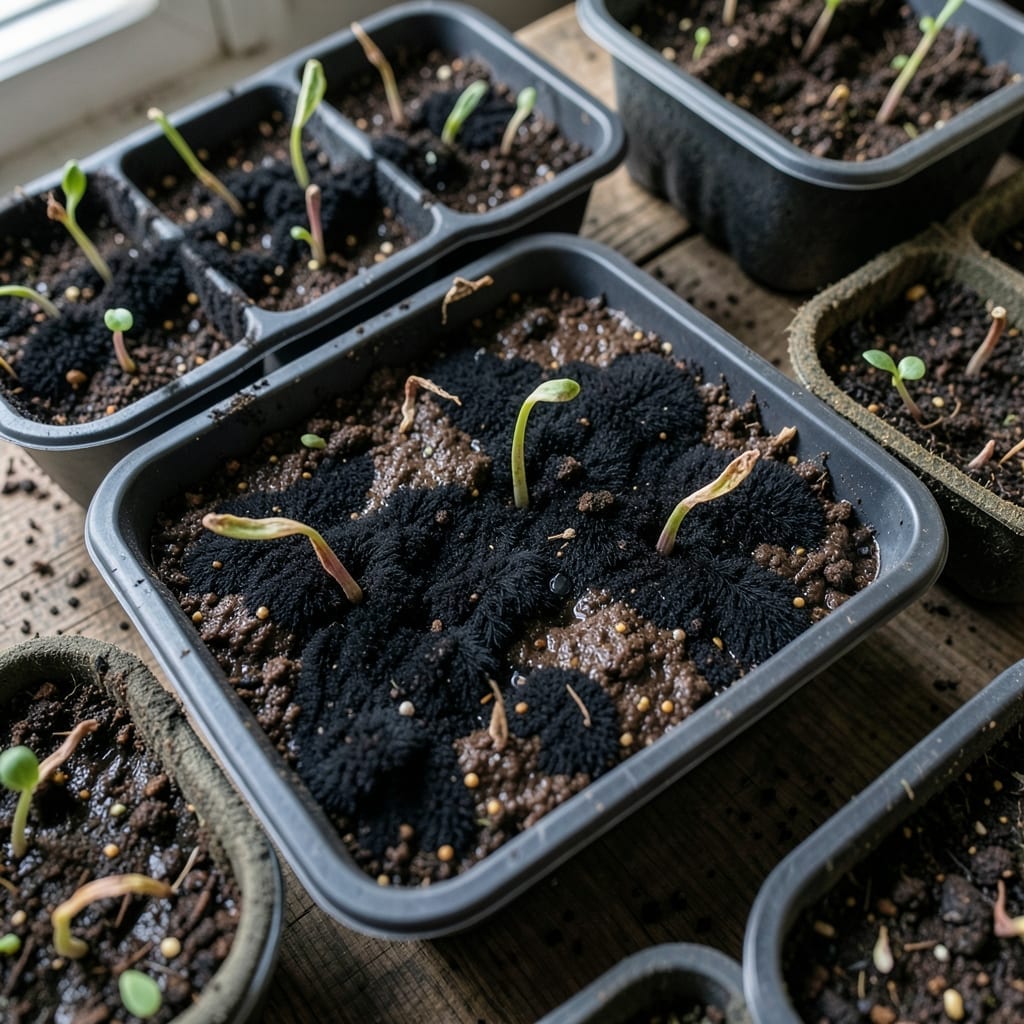
Seeing black mold on your seed starting mix isn’t just unsightly—it signals serious drainage issues. This dark fungus thrives in overly moist conditions and often appears when gardeners reuse old soil or create homemade mixes without proper sterilization.
Prevent it by ensuring your seed trays have drainage holes and using a well-balanced mix of peat, perlite, and vermiculite. Always sterilize homemade mixes by baking soil at 200°F for 30 minutes to kill mold spores before planting.
This fix is especially important for DIY gardeners who love crafting their own growing mediums. 🌱
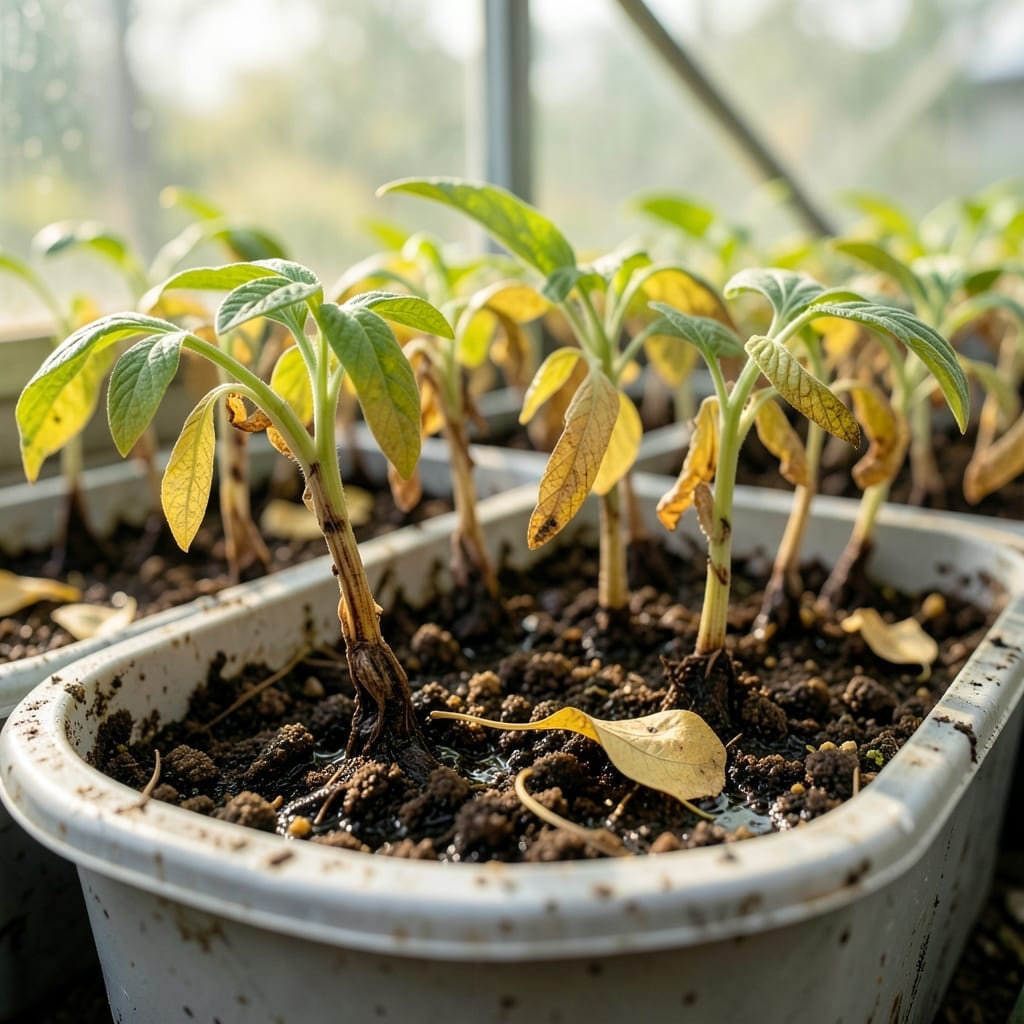
Your seedlings look well-watered but still wilt with yellowing leaves. This could be Fusarium wilt, a vascular disease that blocks water movement through the plant, even when soil moisture is perfect.
It thrives in warm climates and spreads through contaminated soil or unclean containers. Prevent it by sterilizing pots with a 10% bleach solution between uses and rotating crops yearly. Remove and destroy infected plants immediately to prevent spread.
Gardeners reusing old containers or growing in hot regions need to be especially vigilant against this silent killer. 🌱
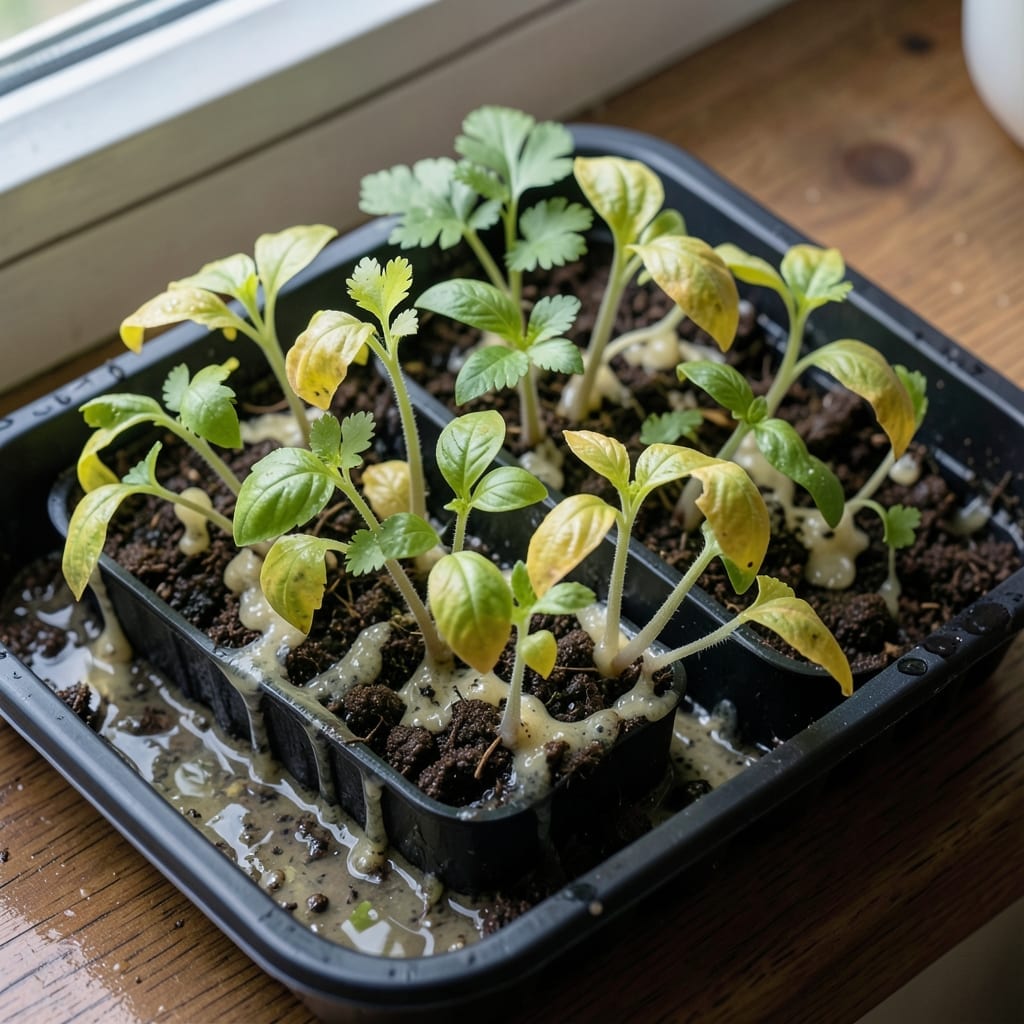
That gelatinous coating on your seedling stems isn’t just unsightly—it’s a clear sign of overwatering. This slimy mold thrives in consistently wet conditions, often appearing when gardeners struggle with poor-draining seed trays or heavy-handed watering habits.
Fix it by switching to trays with drainage holes and watering only when the top inch of soil feels dry. Ensure your seed starting mix contains perlite or vermiculite for better drainage. This adjustment is especially crucial for indoor gardeners using grow lights.
Making these simple changes will help you maintain healthy moisture levels and prevent future mold outbreaks. 🌱
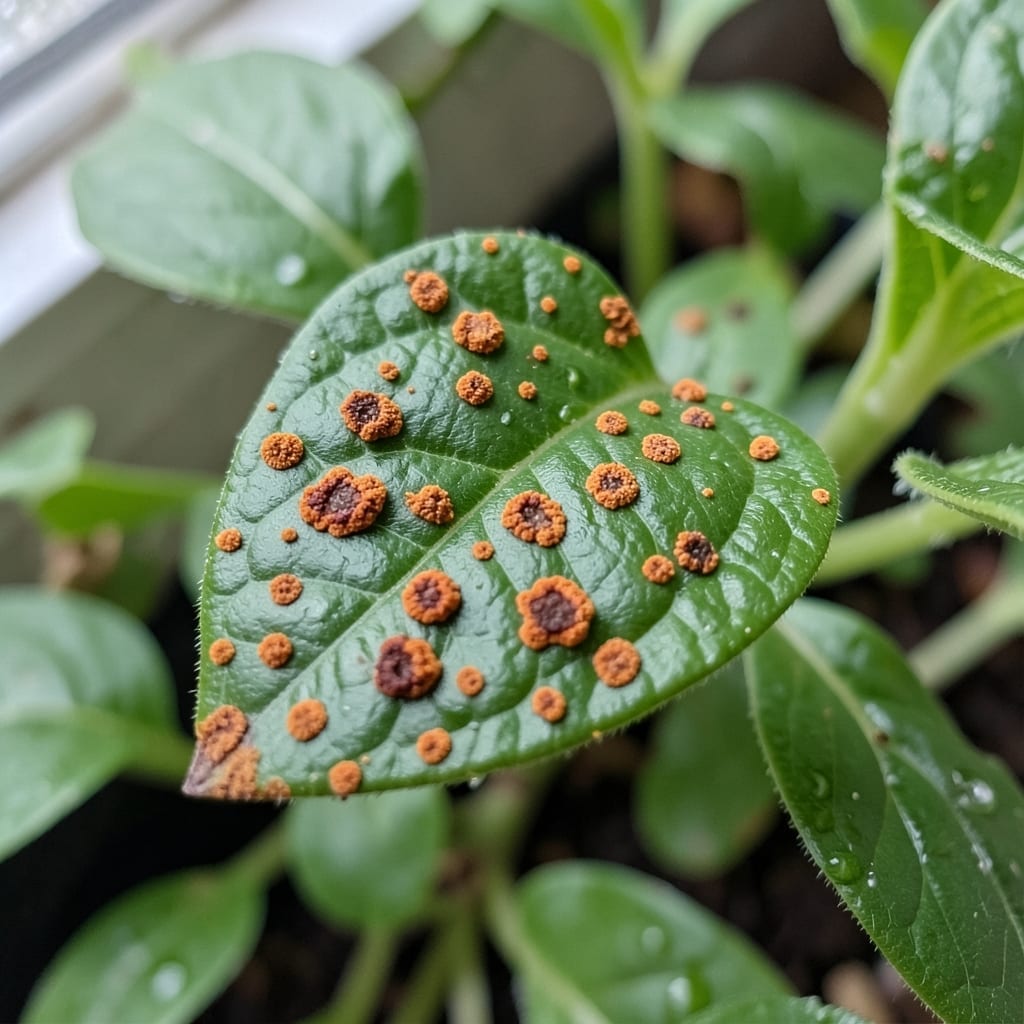
Those orange-brown pustules on your seedling leaf undersides aren’t dirt—they’re rust fungus, a sneaky disease that thrives in high humidity and can quickly spread to mature plants if left unchecked.
This fungus often appears when water sits too long on foliage or air circulation is poor. Combat it by watering at the soil level, increasing airflow with a small fan, and removing affected leaves immediately. A neem oil spray can help stop its progression.
Gardeners in damp climates or those with crowded seed trays need to act fast to prevent this from taking over their garden. 🌱
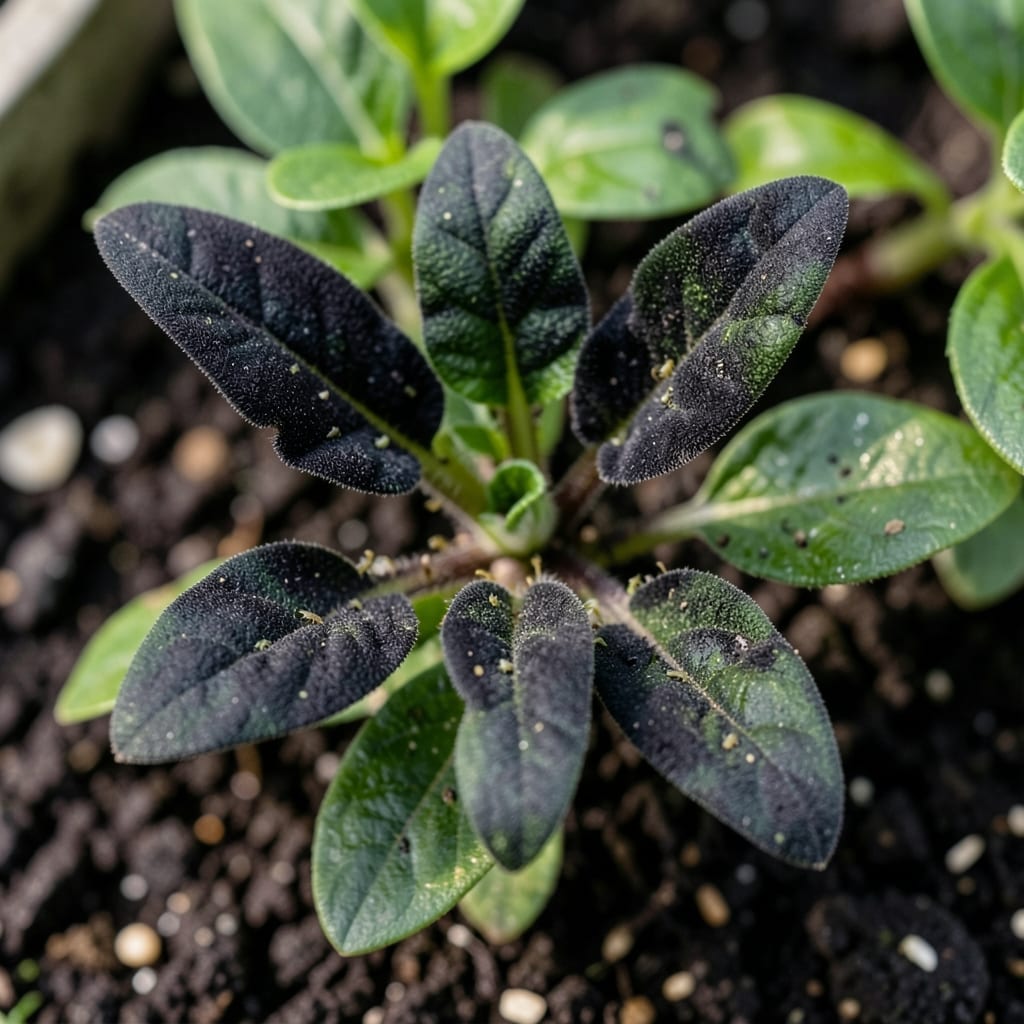
That black coating on your seedling leaves isn’t dirt—it’s sooty mold, a telltale sign of aphids hard at work. These tiny pests excrete sticky honeydew that attracts the dark fungus, creating a double threat to your young plants.
For organic gardeners, the solution is twofold: eliminate the aphids with a strong blast of water or insecticidal soap, then wipe leaves with a damp cloth to remove the mold. Introducing beneficial insects like ladybugs can provide long-term control.
This approach keeps your garden chemical-free while addressing both the pests and the resulting mold, perfect for eco-conscious growers. 🌿
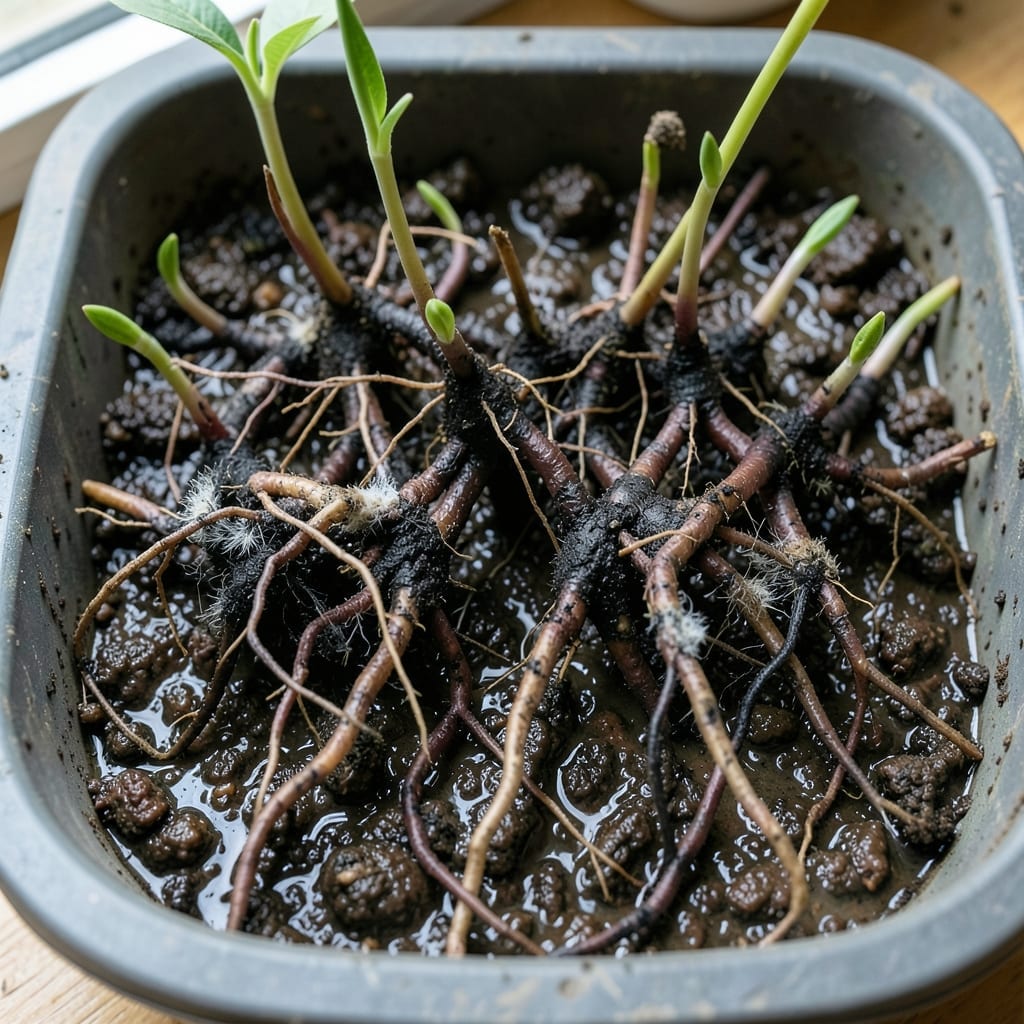
If your seedlings’ roots look dark and mushy with white or black mold, you’re dealing with root rot—a common issue in waterlogged trays. This happens when roots sit in water too long, often in bottom-watering systems or trays without proper drainage.
Prevent it by ensuring your trays have drainage holes and emptying excess water after bottom-watering. Use a well-draining seed mix and avoid overwatering. If you spot root rot, remove affected seedlings immediately to prevent spread to healthy plants.
This tip is especially important for gardeners using self-watering systems or those who tend to overwater. 🌱
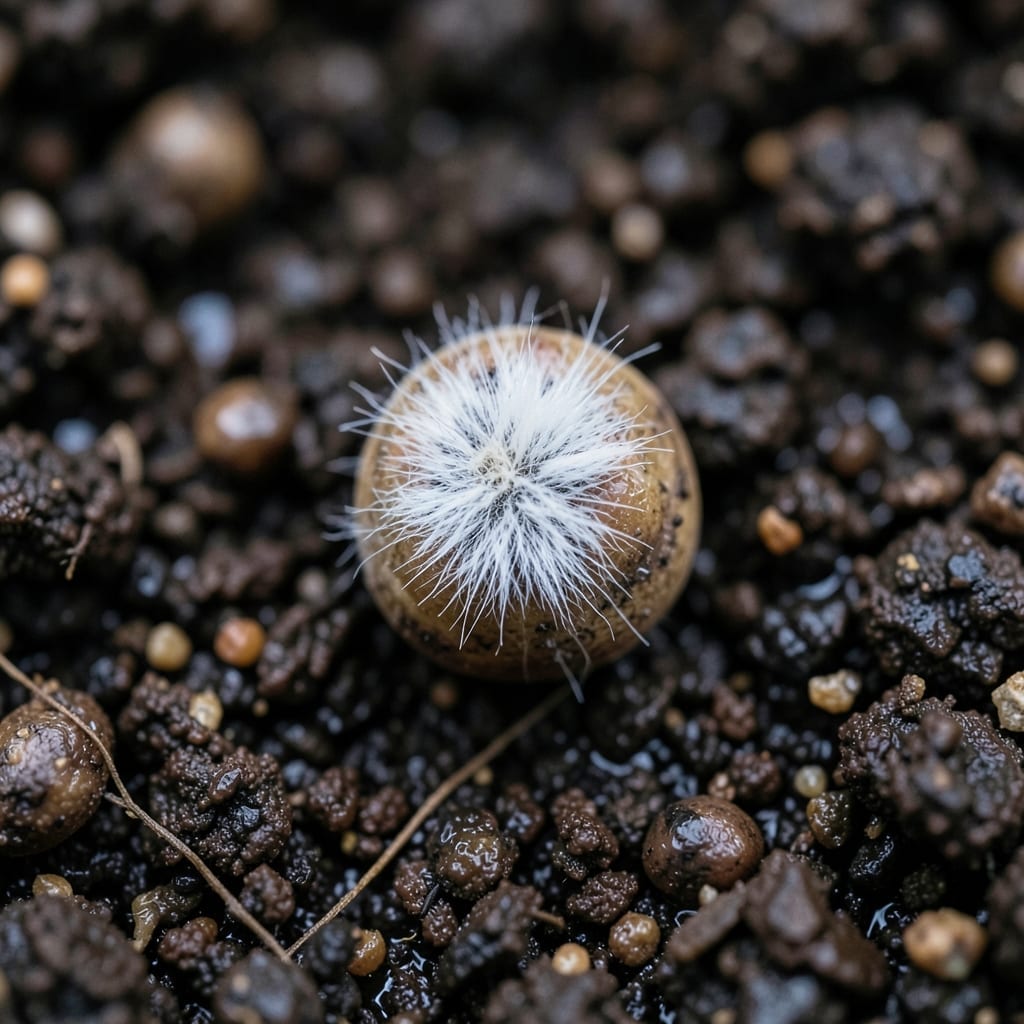
Spotting white fuzzy mold on your germinating seeds? This common issue appears when seeds are planted too deeply or in cold, wet soil, preventing proper airflow and trapping moisture against the seed coat.
Prevent it by sowing seeds at the recommended depth—usually no deeper than twice their width—and using well-draining soil. For early-season gardeners, warm the soil with a heat mat or start seeds indoors to avoid cold, damp conditions.
This simple adjustment makes all the difference for cool-weather crops like lettuce and spinach, giving your seedlings a mold-free start. 🌱