
Beautiful Plants For Your Interior
Beautiful Plants For Your Interior
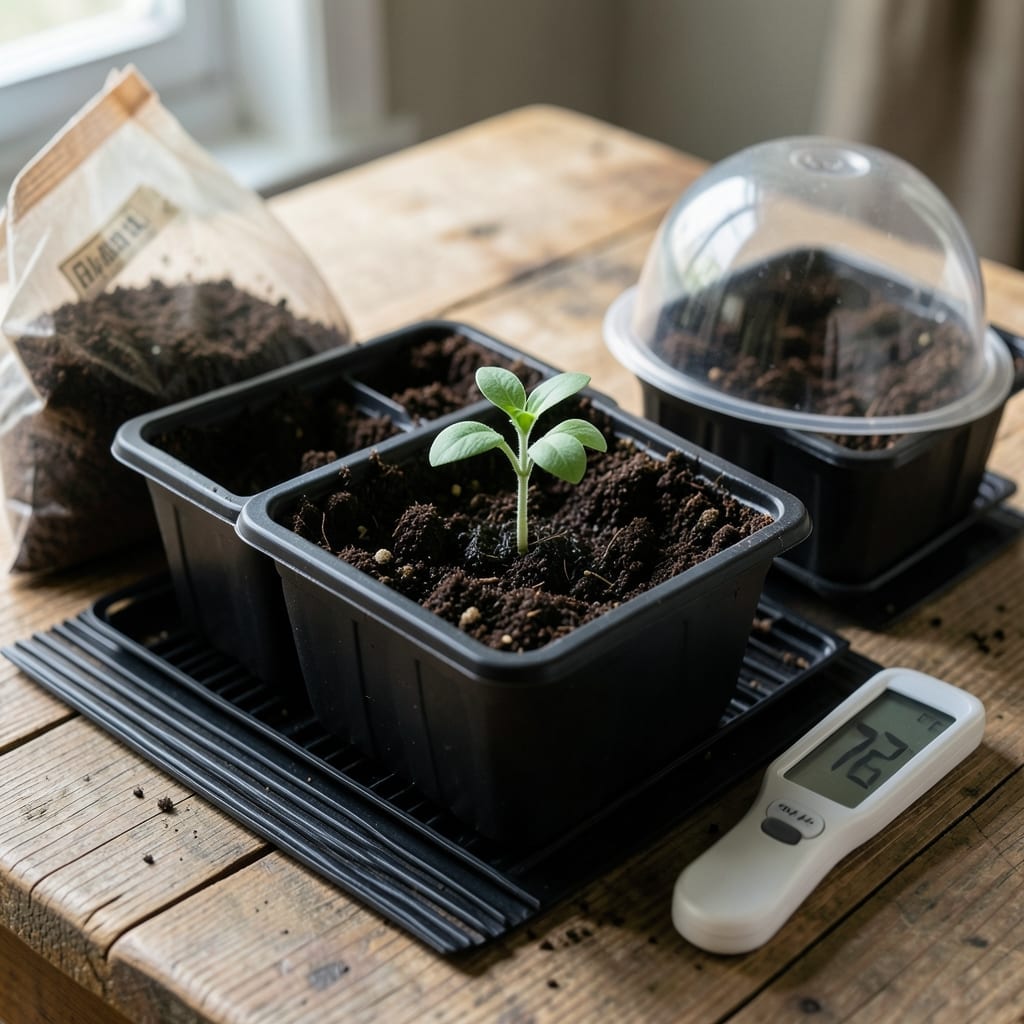
The difference between slow, patchy germination and fast, uniform sprouting often comes down to one critical factor. That factor is temperature control.
I’ve seen gardeners struggle with the 🌱 Seedling for weeks simply because they overlooked this key detail. Getting it right can cut your waiting time dramatically.
What most don’t realize is that even a few degrees can make or break your success. The right range turns dormancy into vigorous growth.
Discover exactly how to hit that sweet spot for your seedlings. It’s simpler than you think, and I’ll show you how.


Getting seedling germination temperature right is the secret to faster sprouting and healthier plants. Each veggie has its own ideal range, and hitting it can mean the difference between slow growth and vigorous seedlings.
I’ve found that tomatoes and peppers thrive in warm soil, while lettuce and spinach prefer cooler conditions. Knowing these ranges helps me plan my planting schedule for maximum success.
| Variety | Minimum (°F) | Optimal (°F) | Maximum (°F) |
|---|---|---|---|
| Tomato | 60 | 70-80 | 95 |
| Pepper | 65 | 75-85 | 95 |
| Lettuce | 40 | 60-70 | 80 |
| Beans | 60 | 70-80 | 90 |
| Cucumbers | 60 | 70-85 | 95 |
For cool-season crops like lettuce and spinach, I aim for 60-70°F. These temperature ranges ensure quick germination without heat stress.
Warm-season veggies like tomatoes and peppers need 70-85°F to sprout. If the soil is too cool, they’ll struggle to germinate or grow slowly.
I always use a soil thermometer to check germination conditions. It’s a simple tool that helps me avoid guesswork and optimize my setup for each plant type.
If I’m starting seeds indoors, a heat mat can help maintain consistent warmth. This is especially useful for peppers and eggplants, which need higher temperatures to thrive.
For outdoor sowing, I wait until the soil temperature reaches the optimal range for my chosen crops. A simple test is to insert a thermometer a few inches deep.
Remember, temperature fluctuations can delay germination or cause uneven sprouting. Keeping conditions stable is key to strong seedling development.
By matching each seed type to its ideal temperature, I’ve seen faster results and healthier plants in my garden. It’s a small effort with big rewards 🌱
I’ve learned that temperature doesn’t just influence germination speed—it can make or break your entire seedling batch. Too cold, and seeds may rot. Too hot, and they’ll dry out or fail to sprout at all.
At the right temperature, enzymes activate and metabolic rates surge, allowing seeds to absorb water and begin growth efficiently. This is why consistent warmth is non-negotiable for success.
How Temperature Works Its Magic:
In my experience, seeds planted in cool soil often sit dormant for weeks. Even hardy varieties like peas and spinach germinate poorly below 40°F. Warmth is the catalyst.
For most vegetables, the sweet spot is between 70-80°F. In this range, tomatoes and peppers can sprout in just 5-7 days, compared to weeks in cooler conditions.
Don’t assume all seeds need the same heat. Cool-season crops like lettuce and kale prefer 60-70°F, while warm-season stars like beans thrive at 75-85°F.
Monitoring soil temperature with a thermometer removes the guesswork. I keep one in my seed-starting tray and adjust heat mats accordingly. It’s a game-changer for consistent results every time. 🌱