
Beautiful Plants For Your Interior
Beautiful Plants For Your Interior
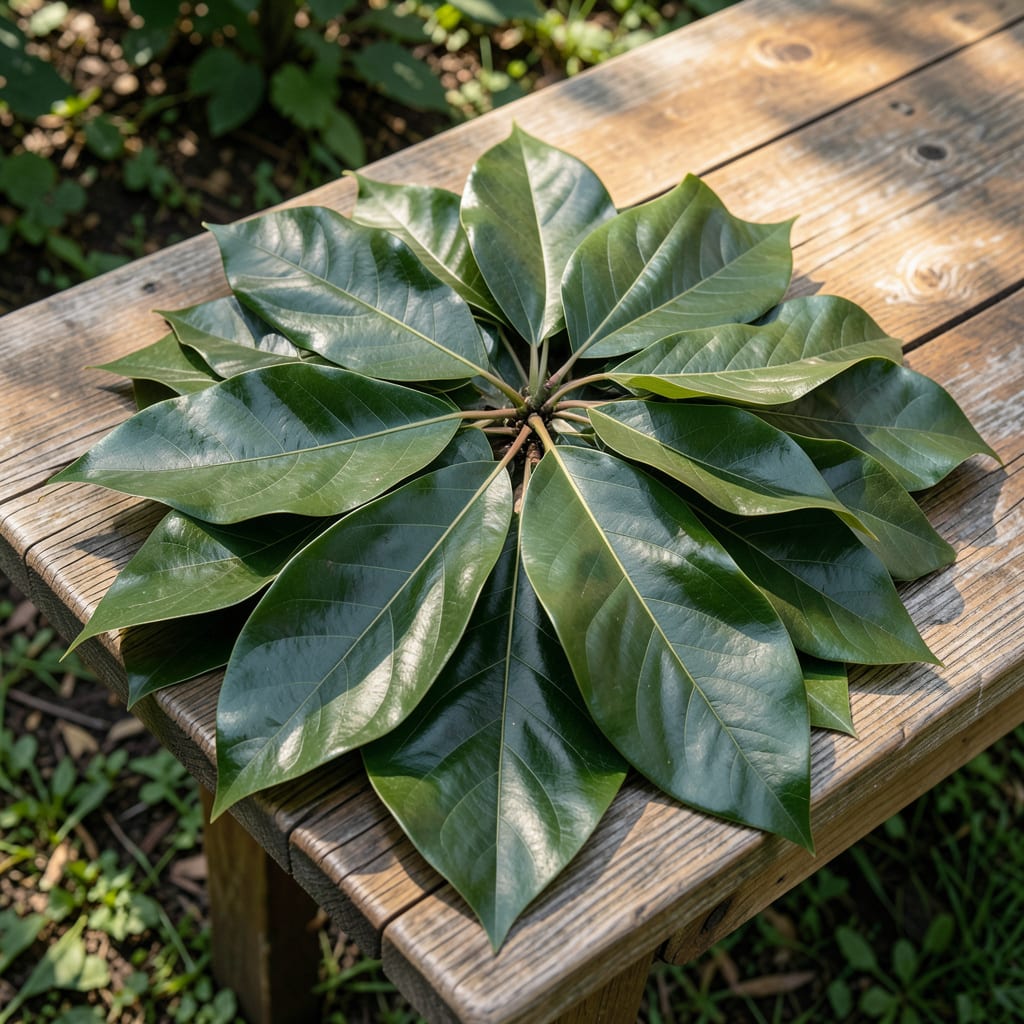
I still remember the first time I saw saucer magnolia leaves unfurling in spring. Their shape is unmistakable—large, oval, and slightly wavy with a smooth, glossy surface that catches the light just right.
These leaves start as fuzzy, silvery buds before transforming into deep green foliage that stays vibrant through summer. By autumn, they turn a golden bronze, creating a stunning display before dropping for winter.
📚 In This Guide
Here’s the method I use to distinguish these iconic leaves from similar species in any landscape.
Saucer magnolia leaves display a distinct elliptical to ovate shape with a broad base that tapers to a pointed tip. Mature leaves typically measure 6-10 inches long and 3-5 inches wide, significantly larger than most ornamental shrubs. This substantial size makes them stand out even from a distance.
Hold a leaf up to the light to see its symmetrical silhouette. The base often appears slightly lobed or rounded, creating a heart-like impression at the stem attachment. This shape differentiates them from the more uniformly narrow leaves of star magnolias.
The surface of saucer magnolia foliage feels smooth and leathery with a glossy finish when healthy. Run your fingers along the leaf—you’ll notice it’s thicker than typical deciduous tree leaves, almost waxy to the touch. This texture helps the tree conserve moisture during dry periods.
Look closely at the color: new growth emerges a soft, fuzzy bronze that matures to deep dark green above and a slightly paler silvery-green underneath. The underside often has a subtle sheen that catches the light differently than the top surface.
Saucer magnolia leaves feature a pinnate vein pattern with a prominent central midrib and 8-12 pairs of lateral veins branching outward. These veins are slightly raised on the underside, creating a textured network you can feel with your fingertips.
The leaves grow in an alternate arrangement along the branches, never directly opposite each other. This alternating pattern creates a spiral effect up the stem when viewed from below. Each leaf attaches to the branch with a ½ to ¾ inch petiole that’s often a reddish color on new growth.
In autumn, saucer magnolia leaves transform dramatically, turning shades of golden yellow to bronze before dropping. Unlike some magnolias that hold their leaves through winter, saucer magnolias are deciduous and will shed completely. The leaf drop typically occurs in late October to November depending on your climate zone.
Watch for the distinctive leaf buds in spring—they’re large, fuzzy, and silvery before unfurling. These buds often appear just as the famous saucer-shaped flowers begin to emerge, creating a stunning contrast between the soft foliage and bold blossoms.
Mastering the details will help you confidently identify these leaves in any setting.
The Size Factor: Remember that mature saucer magnolia leaves are 6-10 inches long and 3-5 inches wide. This substantial size is your first clue—most similar ornamental shrubs have noticeably smaller foliage. When in doubt, compare the leaf to a standard sheet of paper for scale.
Texture Insight: The smooth, leathery feel with a glossy finish is distinctive. Don’t be fooled by the fuzzy bronze appearance of new growth—this transforms to a deep, dark green with a silvery-green underside as the leaf matures. This texture contrast is unique to saucer magnolias.
Vein Pattern Tip: The pinnate vein pattern with 8-12 pairs of lateral veins branching from a prominent central midrib is a dead giveaway. Run your fingers along the underside to feel the slightly raised veins; this textured network is a hallmark of the species.
Seasonal Clue: Saucer magnolias are deciduous, shedding their leaves completely in late October to November. If you see a tree holding leaves through winter, you’re likely looking at a different magnolia variety. The autumn transformation to golden yellow and bronze is another key identifier.
Yellowing leaves often signal nutrient deficiencies (like iron or magnesium) or overwatering. Check soil drainage and consider a soil test. Environmental stress, such as extreme heat or cold, can also cause this.
Saucer magnolias are deciduous, so leaves naturally drop in late fall to early winter. If leaves fall prematurely, investigate pests, disease, or water stress.
Keep the tree well-watered during dry spells, especially young trees. Mulch around the base to retain moisture and protect roots from heat. Avoid overhead watering to prevent fungal issues.
Watch for scale insects, aphids, and magnolia leaf miners. Regularly inspect leaves for spots, curling, or sticky residue. Treat with horticultural oil or insecticidal soap if infestations occur.
Yes, but choose a dwarf variety and a large pot with good drainage. Ensure it gets full sun to partial shade and consistent moisture. Repot every 2-3 years to prevent root crowding.
