
Beautiful Plants For Your Interior
Beautiful Plants For Your Interior
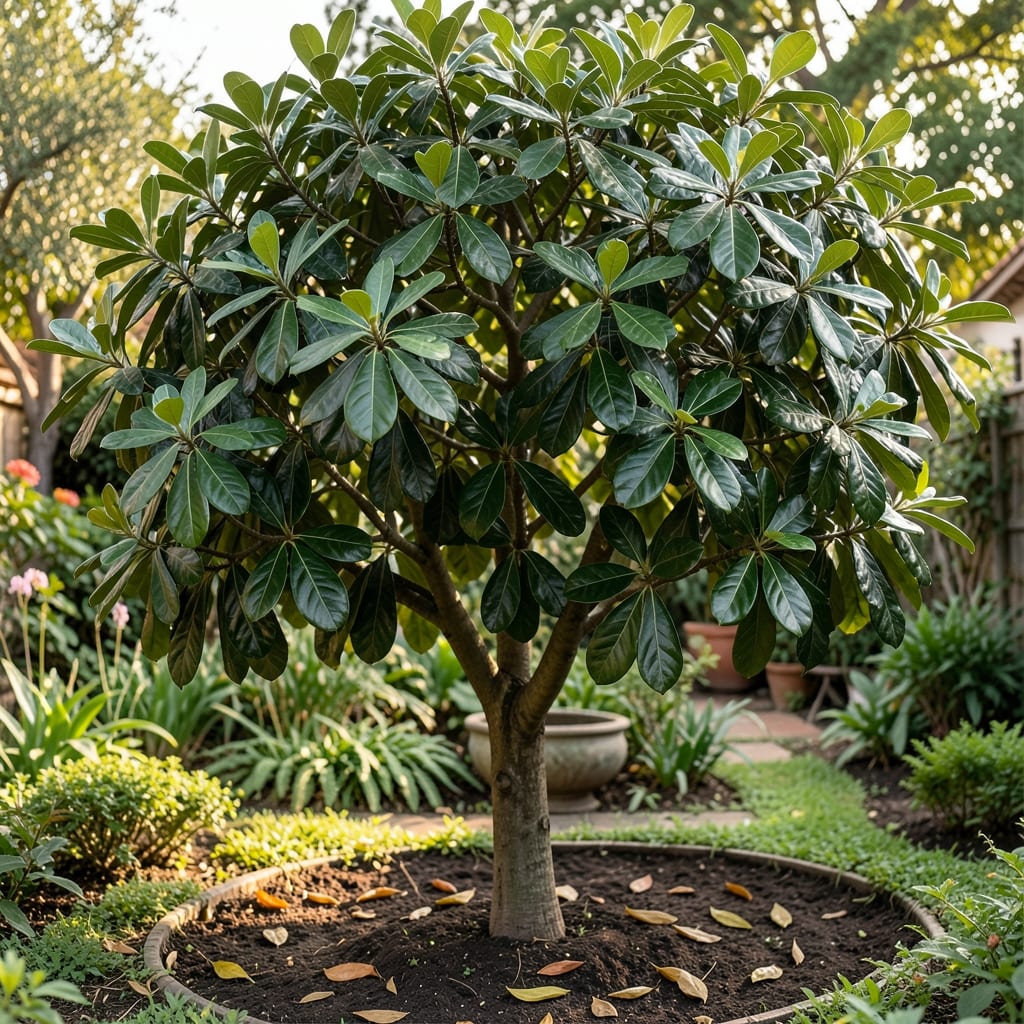
Sapote tree leaves tell you everything about your tree’s health. I learned this the hard way after watching mine drop leaves for weeks.
Once you know what to look for, you’ll spot healthy growth instantly—deep green, firm texture, no spots. The right care keeps them thriving year-round.
📚 In This Guide
Here’s my approach to keeping your tree’s foliage vibrant and thriving through every season.
Healthy sapote leaves are deep green, glossy, and firm to the touch. They should feel smooth with no rough or brittle edges. I always check the undersides too—healthy leaves have a slightly lighter green tone there but no spots or discoloration.
New growth emerges as bright, almost lime-green leaves that darken as they mature. Watch for this color progression; it’s a sure sign your tree is growing properly. Any yellowing or brown edges means it’s time to investigate the tree’s care routine.
Sapote trees need full sun to partial shade for optimal leaf health. Leaves in full sun will be thicker and more leathery, while those in partial shade may be slightly larger but just as healthy. I position my tree where it gets at least 6 hours of direct sunlight daily.
If leaves start looking pale or bleached, your tree might be getting too much harsh afternoon sun. Conversely, if growth is sparse with long gaps between leaves, it likely needs more light. Adjust your tree’s position gradually to avoid shocking the foliage.
Water when the top 2-3 inches of soil feel dry to the touch. Sapote leaves will droop slightly when thirsty but perk up within hours of watering. I water deeply at the base, avoiding the leaves to prevent fungal issues.
Overwatering shows up as yellowing leaves or a general wilt that doesn’t improve with water. The leaves may also feel soft or mushy. Underwatering causes crisp, brown edges and premature leaf drop. Both extremes stress the tree and compromise leaf health.
Healthy leaves resist most pests, but I still check weekly for early signs of trouble. Look for tiny webs (spider mites), white cottony spots (mealybugs), or sticky residue (aphids). A strong spray of water often dislodges these pests before they cause damage.
For fungal issues like powdery mildew, watch for white powdery spots on leaf surfaces. Remove affected leaves immediately and improve air circulation. I find that morning watering gives foliage time to dry, reducing disease risk.
Use a balanced fertilizer every 6-8 weeks during the growing season. I prefer organic options that release nutrients slowly. Healthy leaves will maintain their deep green color and produce robust new growth throughout the season.
If leaves turn pale green or yellow between veins, your tree might need more nitrogen. Brown leaf tips often indicate a potassium deficiency. Adjust your fertilizer blend to address these specific needs, but always follow package instructions carefully.
Here’s what I’ve learned from years of tending to sapote trees and keeping their leaves vibrant.
The Light Factor: That 6 hours of direct sunlight daily is non-negotiable for optimal leaf health. I’ve found that morning sun is gentler than harsh afternoon rays, which can bleach or scorch leaves. If you notice pale or bleached leaves, try shifting your tree to a spot with more consistent, indirect light.
Watering Wisdom: The top 2-3 inches of soil rule works perfectly—I check this depth with my finger before watering. Sapote leaves will actually droop slightly when thirsty, then perk up within hours after watering. This visual cue is more reliable than sticking to a rigid schedule.
Pest Prevention: Weekly inspections catch problems early. I use a simple trick: a strong spray of water from the hose dislodges spider mites, mealybugs, and aphids before they establish themselves. Morning watering also helps prevent fungal issues by giving leaves time to dry throughout the day.
Fertilizer Timing: The every 6-8 weeks schedule during growing season keeps leaves that deep green color. I mark my calendar to stay consistent. If you notice pale green leaves with yellow between the veins, your tree is likely craving more nitrogen—adjust your fertilizer accordingly.
While sapote fruit is delicious, its leaves are not typically consumed. They contain compounds that may be toxic in large amounts. Stick to the fruit and avoid using the leaves for teas or cooking. Always consult an expert before experimenting with non-food parts of the plant.
Yellowing leaves often signal overwatering, nutrient deficiencies (like nitrogen or iron), or poor drainage. Check soil moisture and fertility, and ensure proper drainage. If the issue persists, test the soil or consult a local nursery for targeted solutions.
Young sapote trees need consistent moisture—water 2-3 times weekly in dry climates. Mature trees are drought-tolerant but thrive with deep, weekly watering. Adjust based on rainfall and soil drainage to avoid root rot. Tip: Let the top inch of soil dry between waterings.
Use a balanced fertilizer (e.g., 8-8-8 or 10-10-10) every 2-3 months during the growing season. Organic options like compost or manure also work well. Avoid over-fertilizing, as it can lead to leaf burn or excessive foliage with poor fruit production.
Spots or holes may indicate pests (like caterpillars) or fungal diseases. Spray with neem oil or insecticidal soap for pests, and apply a fungicide for diseases. Prune affected leaves to prevent spread and improve airflow.