
Beautiful Plants For Your Interior
Beautiful Plants For Your Interior
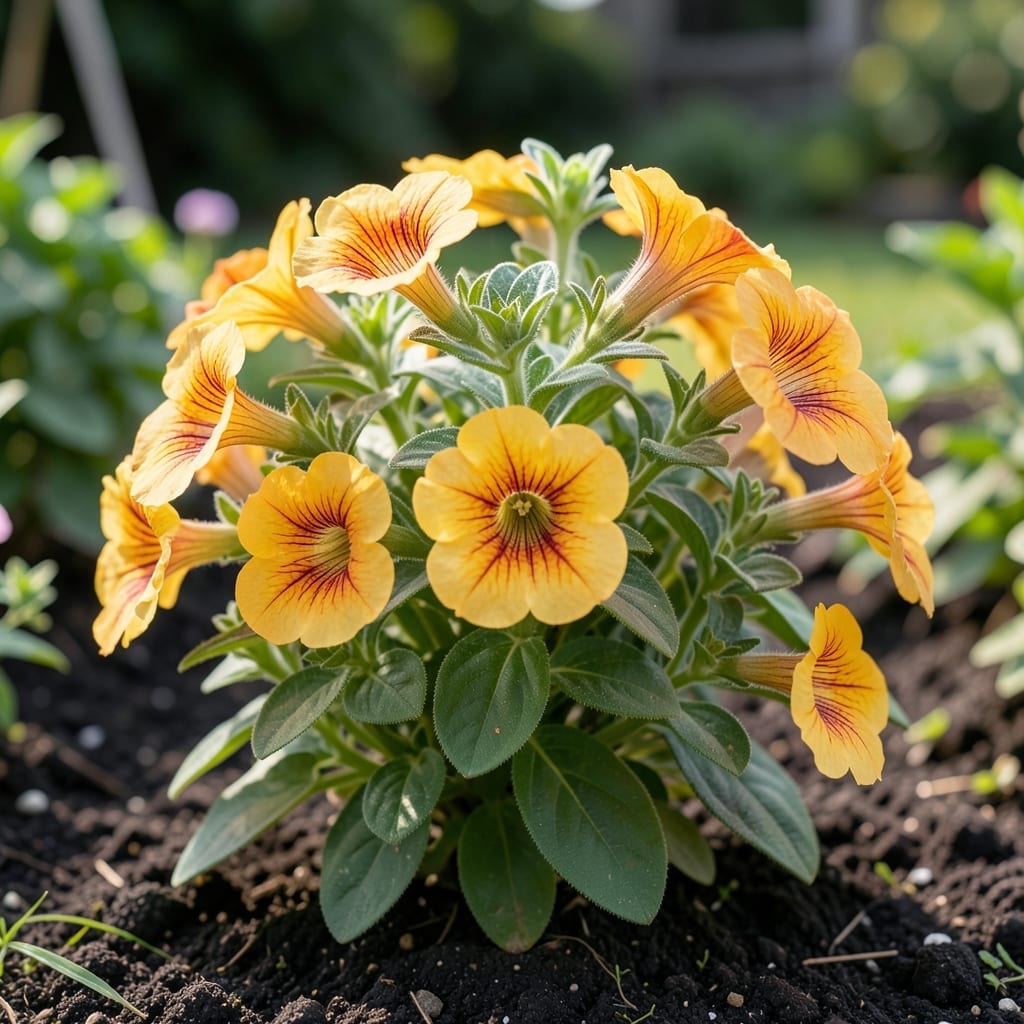
This petunia variety stopped me in my tracks last summer. The saffron-yellow blooms with deep purple centers create a color combo that hummingbirds can’t resist.
They thrive in full sun with well-draining soil, blooming nonstop from spring until frost. Deadhead spent flowers weekly to keep them producing, and you’ll have vibrant color for months with minimal effort.
📚 In This Guide
Here’s the method I trust for achieving bold, long-lasting blooms every season.
Choose a site with full sun exposure—at least 6-8 hours of direct sunlight daily. Saffron Finch Petunias thrive in bright conditions and will produce more vibrant blooms with sufficient light. Avoid areas with strong afternoon shade, as this can lead to leggy growth and fewer flowers.
Ensure the soil is well-draining with a slightly acidic to neutral pH (6.0-7.0). If your garden soil is heavy clay, amending with compost or planting in raised beds will improve drainage and prevent root rot. I always test my soil before planting to confirm it meets these conditions.
Loosen the soil to a depth of 12-15 inches to encourage deep root development. Work in a 2-3 inch layer of organic matter, such as compost or well-rotted manure, to improve fertility and structure. This step ensures the roots can access nutrients and water efficiently.
Remove any weeds or debris that could compete with your petunias for resources. I’ve found that a clean planting area reduces stress on the plants and minimizes the risk of pests or diseases taking hold early on.
Space the plants 12-18 inches apart to allow for proper air circulation and growth. This spacing prevents overcrowding, which can lead to fungal issues and stunted blooms. Dig a hole slightly larger than the root ball, place the plant, and backfill with soil, pressing lightly to remove air pockets.
Water thoroughly after planting to help settle the soil and encourage root establishment. I always give my petunias a deep drink at this stage to ensure they start off strong. Avoid overhead watering to keep foliage dry and reduce the risk of disease.
Keep the soil consistently moist but not waterlogged. Water at the base of the plant when the top inch of soil feels dry to the touch. Overwatering can lead to root rot, while underwatering will stress the plant and reduce flowering.
Fertilize every 2-3 weeks with a balanced, water-soluble fertilizer to promote continuous blooming. I use a 10-10-10 or 20-20-20 formula for my petunias, as it provides the nutrients they need for vibrant, long-lasting flowers. Deadhead spent blooms regularly to encourage new growth and extend the flowering season.
These insights will help you avoid common pitfalls and get the most from your blooms.
Sunlight Essentials: The 6-8 hours of direct sunlight daily in Step 1 isn’t just a suggestion—it’s critical for vibrant blooms. I learned this the hard way when my first batch ended up leggy and pale in partial shade. If your garden doesn’t get this much sun, consider container planting so you can move pots to follow the light. Between us, morning sun with some afternoon shade works better than harsh all-day exposure in extreme climates.
Soil Preparation Secret: When loosening soil to 12-15 inches in Step 2, don’t just dig—test the drainage by filling the hole with water. If it doesn’t drain within an hour, add more compost. The 2-3 inch layer of organic matter should be worked in thoroughly, not just spread on top. Real talk: this step often gets rushed, but it’s what separates thriving plants from struggling ones.
Planting Precision: That 12-18 inches apart spacing in Step 3 might seem generous, but it prevents problems later. Overcrowded plants compete for nutrients and airflow, leading to disease. Dig holes twice as wide as the root ball to encourage outward root growth. Watering thoroughly after planting isn’t optional—it removes air pockets that could stress roots.
Maintenance Rhythm: The 2-3 weeks fertilization schedule in Step 4 works best when paired with consistent moisture checks. Use your finger to test that top inch of soil—if it’s dry, water deeply. Confession: I skipped deadheading once and my plants looked sad within days. Those spent blooms are energy drainers that prevent new growth.
Yes! These vibrant petunias thrive in full sun (6+ hours daily). Ensure well-draining soil and water regularly to prevent wilting in extreme heat.
Plant after the last frost in spring when soil temperatures reach 60°F. They love warmth, so avoid cold snaps for healthy growth.
Try ‘Wave’ petunias or marigolds for similar color and low-maintenance care. Both attract pollinators and bloom all season!
Check for overwatering, poor soil fertility, or insufficient sunlight. Deadhead spent blooms and fertilize weekly to encourage new flowers.
Aphids and spider mites love petunias. Spray with neem oil or insecticidal soap weekly, and keep the area weed-free to deter pests.