
Beautiful Plants For Your Interior
Beautiful Plants For Your Interior
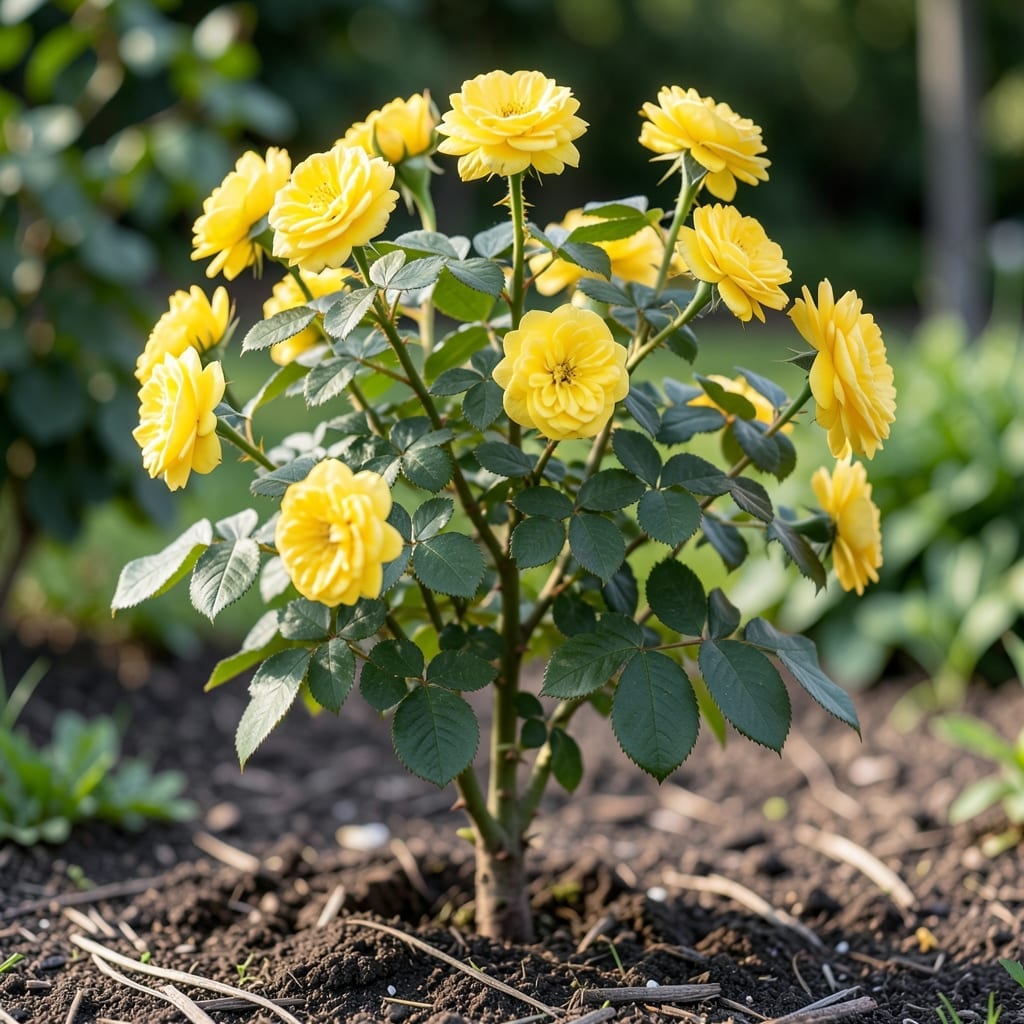
This shrub changed my garden forever. Rugosa roses laugh at salt spray, drought, and poor soil—yet they reward you with bright yellow blooms from late spring until frost.
Plant in full sun with well-draining soil, water deeply once a week, and you’ll get fragrant flowers, rose hips for wildlife, and virtually no disease issues. Minimal pruning keeps them tidy.
📚 In This Guide
Here’s the method I trust for establishing these resilient shrubs and ensuring vibrant blooms all season long.
Choose a location with full sun exposure for at least 6-8 hours daily. Rugosa roses tolerate partial shade but produce fewer flowers and less vigorous growth. The soil should drain well—avoid low spots where water pools after rain.
Test drainage by digging a 1-foot deep hole, filling it with water, and checking if it empties within 1-2 hours. If water lingers, amend the soil with compost or select a different site. These shrubs thrive in slightly acidic to neutral soil with a pH between 6.0-7.0.
Dig a hole twice as wide as the root ball and just as deep. This gives roots room to spread without sinking the plant too deeply. Loosen the soil at the sides of the hole to help roots penetrate the surrounding earth more easily.
Remove the plant from its container and gently tease apart any circling roots. If the roots are tightly bound, make three vertical cuts through the root ball with a sharp knife to encourage outward growth. This prevents girdling, which can strangle the plant as it matures.
Place the plant in the hole so the bud union (where the roots meet the stem) sits 1-2 inches above the soil level. This protects against rot and ensures stability. Backfill with native soil, tampering lightly as you go to eliminate air pockets.
Create a water basin around the base by mounding soil in a 3-inch high ring about 12 inches out from the stem. This helps direct water to the roots. Water deeply immediately after planting, using 5-10 gallons to settle the soil and hydrate the roots. You’ll see the soil level drop slightly as air pockets collapse—top off with more soil if needed.
Apply a 2-3 inch layer of organic mulch such as wood chips or shredded bark, keeping it 3 inches away from the stem to prevent rot. Mulch conserves moisture, suppresses weeds, and insulates roots against temperature swings.
Water deeply 2-3 times weekly for the first month, then taper to once weekly unless rainfall is less than 1 inch per week. Check soil moisture by inserting your finger 2 inches deep—if it feels dry, it’s time to water. Rugosa roses are drought-tolerant once established, but consistent moisture encourages strong root development early on.
After the first bloom cycle, prune to shape the shrub and remove any dead or diseased wood. Use clean, sharp bypass pruners to make cuts at a 45-degree angle just above an outward-facing bud. This directs growth away from the center, improving airflow and reducing disease risk.
Remove about one-third of the oldest canes at the base each year to rejuvenate the plant. This encourages vigorous new growth from the base, which produces the most flowers. Always disinfect pruners between cuts with rubbing alcohol to prevent spreading pathogens.
A few thoughtful adjustments will ensure your shrubs thrive with minimal effort.
Sunlight Essentials: The 6-8 hours of daily full sun exposure mentioned in Step 1 is non-negotiable for optimal flowering. While rugosa roses tolerate partial shade, you’ll sacrifice bloom abundance and vigor. I’ve seen the difference firsthand—full sun locations produce twice as many flowers with richer color. Trust me on this.
Drainage Test Refinement: When testing drainage in Step 1 as directed, use the 1-foot deep hole method precisely. If water doesn’t empty within 1-2 hours, don’t just amend with compost—consider raising the planting area slightly. These shrubs despise wet feet, and poor drainage is the number one cause of failure I see in gardens.
Planting Depth Precision: The 1-2 inches above soil level for the bud union in Step 3 might seem fussy, but it’s critical. I learned this the hard way after losing several plants to rot. Even in well-draining soil, that slight elevation prevents water from pooling around the vulnerable crown where stem meets roots.
Pruning Technique: For Step 5, that 45-degree angle cut just above an outward-facing bud isn’t just aesthetic—it’s functional. This specific angle sheds water away from the bud, while the outward direction prevents inward growth that would crowd the center. Between us, this single technique has kept my roses healthier than anything else.
Yellow rugosa roses thrive in full sun and well-drained soil. Water deeply once a week, and prune in late winter to remove dead wood. They’re low-maintenance and disease-resistant, making them perfect for beginners!
These hardy shrubs typically bloom from late spring to early fall, with peaks in summer. Their bright yellow flowers often repeat bloom, offering season-long color and a sweet fragrance.
Absolutely! Rugosa roses, including yellow varieties, are salt-tolerant and thrive in coastal conditions. Their tough nature makes them ideal for windy, salty environments where other plants might struggle.
Yellowing leaves can signal overwatering, poor drainage, or nutrient deficiencies. Check soil moisture and fertility, and ensure good airflow around the plant to prevent fungal issues.