
Beautiful Plants For Your Interior
Beautiful Plants For Your Interior
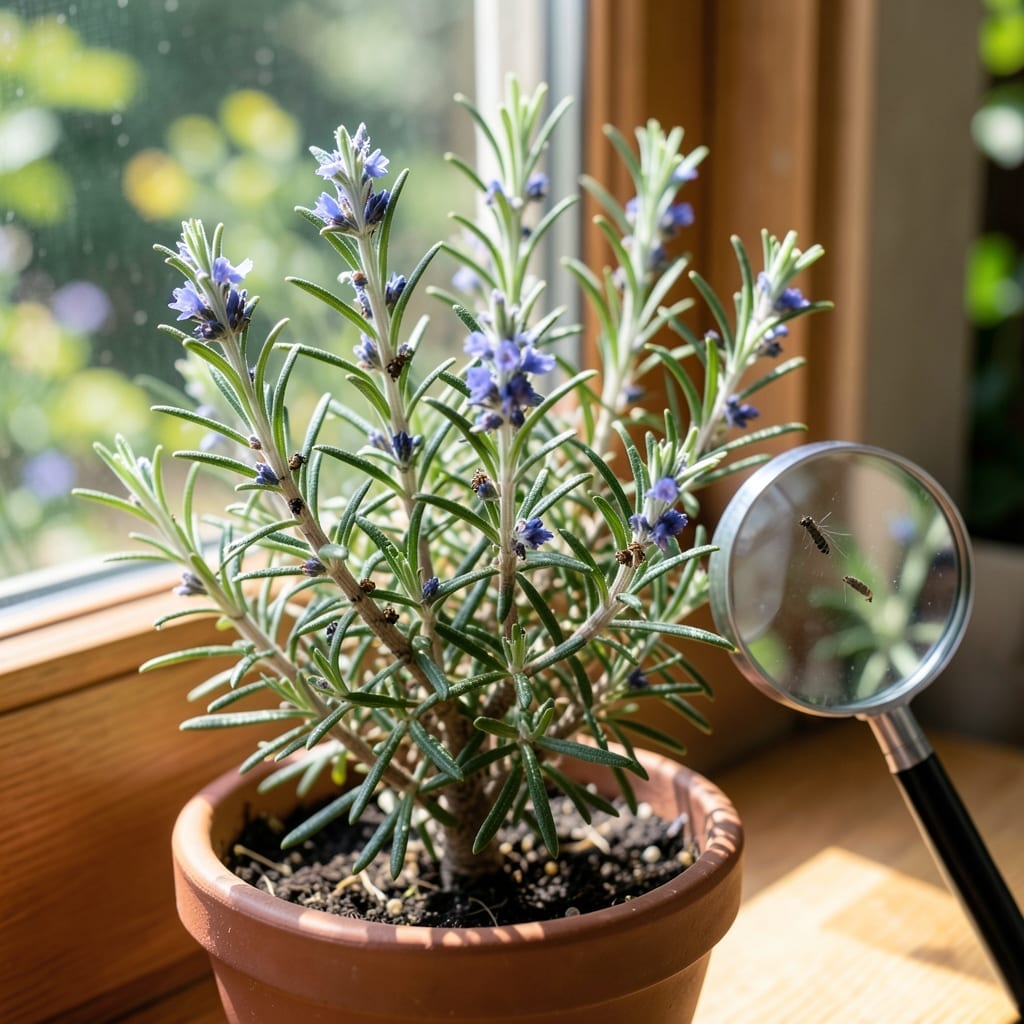
Rosemary usually laughs off pests, but even this tough herb has its kryptonite. I’ve lost count of how many plants I’ve saved by catching infestations early enough to turn things around.
Spider mites, aphids, and mealybugs love stressed plants in dry conditions. The good news? These pests are easy to spot once you know what to look for, and organic solutions work surprisingly well.
You’ll learn to identify each invader by their telltale signs—webbing, sticky residue, or white cottony clusters. Early action means your rosemary recovers within weeks with minimal damage.
Prevention is simpler than cure: proper watering, airflow, and occasional hosing keeps most problems away. Here’s how to keep your rosemary thriving.
Pests don’t just appear on your rosemary by accident—specific conditions invite them. Understanding these triggers helps you prevent infestations before they start.
Rosemary thrives in warm, dry climates with excellent drainage. Overwatering or poor soil drainage creates soggy roots, weakening the plant and attracting root rot pathogens and moisture-loving pests like fungus gnats. Conversely, drought stress from underwatering can leave the plant vulnerable to spider mites, which flourish in hot, arid environments.
Dense foliage or crowded planting spaces reduce airflow, trapping humidity around the leaves. This stagnant environment is a breeding ground for aphids, whiteflies, and powdery mildew—which, while not an insect, often accompanies pest infestations. Pruning regularly and spacing plants properly disrupts this cozy habitat for pests.
A weakened rosemary plant—whether from nutrient deficiencies (e.g., low nitrogen) or physical damage (e.g., pruning wounds)—emits stress signals that attract pests. Scale insects and mealybugs, for instance, target plants with compromised defenses. Ensure your rosemary receives balanced fertilization and prompt care after pruning to maintain its natural resistance.
Pests often hitchhike on new plants, garden tools, or even your clothing. Introducing an infested plant near your rosemary can quickly spread thrips or leafhoppers. Always quarantine new additions and sterilize tools with rubbing alcohol to minimize cross-contamination.
Keep your rosemary thriving by tackling pests head-on with these targeted fixes. Addressing each issue promptly ensures a healthy, aromatic plant. 🌿
Spray aphids off with a strong stream of water to dislodge them. For stubborn infestations, use insecticidal soap or neem oil, applying every 5–7 days until they’re gone. Prevention tip: 💡 Introduce beneficial insects like ladybugs or lacewings to keep aphid populations in check naturally.
Spider mites thrive in dry conditions. Combat them by misting your rosemary regularly or placing a humidity tray nearby. For immediate action, wipe leaves with a damp cloth or use neem oil spray. Prevention tip: 🌡️ Keep your plant in a well-ventilated area to discourage mite outbreaks.
Dab mealybugs with a cotton swab soaked in rubbing alcohol to kill them on contact. For larger infestations, treat with insecticidal soap or systemic granules. Prevention tip: ✨ Inspect new plants before bringing them near your rosemary to avoid contamination.
Create a physical barrier with copper tape or crushed eggshells around the pot. Alternatively, set out beer traps or use iron phosphate baits for a pet-safe solution. Prevention tip: 🎯 Keep the area around your rosemary free of debris where slugs and snails might hide.
Hang yellow sticky traps near the plant to catch adult whiteflies. For larvae, spray with insecticidal soap or introduce parasitic wasps as a biological control. Prevention tip: 🔥 Avoid over-fertilizing, as whiteflies are attracted to lush, soft growth.
Look for yellowing leaves, webbing, or sticky residue on the plant. Tiny dots on undersides of leaves often indicate spider mites or aphids.
Check weekly during warm months and every 2-3 weeks in cooler weather. Catching pests early prevents major infestations.
Use organic options like neem oil or insecticidal soap first. If needed, choose pesticides labeled for culinary herbs and follow directions carefully.
Yes, many pests move easily between plants. Isolate infested rosemary immediately and treat surrounding plants preventatively.