
Beautiful Plants For Your Interior
Beautiful Plants For Your Interior
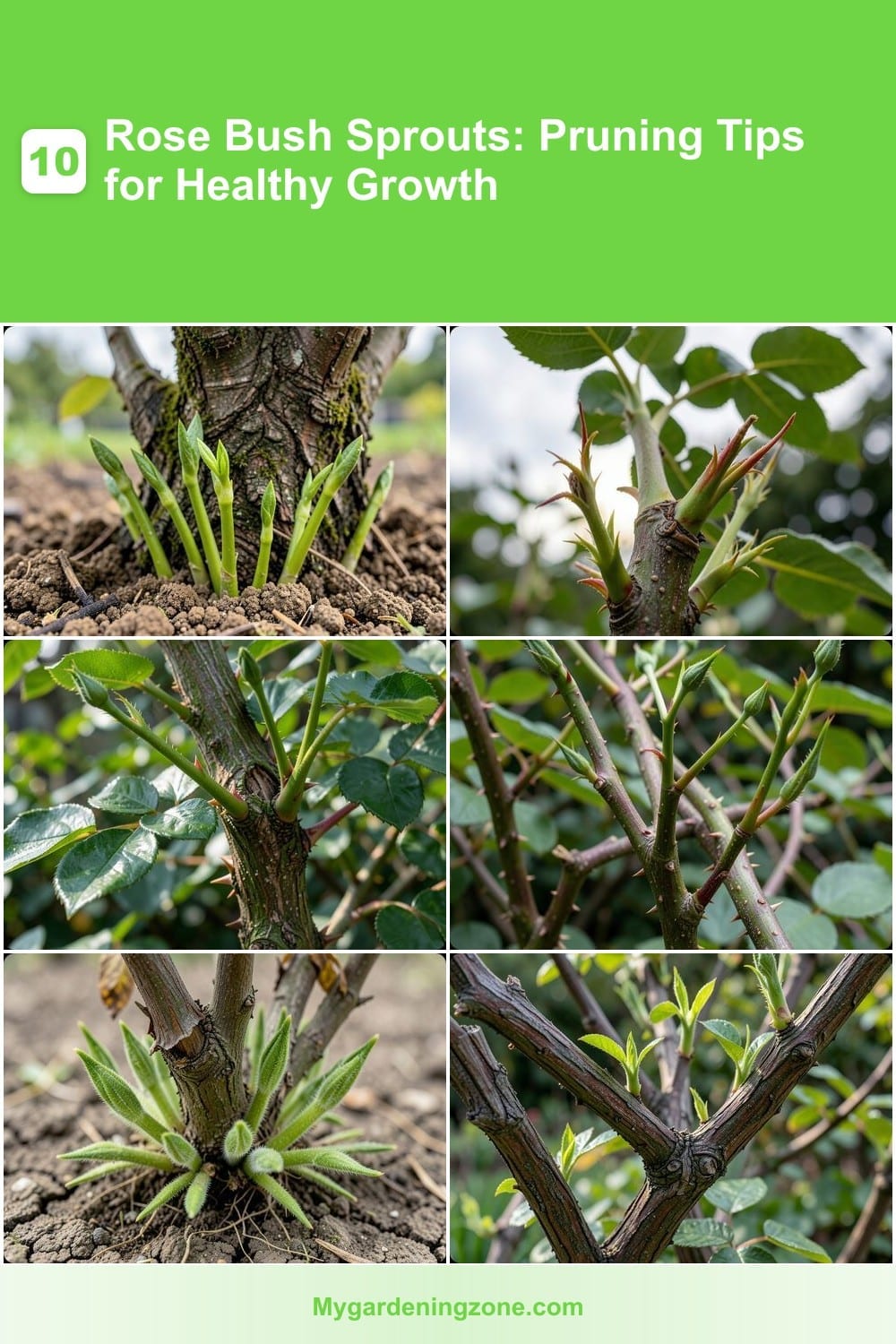
Noticing new sprouts on your rose bushes? Properly identifying and pruning these early growths is key to vibrant blooms and healthy plants. This guide covers 10 types of rose bush sprouts and how to manage each for optimal garden success.
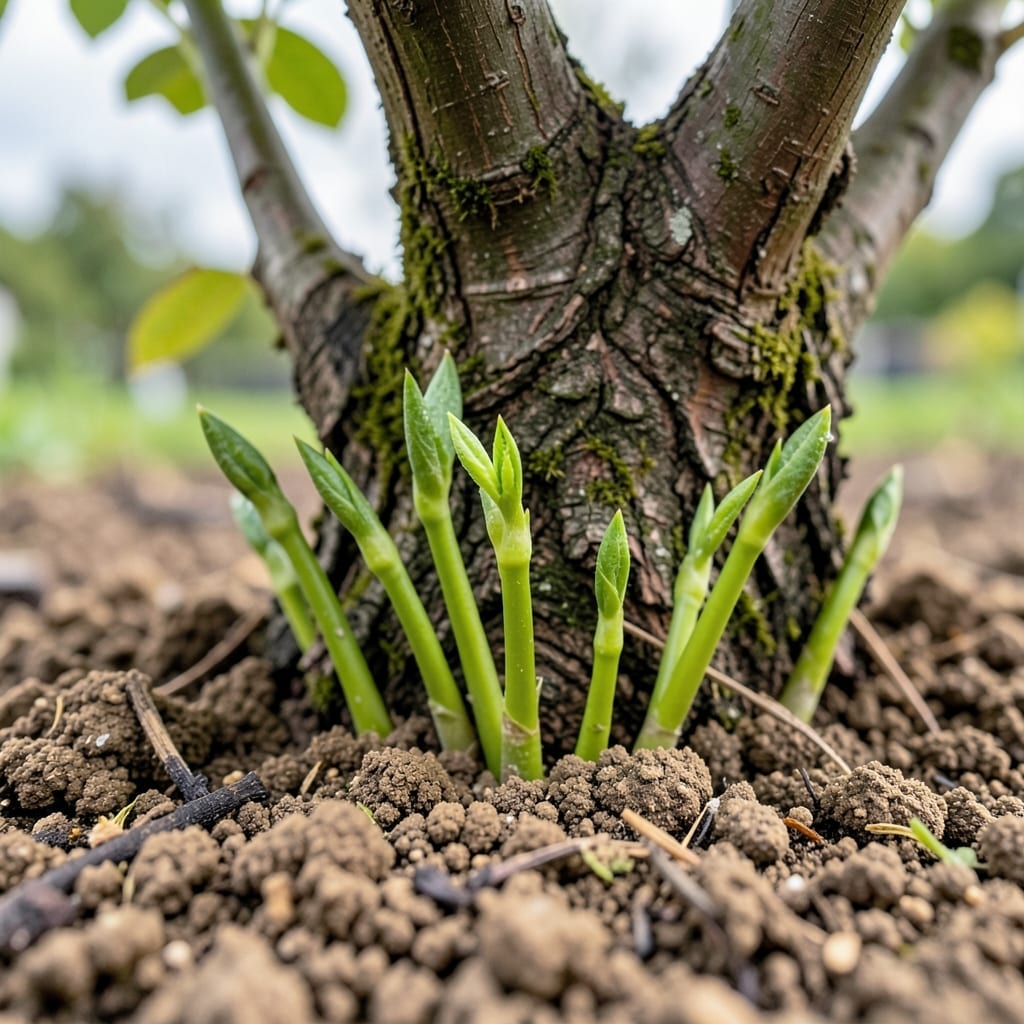
Spot the fresh green shoots emerging from your rose’s crown? These basal sprouts are the superstars of new growth, promising vigorous canes and abundant blooms if you treat them right.
Unlike other sprouts, these appear at the base and signal the plant’s strongest growth potential. Leave 3-5 of the healthiest shoots to develop into main canes, but remove any weak or overcrowded ones. This ensures energy goes to bloom production rather than excess foliage.
Perfect for gardeners who want maximum flowers with minimal fuss—these shoots reward careful selection with the most spectacular displays. 🌷
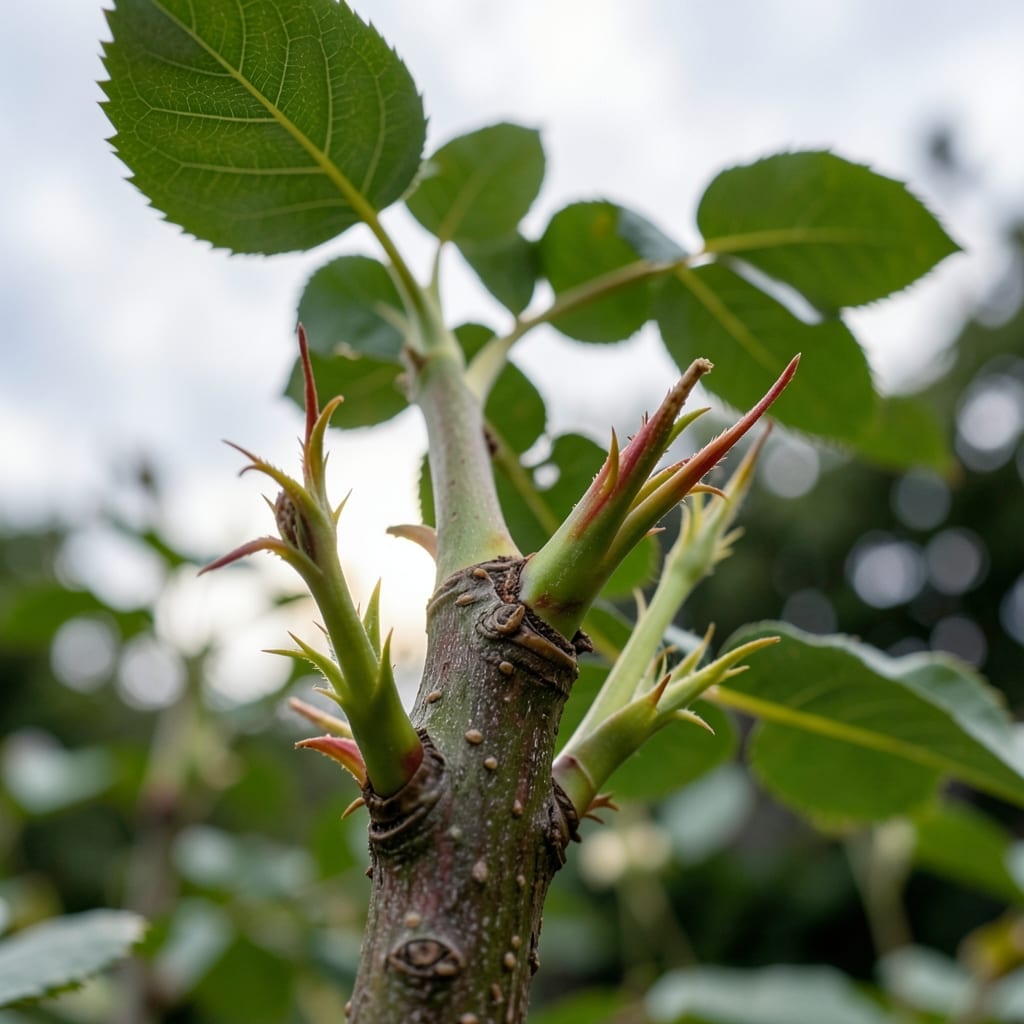
Notice fast-growing shoots below the graft union on your grafted rose? These are watermark sprouts—aggressive suckers from the rootstock that can quickly take over.
They often have different leaf shapes or colors than your cultivated variety. Remove them immediately at the base to prevent them from diverting energy and nutrients from your desired rose. Use clean, sharp pruners to make a precise cut.
This is especially important for hybrid roses, where these suckers can revert the plant to its less desirable rootstock variety. Regular checks ensure your rose stays true to its intended form. 🌿
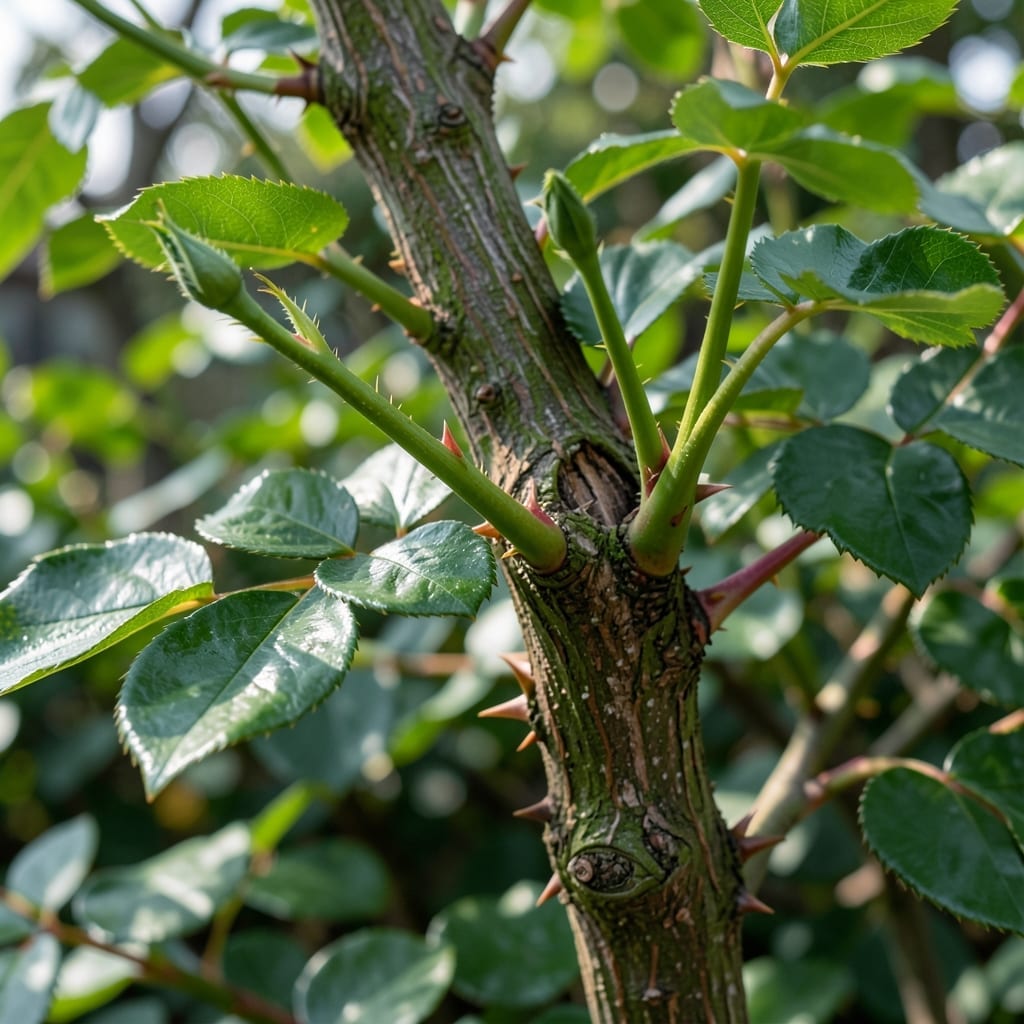
Seeing long, leafy shoots on your rose bush with no flower buds in sight? These blind sprouts may look healthy, but they’re stealing valuable energy from your plant without producing any blooms.
Always prune these non-flowering canes back to a bud union or main stem. This redirects the plant’s resources to the shoots that will actually produce roses, giving you a more vibrant display. Use sharp pruners to make a clean cut just above a leaf node.
Ideal for gardeners who want to maximize their rose blooms and keep their bushes productive rather than wasteful. 🌿
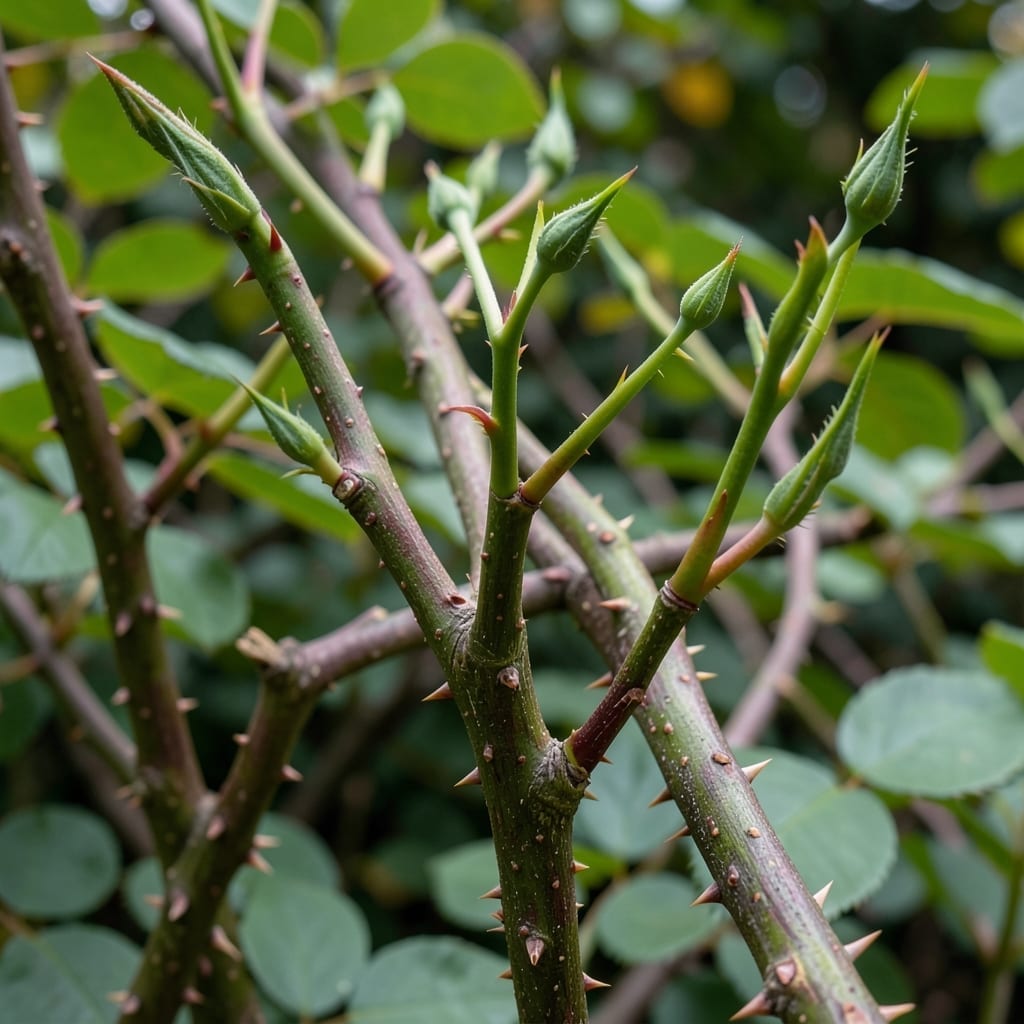
Those small shoots branching off your rose’s main canes aren’t just random growth—they’re your ticket to a fuller, more floriferous plant. Lateral sprouts form at leaf nodes and can develop into additional flowering stems when managed properly.
To encourage branching, prune just above a leaf node with 5-7 leaflets. This signals the plant to produce more side shoots, each capable of bearing blooms. Leave 2-3 well-spaced laterals per main cane to avoid overcrowding while maximizing flower production.
Perfect for rose lovers who want to turn a sparse bush into a bloom-covered showstopper with strategic pruning. 🌷
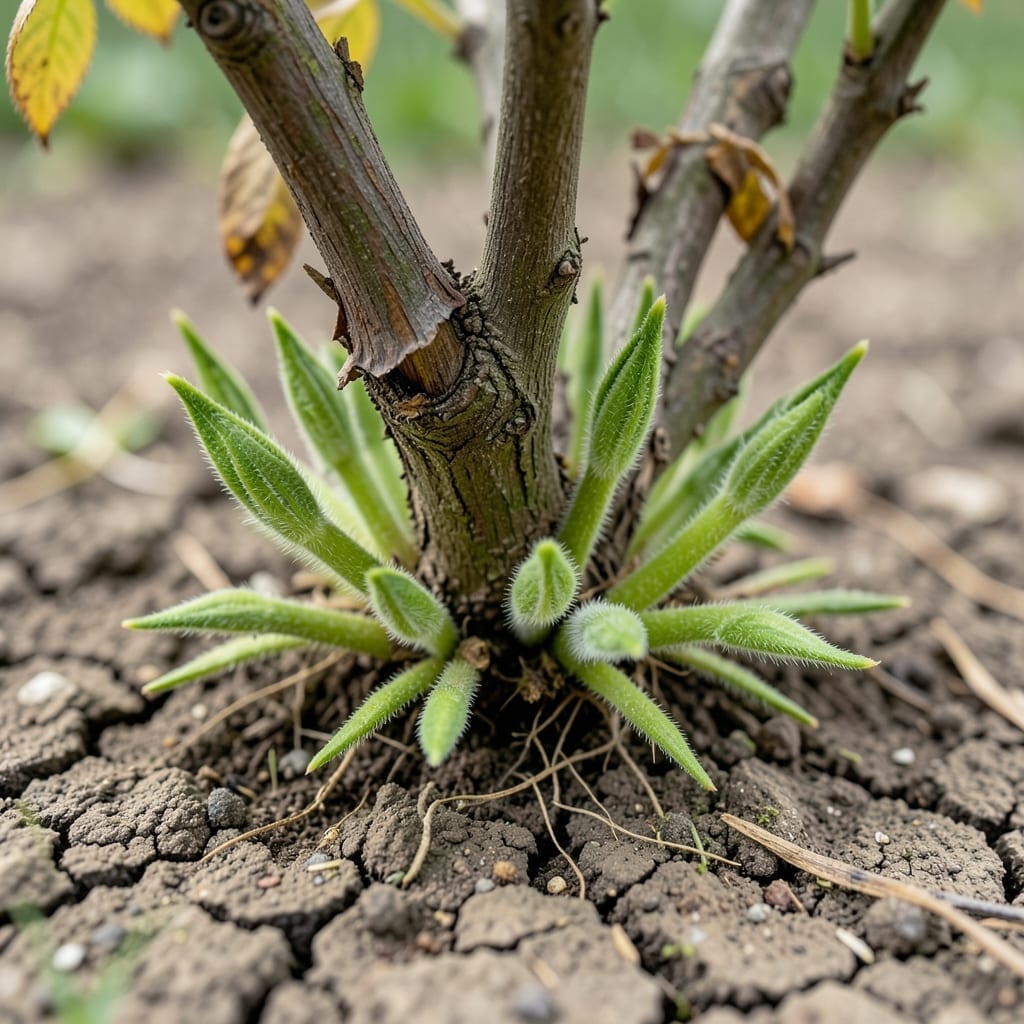
Seeing clusters of new shoots popping up from the soil around your rose bush? These root sprouts often signal your plant is under stress, whether from drought, disease, or poor soil conditions.
While they may look vigorous, allowing too many to grow can weaken the main plant and create an unruly appearance. Carefully remove excess sprouts at soil level, leaving only the strongest 2-3 shoots to prevent energy drain. This maintains both plant health and garden aesthetics.
Ideal for gardeners who want to balance growth with control, ensuring their roses stay strong and beautiful. 🌿
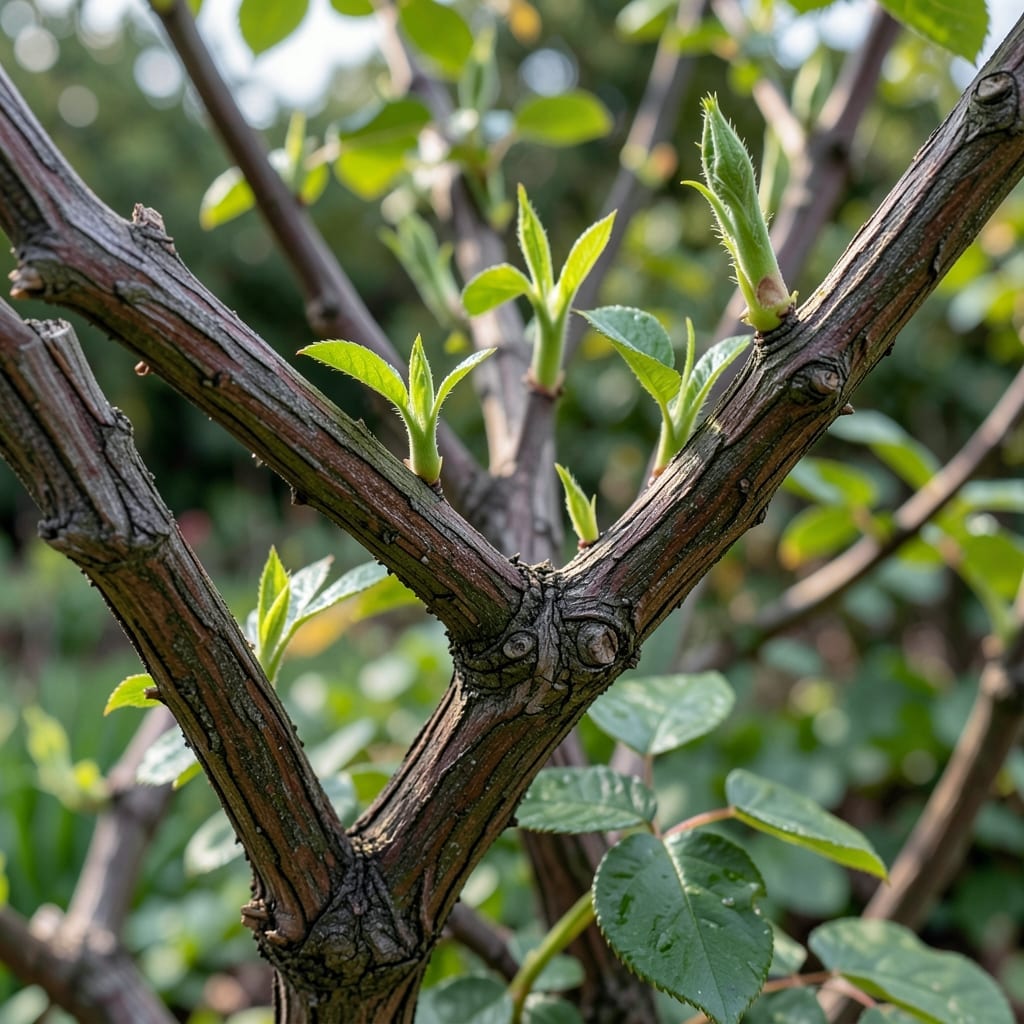
Don’t overlook those fresh green shoots appearing on your rose’s older, woody canes. These sprouts from old wood may not produce the largest blooms, but they can fill gaps in your display and add subtle charm to your garden.
While they might be less vigorous than basal shoots, they still contribute to your rose bush’s overall beauty. Keep a few well-placed sprouts to maintain a natural, fuller appearance without overcrowding the plant. Just ensure they’re spaced out to allow light and air circulation.
This approach is perfect for gardeners who want a balanced, lush look without sacrificing plant health. 🌷
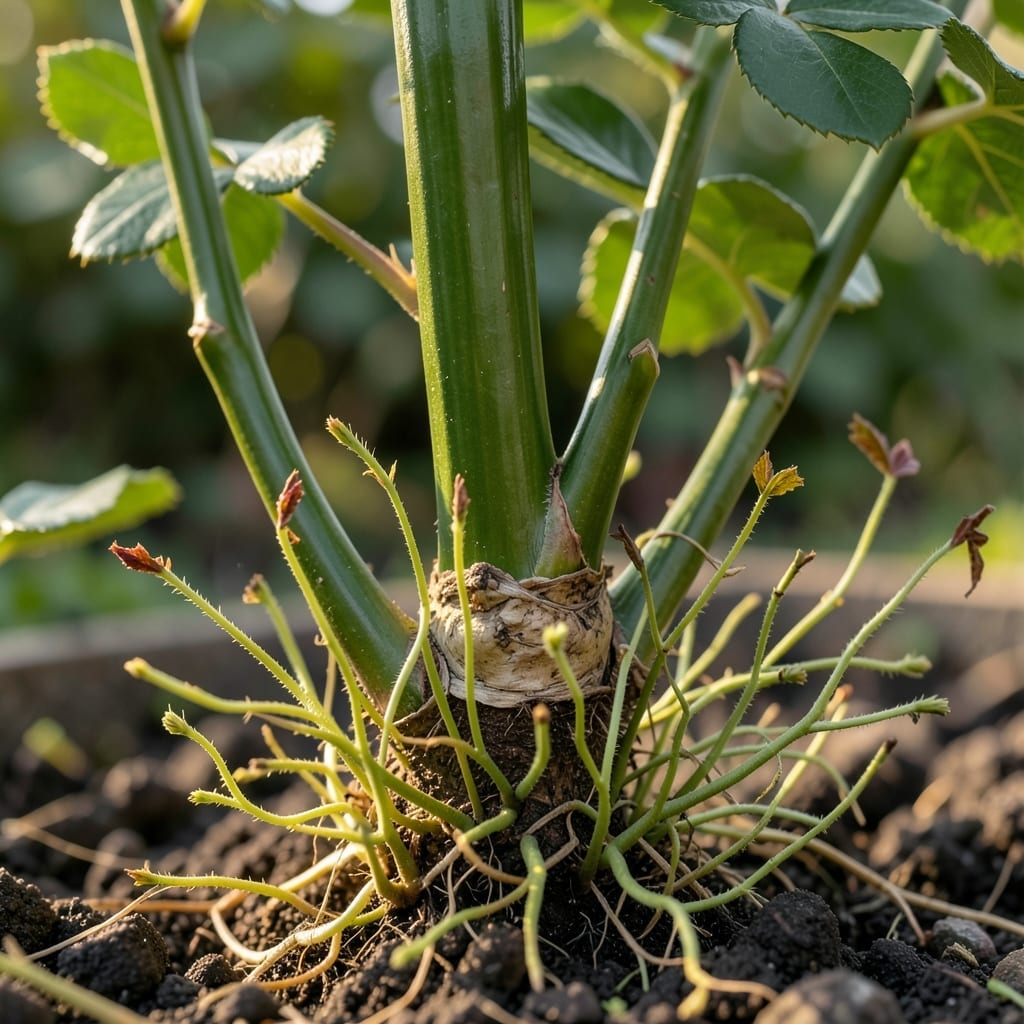
Spotting thin, fast-growing shoots at the base of your grafted rose? These sucker sprouts often have different leaf shapes or colors than your main plant, and they’re not the growth you want.
Unlike desirable basal shoots, these emerge from the rootstock below the graft. They’ll divert energy from your cultivated variety and can even revert the plant to its less desirable rootstock if left unchecked. Remove them at soil level immediately to protect your rose’s true characteristics.
This is critical for hybrid roses, where maintaining the intended variety ensures the best blooms and plant performance. 🌷
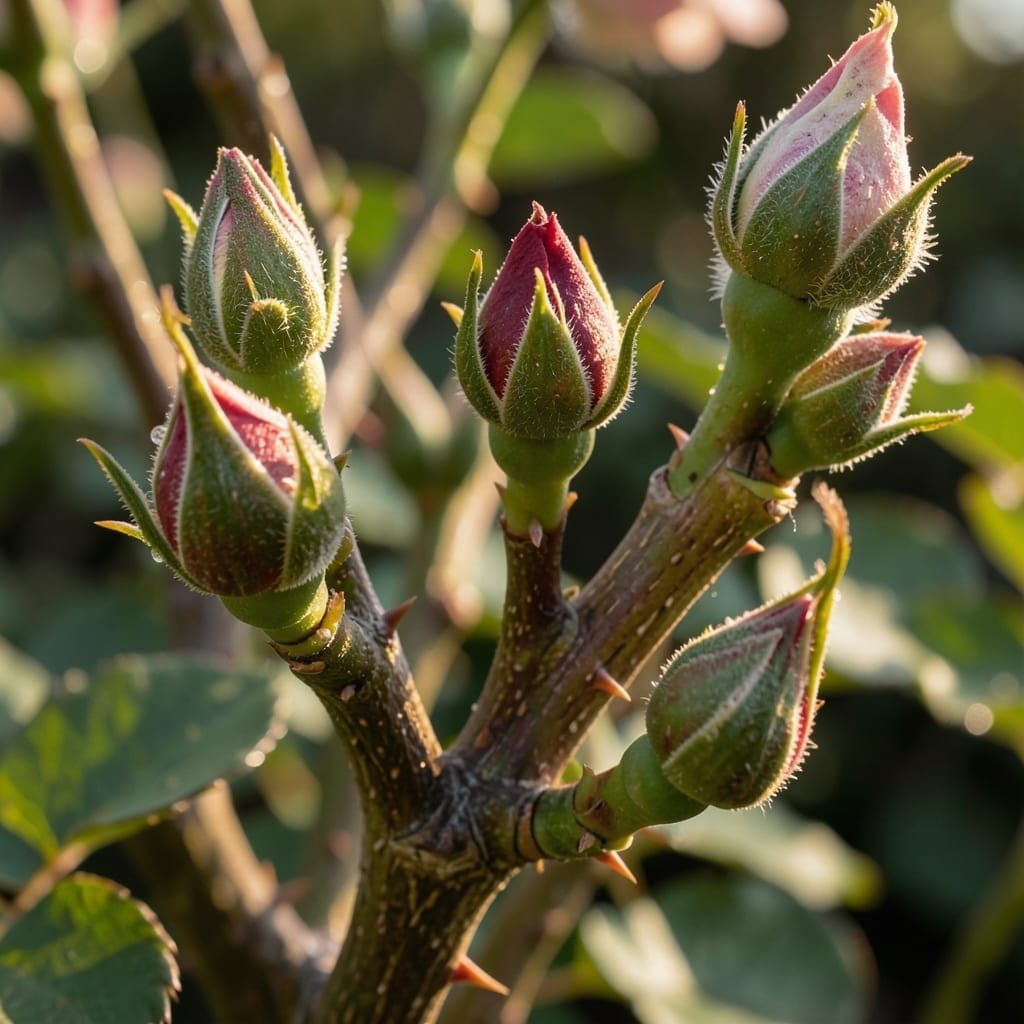
Spotting those swollen-tip sprouts on your rose canes? These flowering sprouts with buds are your future blooms in the making, and they deserve special attention to reach their full potential.
Protect them from late frosts with fleece covers and ensure they get consistent moisture—dry spells now mean fewer flowers later. Support tall sprouts with stakes to prevent wind damage that could abort the buds.
By nurturing these prized growths, you’ll enjoy a longer, more abundant flowering season that turns your garden into a fragrant haven. 🌷
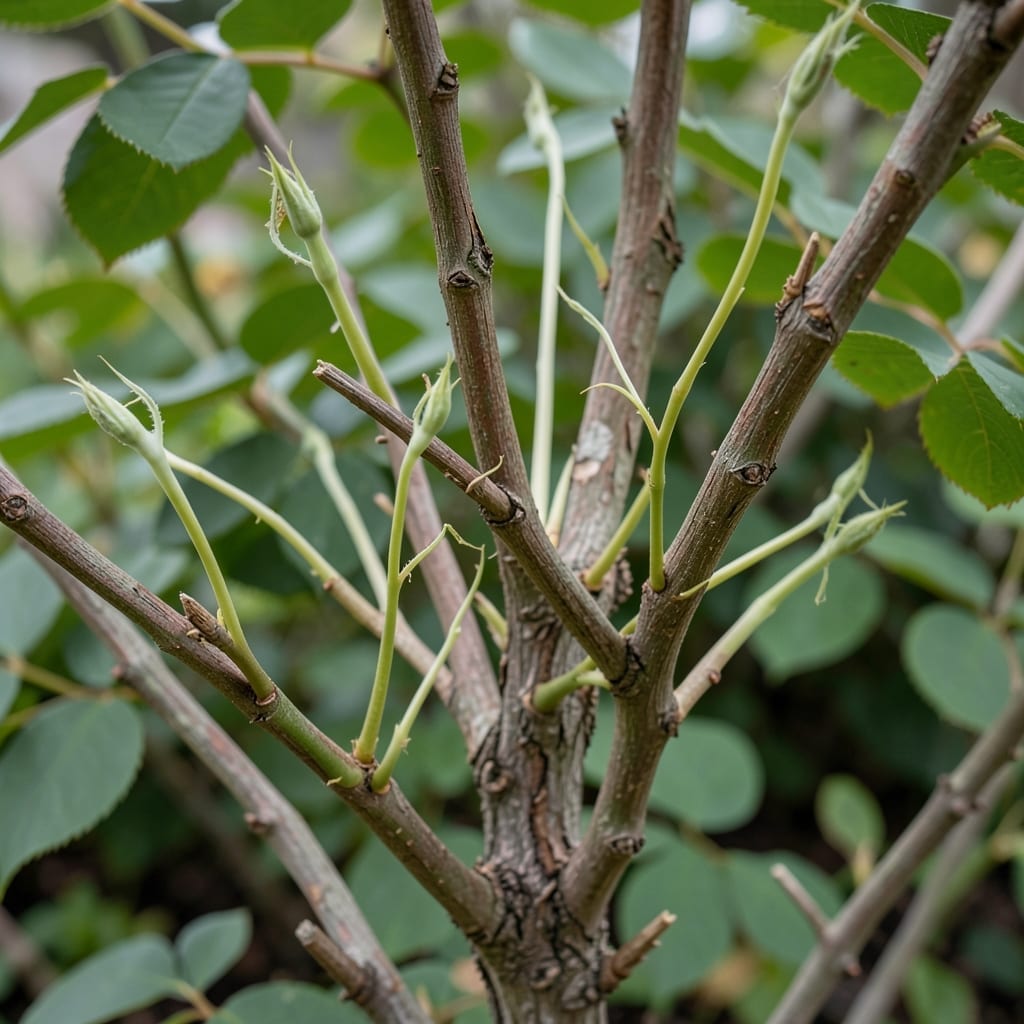
Those thin, pale green shoots on your rose bush aren’t helping your plant—they’re draining its energy. Weak, spindly sprouts often result from poor light conditions or overcrowding, and they’ll never produce strong blooms.
Prune these immediately at their base using clean, sharp shears. This redirects the plant’s resources to healthier canes that will reward you with vibrant flowers. Always cut just above a leaf node to encourage stronger regrowth in the right places.
This simple step keeps your rose bush focused on what matters most: producing those gorgeous blooms you love. 🌷
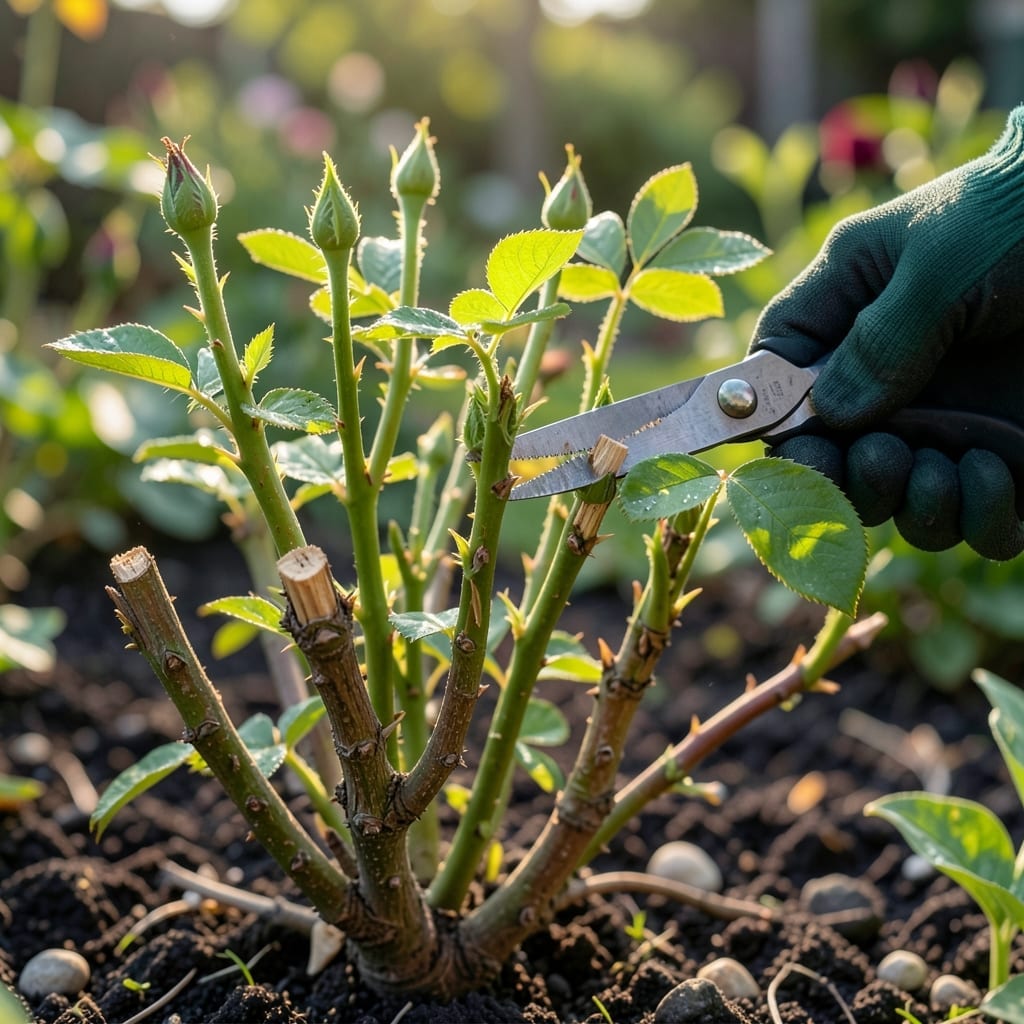
After heavy pruning, your rose bush may explode with vigorous new sprouts—this is normal and a sign of healthy recovery. However, too many shoots can create a tangled mess that blocks sunlight and traps moisture.
Thin out the excess growth, keeping only the strongest, most well-placed sprouts to ensure good air circulation. Space remaining shoots evenly to prevent overcrowding and encourage robust, bloom-producing canes.
This step is crucial for gardeners who’ve pruned aggressively and want to guide their rose’s energy toward a balanced, thriving structure. 🌷