
Beautiful Plants For Your Interior
Beautiful Plants For Your Interior
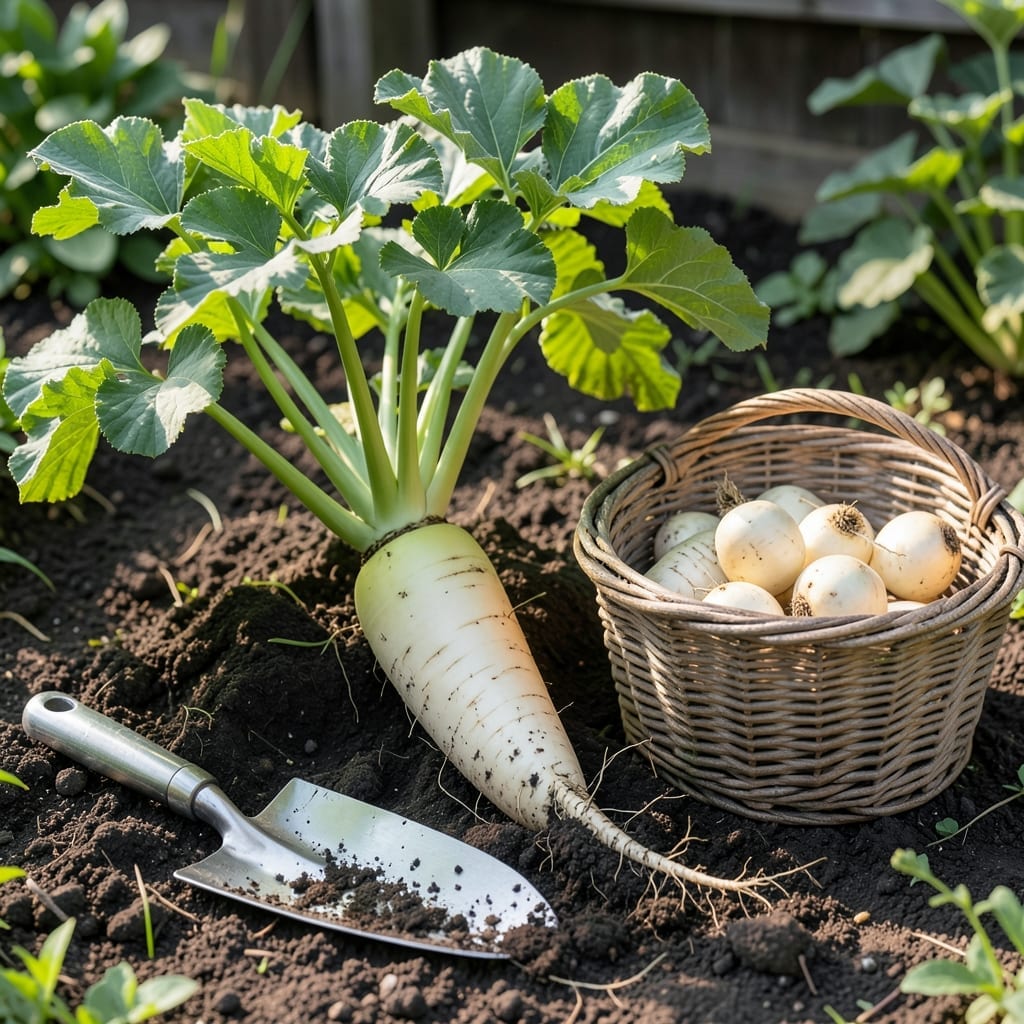
Daikon changed my fall garden game completely. These crisp white roots grow fast with minimal effort, and the flavor beats anything from the store.
Plant them in loose soil with 6-8 hours of sun, and you’ll pull up perfect specimens in 60 days. Even my first attempt produced straight, sweet roots that kept well for months.
📚 In This Guide
Here’s my proven approach for achieving straight, crisp roots with minimal effort every time.
Daikon needs 12-18 inches of loose, well-draining soil to grow properly—rocky or compacted ground leads to forked, stunted roots. I till the area deeply and work in 2-3 inches of aged compost to improve fertility and structure. The soil should feel crumbly and light when squeezed in your hand.
Check drainage by digging a 1-foot hole and filling it with water. If it drains completely within 1 hour, you’re good. If not, amend with coarse sand or additional compost. This prevents waterlogging, which causes roots to rot before maturing.
Plant seeds ½ inch deep and 2 inches apart in rows spaced 12 inches apart. I use a ruler the first few times—eyeballing it often leads to overcrowding. Cover lightly with soil and firm gently to ensure good seed-to-soil contact.
In 5-10 days, you’ll see sprouts emerging. Thin seedlings to 4-6 inches apart once they develop 2 true leaves. Pulling extras early prevents competition, and the ones you remove make a great microgreen harvest.
Keep soil evenly moist but not soggy—daikon roots split or become woody if they experience drought followed by heavy watering. I water deeply 2-3 times weekly, adjusting for rainfall. The soil should feel like a wrung-out sponge: damp but not dripping.
Provide full sun (at least 6-8 hours daily) for the fastest, straightest growth. If your space only gets partial sun, expect slightly smaller roots. Watch for yellowing leaves, which often signal the plant needs more light or nitrogen.
Daikon grows quickly, reaching harvest size in 40-70 days depending on variety. I check progress by gently brushing soil away from the top of the root to gauge size. Once the shoulders (top of the root above soil) reach 1-1.5 inches in diameter, they’re ready.
Flea beetles love daikon leaves, so I cover young plants with floating row fabric until they’re established. If you see tiny holes in leaves, act fast—these pests can defoliate plants overnight. A light dusting of diatomaceous earth around the base deters them effectively.
Pull roots when they’re 1-2 inches in diameter for the best texture. Larger roots can become tough and pithy. I water the bed the day before harvesting to loosen the soil, then grasp the leaves and pull firmly. If the root resists, use a fork to gently lift it from below.
Cut off the greens immediately—they draw moisture from the root and cause it to soften. Store unwashed daikon in the fridge for up to 2 weeks. The greens are edible too; sauté them like spinach for a peppery kick.
These insights will help you avoid pitfalls and grow the straightest, crispiest roots with ease.
The Soil Depth Factor: Daikon needs that 12-18 inches of loose soil mentioned in Step 1—shallower beds lead to forked roots. I learned this the hard way after pulling up a crop that looked like abstract art. Use a garden fork to loosen soil deeply before planting.
Thinning Strategy: When Step 2 says to thin to 4-6 inches apart, don’t hesitate. Overcrowding creates competition, and those pulled seedlings make delicious microgreens. I usually thin in the evening when the soil is cooler and plants experience less transplant shock.
Watering Wisdom: The 2-3 times weekly watering in Step 3 works perfectly if you water deeply. Shallow watering encourages surface roots. I check soil moisture by sticking my finger 2 inches down—if it’s dry, it’s time to water.
Harvest Timing: In Step 5, pulling roots at 1-2 inches diameter ensures peak crispness. I’ve found that waiting until they’re 1.5 inches gives the best balance of size and tenderness. Always water the bed the day before harvesting as instructed—it makes pulling so much easier.
Yes! Daikon is beginner-friendly, thriving in cool weather with minimal fuss. Just ensure loose, well-draining soil and consistent moisture for crisp, fast-growing roots.
Most daikon varieties mature in 50–70 days. Smaller types may be ready in 30–40 days, while larger heirlooms can take up to 100 days. Harvest when roots reach 1–2 inches in diameter.
Absolutely! Choose deep containers (at least 12–18 inches) and dwarf varieties like ‘Miyashige’ or ‘White Icicle’. Ensure good drainage and avoid overcrowding for best results.
Bitterness or woodiness often comes from hot weather, uneven watering, or leaving roots in the ground too long. Harvest young, and keep soil consistently moist for sweet, tender daikon.