
Beautiful Plants For Your Interior
Beautiful Plants For Your Interior
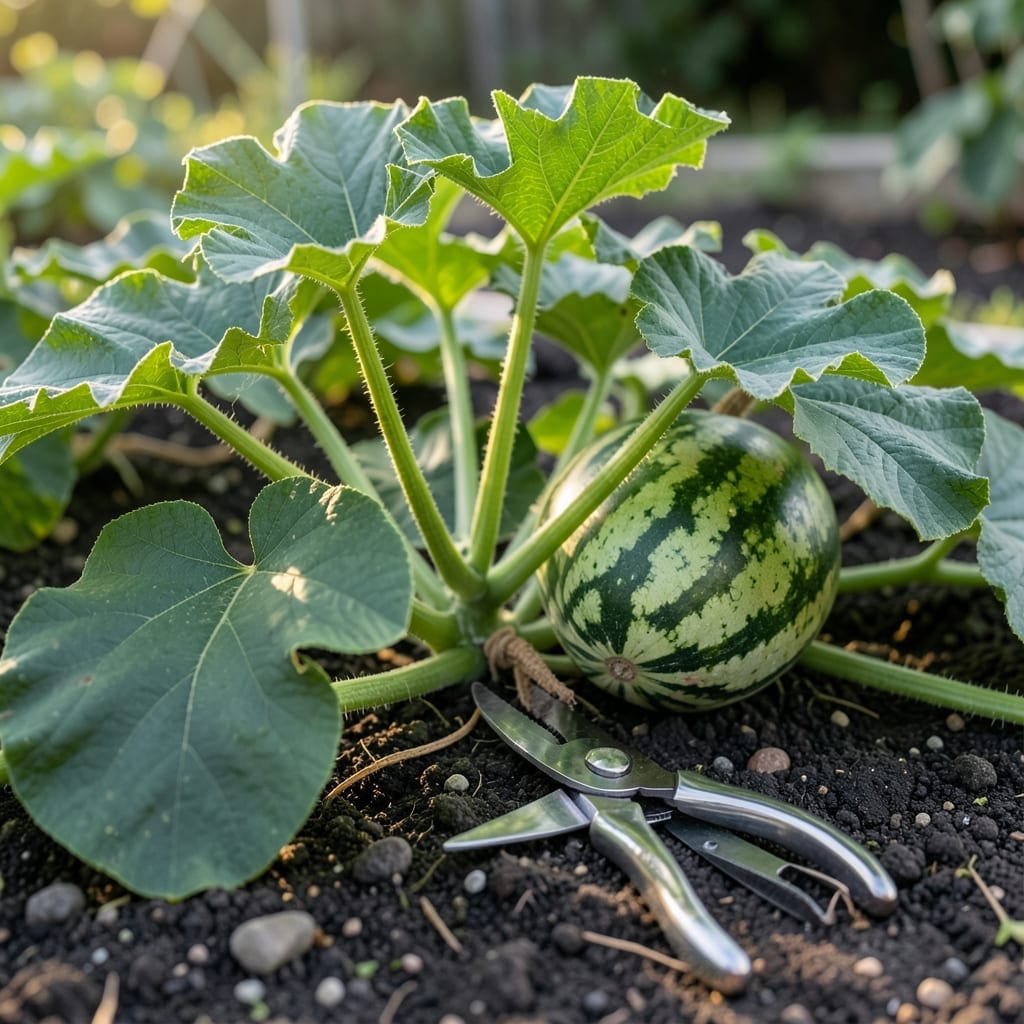
Picking the perfect watermelon can feel like a gamble, but the stem holds the secret to ripeness that even seasoned gardeners overlook.
I remember my first attempt at growing 🍉 Watermelon – I waited too long and ended up with overripe fruit. The stem tells you everything if you know what to look for.
From color changes to texture differences, there are clear signs that your Watermelon is ready. These simple checks take just seconds but make all the difference.
Discover how to read these signals and you’ll never pick an unripe Watermelon again. Your harvest will thank you for learning this.

I’ve found that the stem tells the story of a watermelon’s ripeness better than any other indicator. As the fruit matures, the stem dries out and changes from green to brown, signaling that the sugars inside have developed fully.
Commercial growers often use the stem snap test: if the stem breaks cleanly when bent, the watermelon is ready. This works because the stem’s moisture content decreases as the fruit ripens, making it brittle.
| Stem Sign | Ripeness Indication |
|---|---|
| Green stem | Not ripe – still growing |
| Brown, dry stem | Fully ripe – ready to harvest |
| Snaps easily | Peak ripeness – sugars developed |
| Green with white streaks | Almost ripe – check in 2-3 days |
In my garden, I also look at the tendril nearest the stem. When it turns brown and dry, that’s another confirmation the watermelon is ready. This tendril is directly connected to the fruit’s development.
The stem’s texture changes too. An unripe watermelon has a flexible, moist stem, while a ripe one feels dry and brittle to the touch. This transformation happens as the plant redirects its energy.
I’ve noticed that environmental factors like heat and drought can accelerate this process. In hotter climates, stems may dry out faster, but the fruit might not be fully sweet. Always combine the stem test with other indicators.
One common mistake I see is harvesting too early when the stem is just starting to turn. Patience is key—wait until the entire stem has changed color and texture for the sweetest results.
For the most accurate reading, check the stem in the early morning when the plant is most hydrated. This gives you the clearest picture of its true ripeness stage.
Remember that stem attachment matters too. If the stem detaches easily with a gentle tug, that’s a strong sign of ripeness. But don’t force it—let nature do the work.
In my experience, the stem method works best for homegrown watermelons where you can monitor the changes daily. It’s less reliable for store-bought fruits where the stem may have been removed.
🌱I’ve found that the watermelon stem reveals more about ripeness than most gardeners realize. It’s not just about color—texture and behavior matter too. A brown, dry stem is your first clue that the fruit is ready to pick. This happens as the plant redirects energy away from the fruit.
Commercial growers swear by the stem snap test. When the stem near the fruit breaks easily with a slight bend, it’s a sure sign of maturity. If it bends without snapping, the watermelon needs more time on the vine.
One common mistake I see is checking the stem too early. Watermelons typically need 70-100 days to mature, depending on the variety. Rushing this process often leads to underripe, less sweet fruit.
The tendril test complements the stem check perfectly. The curly tendril closest to the fruit’s stem dries up as the watermelon ripens. If it’s still green and flexible, your watermelon isn’t ready yet.
If you find a watermelon with a missing stem, don’t panic. Look for other ripeness indicators like a cream-colored underside or a dull rind. The stem’s absence doesn’t always mean the fruit is unripe.
Remember, these stem signs work best when combined with other ripeness tests. The underside color and rind hardness provide additional confirmation that your watermelon is at its peak sweetness. ✂️