
Beautiful Plants For Your Interior
Beautiful Plants For Your Interior
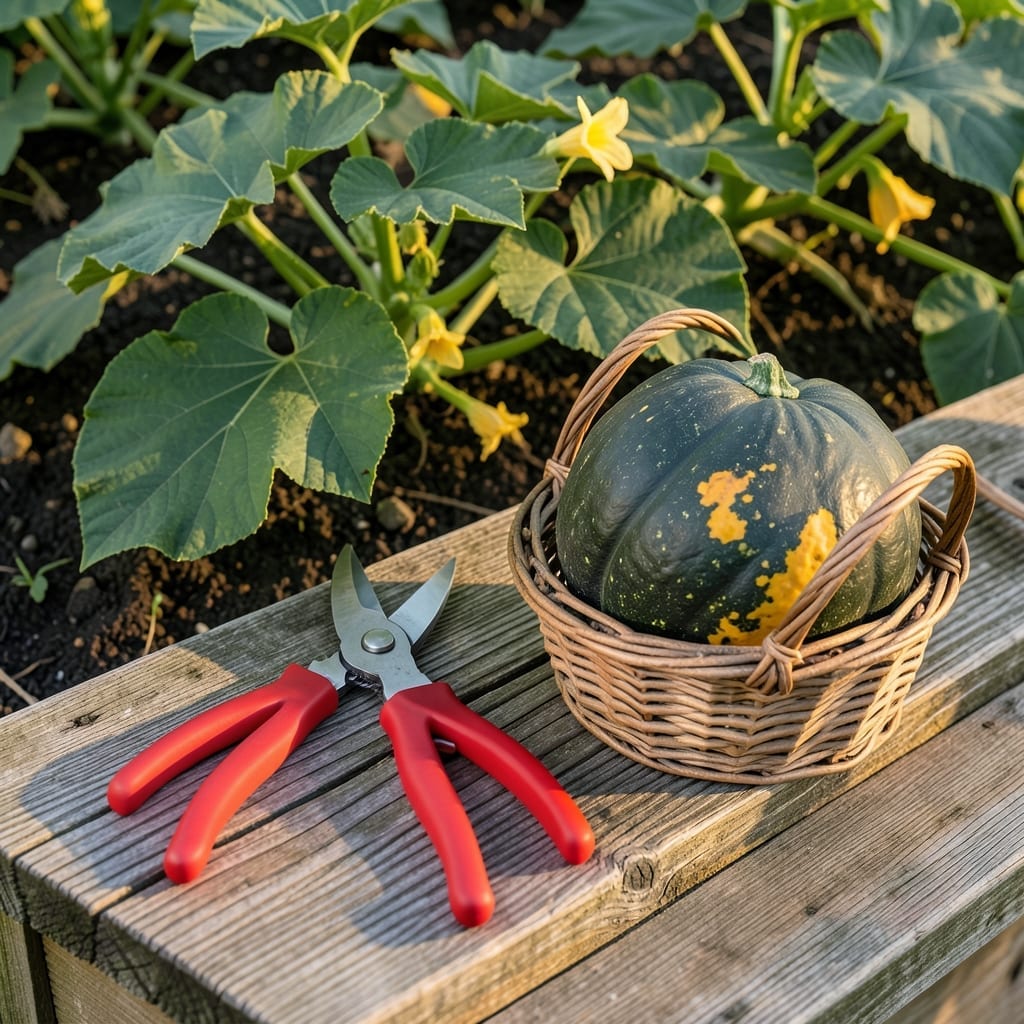
Knowing when to harvest Acorn Squash 🎃 can mean the difference between a flavorful, long-storing crop and a disappointing yield.
The stem slip point is the most reliable indicator of ripeness, but there are other visual and tactile clues every gardener should master.
From color changes to rind hardness, these signals will help you pick at just the right moment. I’ll walk you through each one so you never question.
Discover how to combine these signs for perfect timing every time. Your harvest will thank you for it.
I’ve found that the stem slip point is the most foolproof way to tell when acorn squash is ready. This is when the stem naturally detaches from the vine as the fruit matures, leaving a clean, dry break.
This happens because the plant stops supplying nutrients to the fruit, and the connection weakens. When I check for ripeness, I gently press near the stem—if it slips off easily, it’s a sure sign the squash is ready to harvest.
| Sign | What It Means |
|---|---|
| Stem slips off | Fruit is fully ripe and ready to pick |
| Stem is dry and brown | Harvest window is open |
| Stem is green and moist | Fruit is still maturing on the vine |
The biological process behind the stem slip is fascinating. As the squash ripens, the plant redirects its energy away from the fruit, causing the stem to dry out and separate cleanly. This is nature’s way of signaling that the squash is ready to store.
I always recommend checking the stem first thing in the morning when the plant is well-hydrated. If the stem doesn’t slip, I leave the squash for another few days and check again. Patience is key here.
Another thing I’ve noticed is that the stem slip point often coincides with the rind hardening. When the squash is ripe, the rind becomes so tough that I can’t puncture it with my thumbnail. This is a great secondary check.
In my experience, the stem slip method works best when combined with other signs. For example, if the vines are dying back and the squash has a dull, hard rind, it’s almost certainly ready. But the stem slip is the most reliable.
I’ve seen gardeners make the mistake of pulling the squash off the vine before the stem slips. This can damage the fruit and reduce its storage life. Always wait for the stem to detach naturally for the best results.
If you’re growing multiple varieties, keep in mind that the stem slip point may occur at slightly different times. But in general, acorn squash reaches this stage about 85 days after planting, depending on the variety.
I also like to check the color of the squash. A ripe acorn squash will have a deep, uniform color—usually dark green or orange—with a dull finish. Shiny or light-colored squash is still ripening.
When in doubt, I wait a few more days. It’s better to harvest a little late than too early, as the squash won’t continue to ripen after picking. Trust the stem slip, and you’ll get the best flavor and storage life from your harvest. 🌱
While the stem slip point is my go-to indicator for ripe acorn squash, I always double-check with other signs. A dull, hard rind that resists thumbnail pressure is a great secondary clue. The color deepens too, often shifting to dark green or orange depending on the variety.
The vine condition offers another hint. When vines start to die back or turn brown, your squash is likely ready. I also listen for a hollow sound when I tap the fruit—this means the inside is dry and mature.
I’ve found that combining 2-3 of these signs gives the most accurate read. For example, if the rind is hard and the vine is dying, but the stem hasn’t slipped yet, I’ll wait another 5-7 days before harvesting.
Don’t rely on size alone—some varieties stay small even when ripe. Instead, focus on texture and color. A shiny or soft rind means it’s not ready, while a matte, firm surface signals it’s time to pick.
Timing matters too. In my Zone 6 garden, I start checking for ripeness in late August. If frost threatens, I’ll harvest early, even if some signs aren’t perfect, to prevent damage to the crop.
Finally, always use pruning shears or a sharp knife to cut the stem, leaving 1-2 inches attached. This helps prevent rot during storage and keeps your harvest fresh longer.
Taking the time to check multiple indicators ensures you’ll pick at the peak of ripeness every time.☀️