
Beautiful Plants For Your Interior
Beautiful Plants For Your Interior
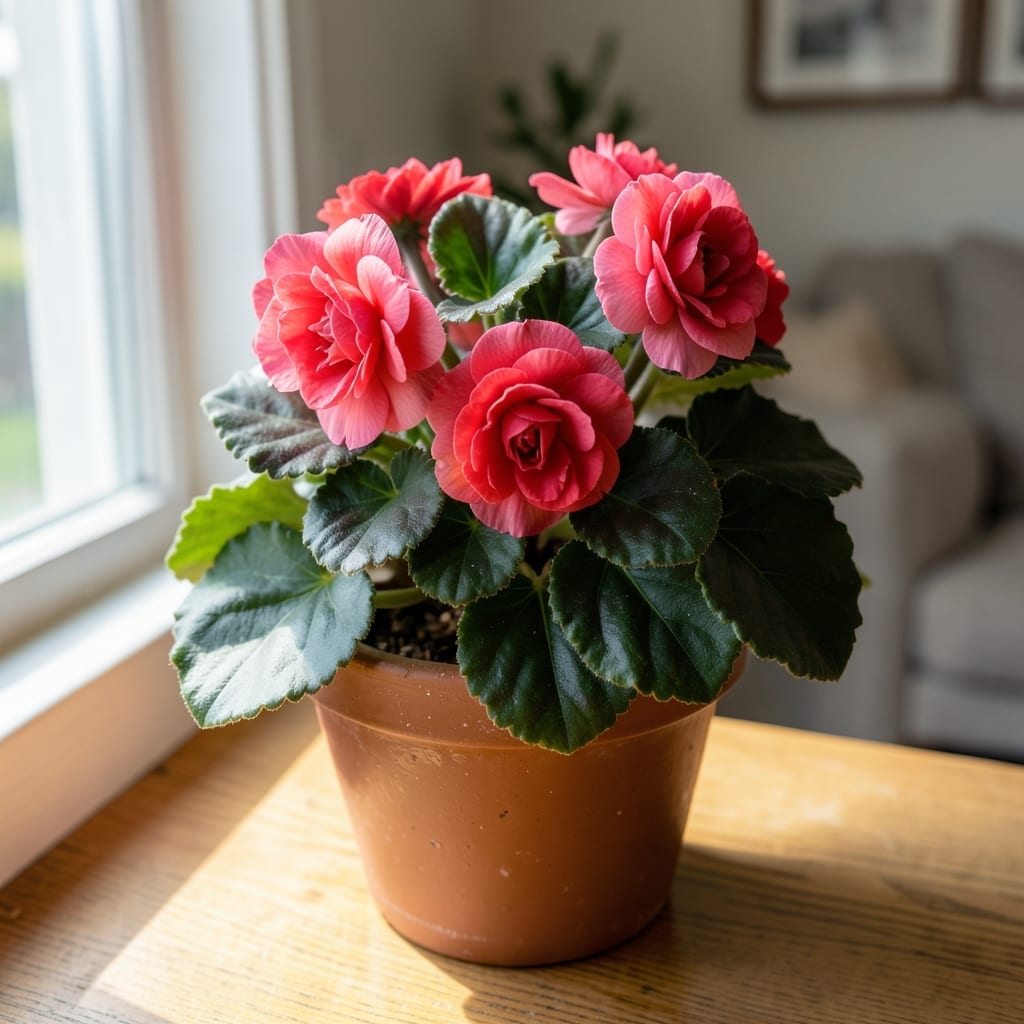
Rieger begonias dazzle with vibrant blooms, but their light needs often puzzle gardeners. Get the balance wrong, and these 🌸 beauties will either scorch in harsh sun or languish in deep shade.
I’ve seen too many gardeners struggle with wilting leaves or lackluster flowers simply because they misjudged the lighting. The good news? Finding that perfect balance is easier than you think.
Let me walk you through the ideal conditions to keep your Rieger Begonia thriving. You’ll discover how to create the right environment for lush, colorful growth.
 Best Window Placement
Rieger begonias thrive in partial shade with just the right touch of light. These stunning hybrid plants need a delicate balance to flourish. Too much sun can scorch their leaves, while too little leaves them weak and leggy.
I’ve found they do best with 4-6 hours of gentle morning light or bright, indirect sunlight throughout the day. This mimics their natural understory habitat, giving them the energy to produce those vibrant blooms we love so much.
For outdoor planting, choose a spot with dappled shade, like under a tree canopy. This provides the perfect filtered light that Rieger begonias adore. In hotter climates, afternoon shade is non-negotiable to prevent leaf burn.
Indoors, place your Rieger begonia near an east or west-facing window. These directions offer gentle light without the intensity of a south-facing exposure. If you only have a south window, use a sheer curtain to diffuse the light.
Seasonal adjustments are key. In spring and fall, you can often increase light exposure, but during the peak of summer, those midday rays can be too harsh. Watch your plants and adjust accordingly.
Remember, these begonias are sensitive to sudden changes. If you’re moving them from indoors to outdoors, do it gradually over a week to acclimate them and prevent shock. This is especially true for young plants or new cuttings.
For container gardening, I recommend rotating your pots every few days. This ensures all sides of the plant receive even light distribution, promoting balanced growth and preventing the plant from leaning toward the light source.
If you notice your Rieger begonia’s stems elongating or its leaves becoming pale green, it’s likely not getting enough light. On the flip side, brown crispy edges on leaves usually indicate too much direct sunlight.
With the right light conditions, your Rieger begonias will reward you with months of stunning blooms and healthy foliage. It’s all about finding that sweet spot in your garden or home where they can thrive without stress ☀️
Your Rieger begonia will tell you when it’s unhappy with its light situation. I always watch for subtle changes in leaves and stems as early warning signs. Catching these early can save your plant from serious stress.
The most obvious sign of too much sun is brown, crispy edges on leaves. This happens when the intense light literally burns the delicate foliage. You might also notice bleached spots where the color fades unevenly.
When light is insufficient, your Rieger begonia will grow tall and spindly as it stretches toward any light source. The stems become weak and the spaces between leaves elongate noticeably. This is called etiolation.
Another clear sign is faded bloom colors. Those vibrant flowers we love lose their intensity. The plant might also produce fewer flowers overall, as it lacks the energy from proper light to support blooming.
I’ve learned that yellowing leaves can indicate either too much or too little light, depending on the pattern. If the yellowing appears on the side facing the light, it’s likely sunburn. If it’s uniform, the plant might need more light.
To fix these issues, adjust gradually. For sunburnt plants, move to shade immediately and trim damaged leaves. For light-starved plants, increase exposure slowly over a week to avoid shocking the plant.
Remember, your Rieger begonia’s needs may change with the seasons. What works in spring might need adjustment in summer’s stronger light 🌿