
Beautiful Plants For Your Interior
Beautiful Plants For Your Interior
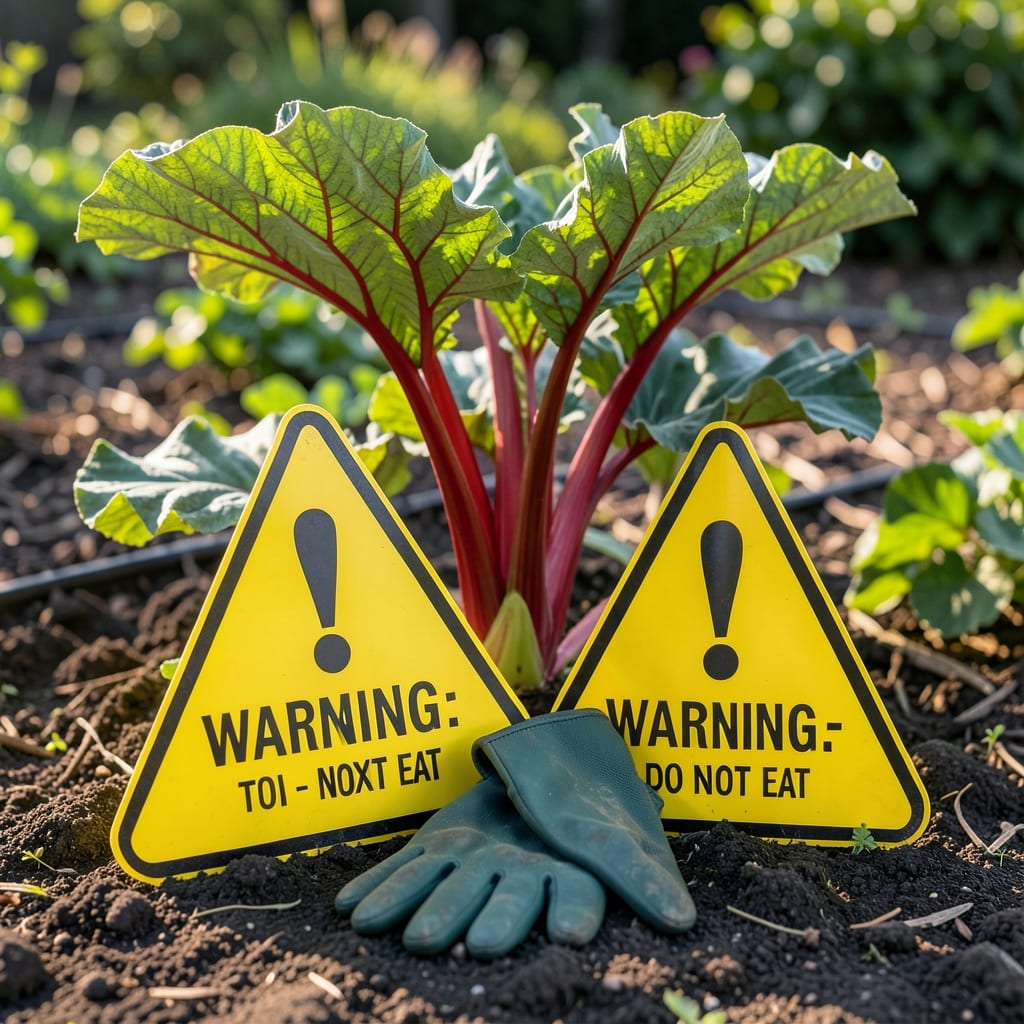
Rhubarb leaves contain high levels of oxalic acid and anthraquinone glycosides, which are toxic to humans and animals, causing severe poisoning if ingested in large quantities.
I always caution gardeners about this because the compounds interfere with calcium absorption and can damage kidneys at high doses. 🔥 Even small amounts may cause nausea or vomiting, so it’s critical to keep leaves away from food preparation areas.
Interestingly, the stalks we eat contain negligible amounts of these toxins, making them perfectly safe when cooked properly. ✨
💡 In This Article
Rhubarb leaves pack 0.5-1.5% oxalic acid by dry weight, which binds calcium in the body. This creates insoluble calcium oxalate crystals that accumulate in kidneys, potentially causing stones or failure at high doses. The sour taste is a natural warning sign your body recognizes as potentially harmful. 🔥
Anthraquinone glycosides act as powerful laxatives, disrupting normal digestive function. These compounds stimulate intestinal contractions aggressively, leading to severe diarrhea and dehydration. Just 1-2 raw leaves can trigger these effects in children, while adults may experience symptoms after consuming 5-10 leaves. ✨
The concentration difference between leaves and stalks is dramatic. Leaves contain 10-100 times more oxalic acid than edible stalks because they serve as the plant’s primary defense. The plant stores these toxins in leaf cells to deter herbivores, while stalks prioritize growth and energy storage. 💫
These toxins become more dangerous when raw. Cooking doesn’t eliminate them but can reduce oxalic acid levels by 10-25%. The heat breaks down some compounds, yet the risk remains significant. Never use leaves in teas, soups, or any preparation where they might be consumed. ⚡
Symptoms typically appear within 30 minutes to 2 hours after ingestion. Initial signs include burning in the mouth and throat, followed by nausea and vomiting. In severe cases, kidney damage may not become apparent for 24-48 hours, making early medical intervention crucial. 🌟
They contain high levels of oxalic acid and anthraquinone glycosides. These toxins can cause severe kidney damage and digestive distress, even in small amounts.
No, cooking only reduces oxalic acid by 10-25%. The remaining toxins are still hazardous, so leaves should never be consumed.
Initial symptoms like mouth burning or nausea typically start within 30 minutes to 2 hours. Severe kidney effects may take 24-48 hours to manifest.
Only in a secure, dedicated bin with a lid. Mix leaves with other waste and avoid using the compost on edible plants, as toxins may persist.