
Beautiful Plants For Your Interior
Beautiful Plants For Your Interior
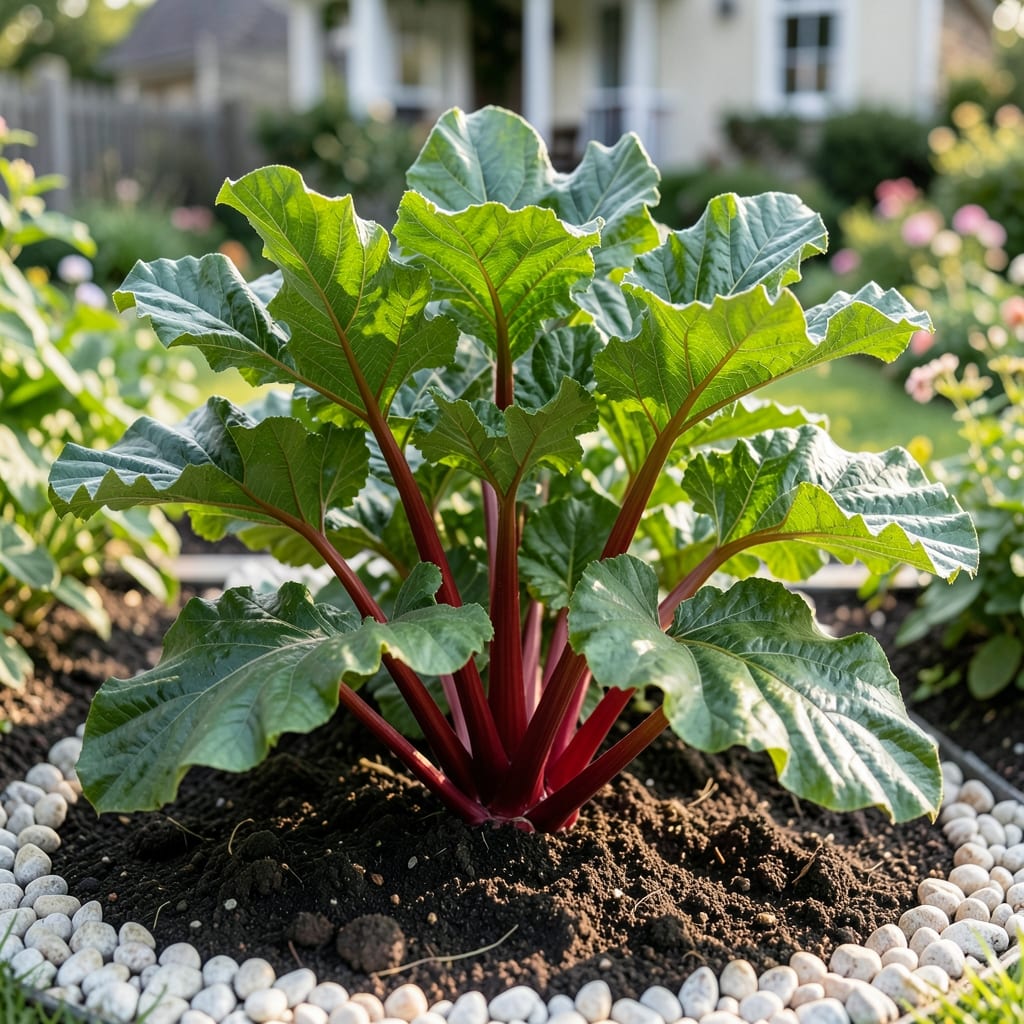
I planted my first rhubarb crowns five springs ago. 3 years of patience later, those same plants now produce enough stalks for pies and jams every season.
This project thrives on neglect once established—just give it full sun, well-draining soil, and room to spread. The key is planting crowns 2-3 feet apart and resisting the urge to harvest that first year.
📚 In This Guide
Here’s the method I’ve refined over years of cultivation for robust, productive plants.
Select a spot with full sun to partial shade, though rhubarb thrives best with at least 6 hours of direct sunlight daily. The soil must be well-draining, rich in organic matter, and slightly acidic to neutral (pH 6.0-7.0). Avoid low-lying areas where water pools, as soggy roots will rot the crown.
I test my soil by digging a 12-inch deep hole and filling it with water. If it drains within 1-2 hours, you’re good. If not, amending with compost or choosing a raised bed is essential. Rhubarb is a long-term investment—plants can produce for 10+ years in the right spot.
Plant 1-year-old crowns in early spring or fall, spacing them 3-4 feet apart. Dig a hole large enough to accommodate the roots without bending them. Place the crown so the top sits 1-2 inches below the soil surface—this prevents crown rot and encourages strong growth.
If starting from seed, sow indoors 8-10 weeks before the last frost. Transplant seedlings when they have 3-4 true leaves. Water immediately after planting and keep the soil consistently moist but not waterlogged for the first 2-3 weeks.
Rhubarb needs 1-2 inches of water per week, especially during active growth in spring and early summer. Water deeply at the base, avoiding the leaves to prevent disease. I use a soaker hose for even distribution and to keep foliage dry.
Apply a 2-3 inch layer of organic mulch, like straw or shredded leaves, around the plants. This retains moisture, suppresses weeds, and keeps the soil cool. Mulch also protects the crown from winter temperature swings. Replace mulch as it decomposes, usually every 6-8 weeks.
Feed rhubarb in early spring with a balanced 10-10-10 fertilizer or a 2-inch layer of well-rotted compost. Avoid high-nitrogen fertilizers, which promote leafy growth at the expense of stalks. I also side-dress with compost mid-season to sustain production.
Remove seed stalks as they appear to direct energy toward stalk production. Pull stalks by hand rather than cutting them, as this stimulates new growth. Stop harvesting by mid-summer to allow the plant to rebuild energy for next year. Always leave at least 1/3 of the stalks on the plant.
After the first hard frost, cut back all foliage and remove it from the garden to prevent disease. In colder zones, add a 4-6 inch layer of mulch over the crown for winter protection. In spring, remove the mulch gradually as new growth appears.
Divide crowded plants every 4-5 years in early spring or fall. Dig up the crown and split it into sections, each with at least 1-2 healthy buds. Replant the divisions immediately. This rejuvenates older plants and increases your harvest.
After years of trial and error, I’ve learned these details make all the difference.
The Sunlight Factor: While rhubarb tolerates partial shade, the 6 hours of direct sunlight mentioned in Step 1 is non-negotiable for robust stalk production. I’ve found plants in shadier spots produce thin, weak stalks that lack that signature tartness.
Soil Drainage Test: That 12-inch deep hole test from Step 1 is your best insurance against root rot. If water doesn’t drain within 1-2 hours, raised beds are your next best option. I learned this the hard way after losing two plants to waterlogged soil.
Planting Depth Matters: In Step 2, placing crowns 1-2 inches below the soil surface prevents crown rot while allowing roots to establish. Plant too shallow and you’ll get weak growth; too deep and the crown may suffocate. Confession: I messed this up my first year and wondered why my plants struggled.
Mulch Maintenance: The 2-3 inch layer of organic mulch in Step 3 needs refreshing every 6-8 weeks, as it decomposes faster than you’d expect. Straw works better than wood chips in my experience—it breaks down into soil-improving organic matter while keeping weeds at bay.
Early spring or fall is ideal for planting rhubarb crowns. This gives the roots time to establish before extreme temperatures hit. Avoid planting in summer heat, as it can stress the plants.
Rhubarb thrives in full sun but tolerates partial shade. Aim for at least 6-8 hours of sunlight daily for the healthiest stalks and most abundant harvests.
Yes! Use a large container (at least 20 inches deep) with good drainage. Ensure the soil stays moist and fertilize regularly, as potted rhubarb may need extra nutrients.
Yellow leaves often signal overwatering, poor drainage, or nutrient deficiencies. Check soil moisture and ensure proper drainage. A balanced fertilizer can help restore vibrant growth.
Yes, rhubarb leaves contain oxalic acid, which is toxic to dogs and cats. Keep pets away from the plants, and discard leaves properly to avoid accidental ingestion.