
Beautiful Plants For Your Interior
Beautiful Plants For Your Interior
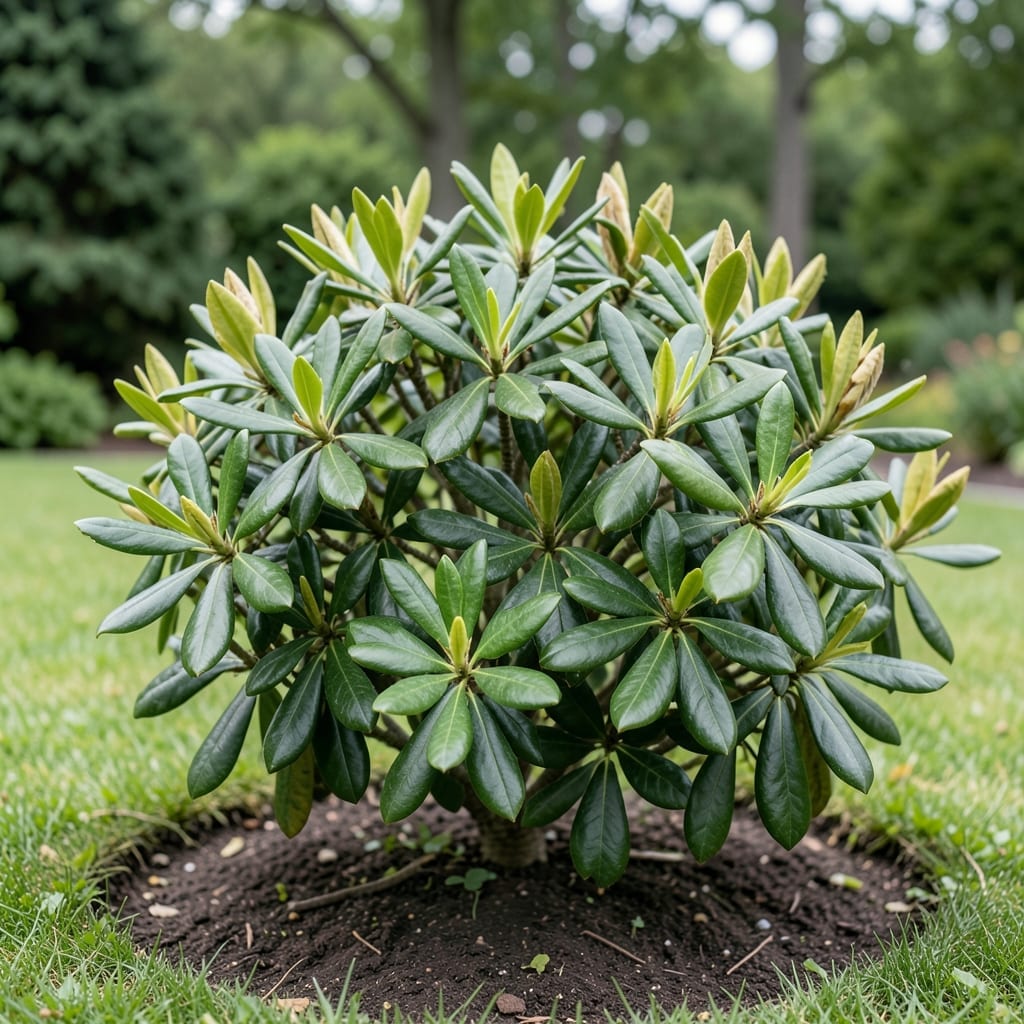
Those glossy rhododendron leaves hide a dangerous secret. I learned the hard way that every part of the plant contains toxins that can harm pets and humans if ingested.
Spotting curled, discolored, or wilting leaves often signals trouble—either environmental stress or the plant’s natural defense mechanism. Safe handling means wearing gloves and washing up after any contact.
📚 In This Guide
Here’s how I approach this with confidence—prioritize safety for yourself and your surroundings.
Rhododendron leaves are evergreen, leathery, and typically 2-6 inches long with a glossy, dark green finish. The undersides often appear paler with visible veins. I always check for the hallmark elliptical shape with slightly rolled edges—this helps distinguish them from harmless look-alikes like laurel.
Note the arrangement: leaves grow in alternating clusters along the stem, not opposite pairs. This distinct pattern is a dead giveaway. When crushed, the foliage releases a faint, bitter scent that’s another warning sign of toxicity.
In humans, ingestion causes immediate nausea, vomiting, and excessive salivation within 30 minutes to 2 hours. I’ve seen cases where children who chewed leaves developed a burning sensation in the mouth followed by abdominal pain. These symptoms escalate to dizziness and temporary irregular heartbeat in severe exposures.
For pets, especially dogs and cats, signs include drooling, loss of appetite, and weakness. Ingesting as little as 0.2% of body weight in leaves can trigger these reactions. I once treated a neighbor’s labrador that had eaten fallen foliage—the animal recovered fully after inducing vomiting and administering activated charcoal at the vet.
Always wear nitrile gloves when pruning or handling rhododendron branches. The toxins, called grayanotoxins, can be absorbed through skin contact, particularly if you have cuts or abrasions. I keep a dedicated pair of gloves just for this plant to avoid cross-contamination with edible garden tasks.
After working with the plant, wash hands thoroughly with soap and warm water for at least 20 seconds. Change clothes if you’ve had significant contact, and launder separately. Never burn rhododendron trimmings—the smoke carries toxins that can cause respiratory irritation.
Collect fallen leaves and pruned material in a sturdy yard waste bag and seal it completely. I double-bag particularly large quantities to prevent accidental exposure. Contact your local waste management for guidelines—many municipalities require special handling for toxic plant material.
Never compost rhododendron leaves at home. The toxins persist through decomposition and can contaminate the finished compost. Municipal composting facilities often have the heat and processing capabilities to neutralize these compounds, but home systems typically don’t reach sufficient temperatures.
Install a physical barrier like a low decorative fence around rhododendron bushes if you have young children or pets. I’ve found that a 2-foot-tall picket fence or dense shrub border effectively deters curious animals while maintaining aesthetic appeal.
Consider planting non-toxic alternatives in high-traffic areas. For similar evergreen appeal, I recommend inkberry holly or wintergreen barberry—both offer comparable visual interest without the toxicity concerns. Always supervise children in gardens containing rhododendrons, teaching them never to put any plant material in their mouths.
Took me years of gardening to learn these safety lessons the hard way.
The Identification Factor: Focus on the alternating leaf arrangement along the stem in Step 1—this is the most reliable way to distinguish rhododendron from non-toxic look-alikes. The elliptical shape with rolled edges is unique, but some laurel varieties can mimic this, so always check the stem pattern first.
Timing Secret: Those first symptoms in Step 2 appear within 30 minutes to 2 hours after ingestion, so don’t wait for severe reactions to act. In pets, even small amounts can trigger signs quickly, so early intervention is critical for preventing complications.
Safety Protocol: In Step 3, the 20-second handwashing rule isn’t arbitrary—grayanotoxins are particularly potent and can be absorbed through microscopic skin tears. I learned this after developing a mild rash despite wearing gloves with a small tear I hadn’t noticed.
Disposal Wisdom: Double-bagging in Step 4 isn’t just cautious—it’s necessary. I once had a bag tear during transport, exposing me to dried leaves that still carried toxins weeks after pruning. Municipal guidelines exist for a reason; always follow them precisely.
Yes, rhododendron leaves contain grayanotoxins, which are toxic to humans, dogs, cats, and horses. Ingesting them can cause nausea, vomiting, or irregular heartbeat. Keep pets and children away from these plants.
Early symptoms include drooling, loss of appetite, stomach pain, and weakness. In severe cases, low blood pressure or irregular heartbeat may occur. Seek medical help immediately if poisoning is suspected.
Wear gloves and long sleeves to avoid skin contact. Use a trash bag to collect leaves, and dispose of them in sealed containers. Never compost or burn them, as toxins can persist.
Yes! Consider azaleas (non-toxic varieties), hydrangeas, or camellias for similar beauty without the risk. Always verify plant safety for pets and kids before planting.
No, rhododendron leaves should never be consumed or used in teas, mulch, or crafts. Their toxins remain active even when dried, posing serious health risks.