
Beautiful Plants For Your Interior
Beautiful Plants For Your Interior
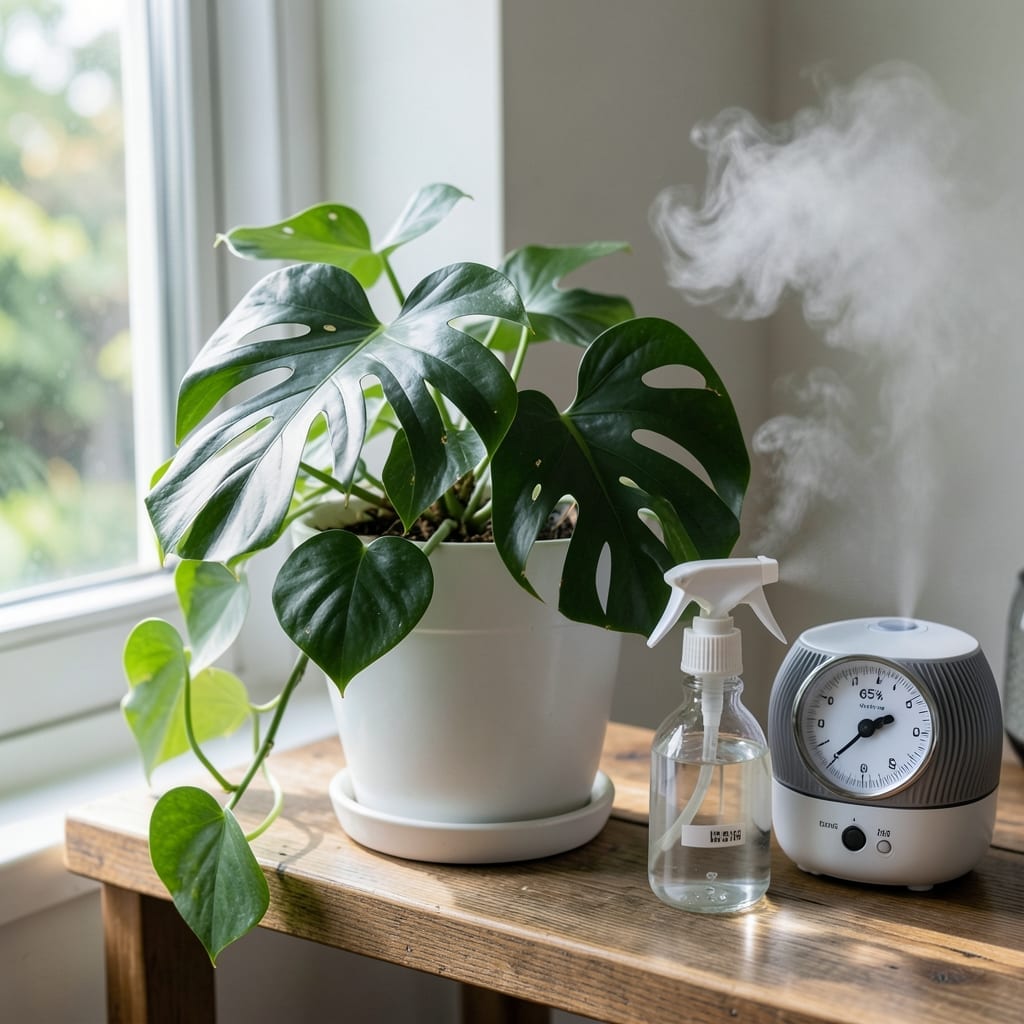
If you’ve ever struggled to keep your 🌿 Mini Monstera looking its best, humidity might be the missing piece of the puzzle. This tropical beauty thrives in conditions that mimic its native habitat.
Getting the moisture levels just right can be the key to lush, vibrant foliage. Without it, you might notice brown tips or stunted growth that leaves you frustrated.
I’ll walk you through exactly what your Mini Monstera needs to flourish. No guesswork, just clear, practical advice for indoor and outdoor setups.
Discover how small adjustments can make a big difference in your plant’s health and vitality.
As a tropical native, the Rhaphidophora tetrasperma or Mini Monstera demands humidity levels that mirror its rainforest home. I’ve found that 60-80% relative humidity is the sweet spot for vibrant, healthy foliage.
This range supports optimal photosynthesis and transpiration, helping your plant thrive. Anything below 50% often leads to brown leaf tips or stunted growth. 🌿
In my experience, consistent humidity is more important than occasional spikes. A hygrometer is a worthwhile investment to monitor levels accurately. Place it near your plant for the most reliable readings.
The Mini Monstera’s tropical origins mean it’s adapted to high moisture environments. In its natural habitat, it enjoys constant humidity from frequent rain and dense vegetation.
When humidity drops below 50%, you’ll often notice leaf curling or dry edges. This is your plant’s way of conserving moisture in less-than-ideal conditions.
Conversely, humidity above 80% can lead to fungal issues. Good air circulation is key to prevent problems like powdery mildew or root rot.
I recommend aiming for the mid-range of 60-70% for most home environments. This provides a good balance between growth and manageability. 🌱
Remember that temperature and humidity work together. Warmer air can hold more moisture, so you may need to adjust as seasons change.
For best results, maintain consistent conditions. Sudden changes in humidity can stress your Rhaphidophora tetrasperma just as much as consistently poor conditions.
With the right humidity, you’ll see faster growth and larger leaves. Your Mini Monstera will reward your efforts with its signature fenestrated foliage. 🪴
I’ve found that Rhaphidophora tetrasperma thrives when humidity mimics its tropical rainforest origins. Without proper moisture in the air, its vibrant foliage can suffer, leading to crispy edges or slow growth.
To keep your Mini Monstera happy, aim for 60-80% humidity. This range supports optimal photosynthesis and transpiration, key processes for healthy growth.
In my experience, a humidifier is the most reliable method, especially in dry indoor climates. It maintains steady humidity without much effort on your part.
Pebble trays are a low-cost alternative. Simply fill a tray with water and pebbles, then place your Mini Monstera pot on top. The evaporating water boosts local humidity.
Grouping plants together is another smart trick. Plants release moisture through transpiration, creating a humid microclimate when clustered. This method is both effective and aesthetic.
For a hands-on approach, misting works well, but I recommend using room-temperature water to avoid shocking the leaves. Just be mindful of over-misting, which can lead to fungal issues.
If you’re up for a project, a DIY terrarium can be a fun way to maintain high humidity. It’s perfect for smaller Rhaphidophora tetrasperma plants and adds a touch of greenery to any space 🌿