
Beautiful Plants For Your Interior
Beautiful Plants For Your Interior
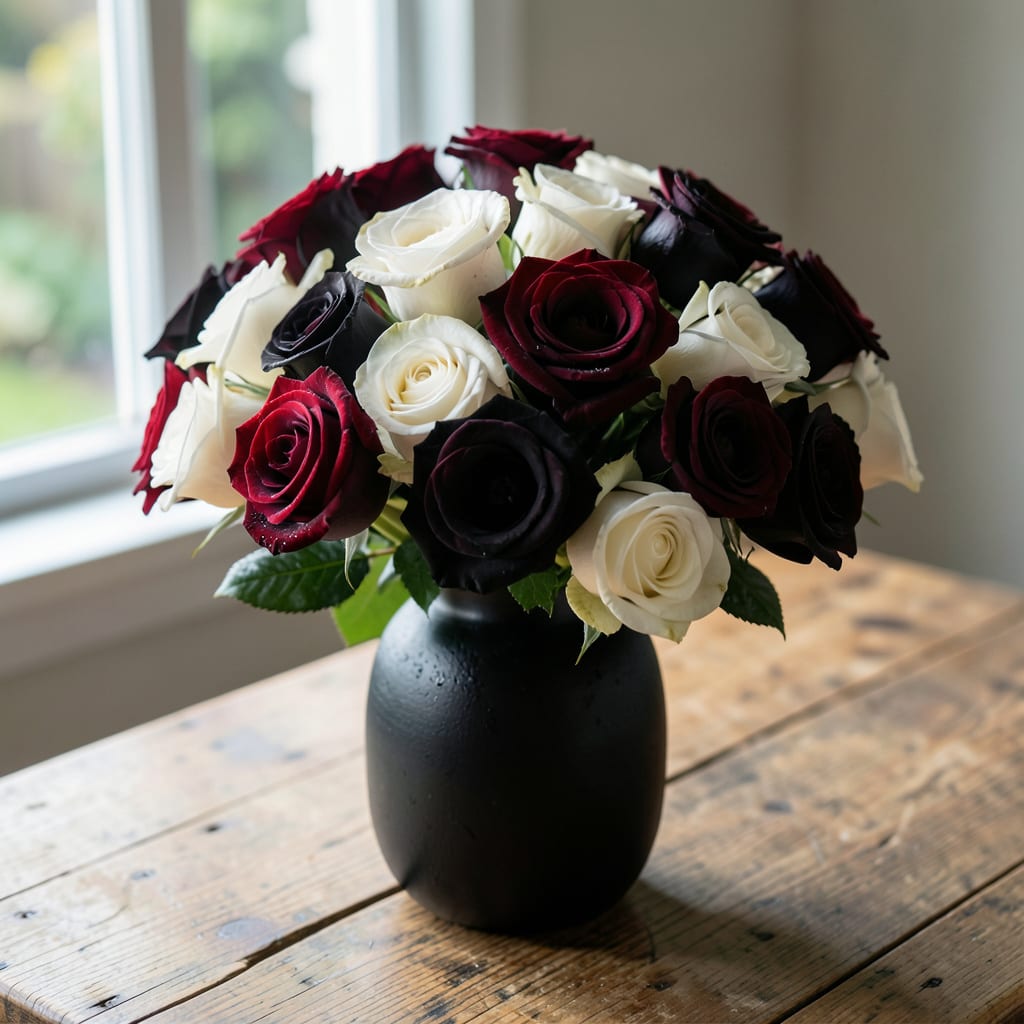
Nothing beats the drama of red roses against black and white blooms. This trio creates timeless contrast that makes any garden look intentional, even if it’s your first attempt.
I’ve used this combo in borders and containers with shocking results. The deep reds pop against the crisp whites, while black roses add mystery. Plant in clusters for impact or scatter for surprise discoveries.
📚 In This Guide
Here’s the method I use to create this timeless look with confidence and precision.
Start with deep red roses like ‘Black Baccara’ or ‘Othello’ for a velvety, near-black appearance. Pair them with pure white roses such as ‘Iceberg’ or ‘White Meidiland’ to create the stark contrast. I always check the bloom size—medium to large flowers make the color difference more striking in the garden.
Choose disease-resistant varieties to keep the display pristine with minimal effort. Look for repeat bloomers so the contrast remains vibrant from spring through fall. This ensures your garden stays elegant without constant upkeep.
Place the red roses in the back or center of the bed, with white roses framing them in the foreground. This arrangement highlights the depth of the red and the brightness of the white. I like to space plants 18-24 inches apart to allow airflow and prevent overcrowding.
Consider adding a neutral backdrop, like a dark fence or evergreen shrubs, to make the colors pop even more. Group at least 3-5 plants of each color together—smaller groupings can look scattered rather than intentional.
Dig a hole twice as wide and just as deep as the root ball for each rose. Mix in compost or well-rotted manure to enrich the soil and improve drainage. I always loosen the roots gently before planting to encourage outward growth into the surrounding soil.
Water deeply after planting, then add a 2-3 inch layer of mulch to retain moisture and suppress weeds. Keep the mulch 2 inches away from the base of each plant to prevent rot. This sets the stage for healthy growth and consistent blooms.
Prune both red and white roses in early spring, removing dead or weak wood and shaping the plants. I aim to open the center of each bush for better airflow, which reduces disease risk. Deadhead spent blooms regularly to encourage continuous flowering and keep the display fresh.
Fertilize every 4-6 weeks with a balanced rose fertilizer to support vibrant color and strong growth. Watch for pests like aphids and treat them promptly—nothing disrupts a classic contrast faster than damaged foliage.
Small adjustments make a big difference in achieving that perfect contrast.
Variety Selection: In Step 1, when choosing your roses, prioritize disease-resistant varieties like ‘Black Baccara’ for red and ‘Iceberg’ for white. These require less maintenance and keep your display looking pristine. Repeat bloomers ensure the contrast stays vibrant throughout the growing season.
Spacing Strategy: For Step 2, that 18-24 inch spacing mentioned isn’t just for aesthetics—it’s critical for airflow, which prevents fungal diseases. I learned this the hard way after losing a few plants to powdery mildew in a crowded bed.
Planting Depth: In Step 3, when digging holes twice as wide and just as deep as the root ball, resist the urge to plant deeper. Roses planted too deep can suffocate, while shallow planting exposes roots. The “just as deep” part is your sweet spot.
Maintenance Timing: For Step 4, that 4-6 week fertilizing schedule keeps your roses blooming consistently. Mark your calendar—missing a feeding can lead to weaker blooms and less vibrant colors, which defeats the purpose of this high-contrast design.
Red roses symbolize love and passion, while black and white accents add depth, representing contrast, balance, or remembrance. This combo often conveys timeless elegance and deep emotion.
Yes! Pairing red roses with black (deep purple) or white varieties creates striking contrast. Ensure they have similar sunlight, soil, and water needs for harmonious growth.
True black roses don’t exist naturally—they’re deep purple or maroon, appearing black. For a dramatic look, pair them with red and white blooms in arrangements.
Trim stems at an angle, change water every 2 days, and remove leaves below the waterline. Keep them in a cool spot away from direct sunlight to extend freshness.
