
Beautiful Plants For Your Interior
Beautiful Plants For Your Interior
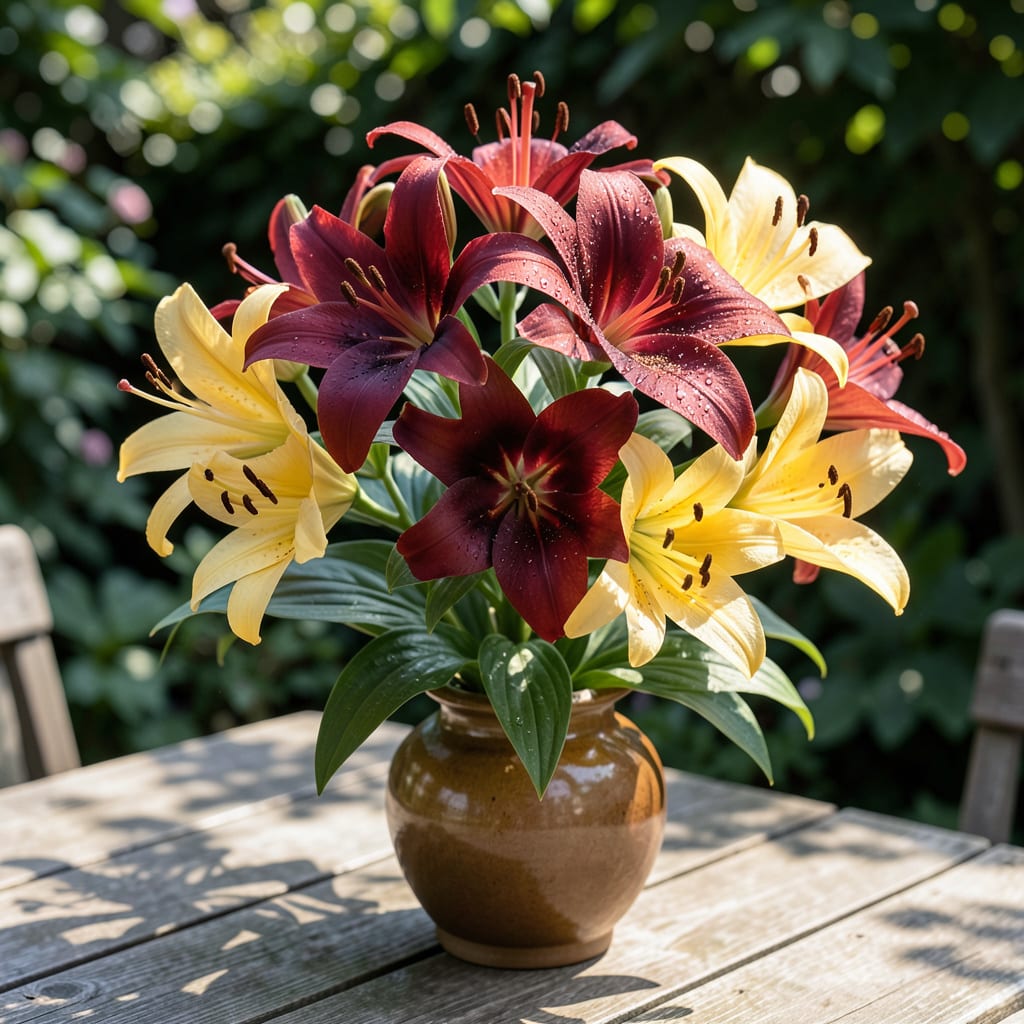
Nothing beats the drama of red and yellow lilies in full bloom. I planted my first batch three seasons ago, and the bold color combo still stops neighbors in their tracks.
They thrive in full sun with well-draining soil and minimal fuss. Once established, these bulbs return bigger and brighter each year, turning any garden into a vibrant canvas.
📚 In This Guide
This method ensures bold, healthy blooms with minimal effort and maximum visual impact.
Choose a spot receiving 6-8 hours of direct sunlight daily, as lilies thrive in full sun but tolerate light afternoon shade in hotter climates. The soil should drain well—avoid low-lying areas where water pools after rain.
I test drainage by digging a 12-inch hole, filling it with water, and checking if it drains within 1-2 hours. If not, amend the area with compost or consider raised beds. Lilies in soggy soil rot quickly, and you’ll see yellowing leaves as the first warning sign.
Lilies prefer slightly acidic to neutral soil (pH 6.0-7.0). Work in 2-3 inches of organic matter like compost or well-rotted manure to improve fertility and drainage. Avoid fresh manure—it burns roots and introduces weeds.
Loosen the soil to a depth of 12-15 inches to encourage deep rooting. This is the moment that matters: shallow prep leads to top-heavy plants that topple in wind. If your soil is heavy clay, mix in sand or perlite to break it up.
Place bulbs 4-6 inches deep (measure from the base of the bulb to the soil surface) and 12-18 inches apart. Deeper planting protects from freeze-thaw cycles in colder zones, while wider spacing ensures good air circulation to prevent fungal diseases.
Set the bulb with its pointed end facing upward—sounds obvious, but it’s easy to second-guess when planting dozens. Press the soil gently to remove air pockets, then water thoroughly to settle the earth around the bulb. You’ll see sprouts emerge in 2-4 weeks depending on soil temperature.
After planting, water deeply until the soil is moist to 6 inches down. Lilies need consistent moisture during active growth but dislike waterlogged roots. Once established, water when the top inch of soil feels dry—usually once weekly in moderate climates.
Apply a 2-3 inch layer of organic mulch (straw or shredded bark) to retain moisture and suppress weeds. Keep mulch an inch away from stems to prevent rot. Real talk: mulching cuts your maintenance time in half and keeps roots cool during summer heatwaves.
Feed lilies in early spring with a balanced 10-10-10 fertilizer, then again after flowering to encourage next year’s blooms. Avoid high-nitrogen fertilizers—they produce lush foliage at the expense of flowers.
Install stakes or a growth ring at planting time if you’re growing taller varieties (some reach 4-6 feet). Here’s the thing—adding support later risks damaging bulbs. Secure stems loosely with soft ties as they grow to prevent wind damage.
Here’s what I wish I’d known before my first lily bed turned into a soggy disaster.
Sunlight Strategy: The 6-8 hours of daily direct sunlight isn’t negotiable for vibrant blooms. I learned this the hard way after planting in a partially shaded spot and getting weak, leggy stems. If your climate has intense afternoon heat, a little dappled shade during the hottest hours is fine, but don’t go below 6 hours of full sun.
Drainage Test: That 12-inch hole drainage test from Step 1 is your best insurance against root rot. Fill it with water and if it doesn’t disappear within 1-2 hours, you’ll need to amend the soil or use raised beds. Yellowing leaves are your first warning sign that the soil is staying too wet.
Depth and Spacing: Planting bulbs 4-6 inches deep and 12-18 inches apart in Step 3 isn’t arbitrary. Deeper planting protects against freeze-thaw cycles in colder zones, while the wider spacing prevents fungal issues by allowing air circulation. I’ve seen crowded lilies develop powdery mildew within a single season.
Support System: For taller varieties that can reach 4-6 feet, install those stakes or growth rings at planting time as mentioned in Step 5. Adding them later inevitably damages the bulbs or roots. I use soft garden ties to secure stems as they grow, preventing wind damage without restricting growth.
Plant bulbs in well-draining soil with full sun to partial shade. Space them 12-18 inches apart and 6-8 inches deep. Water thoroughly after planting and keep the soil moist but not soggy.
The ideal time is early spring or fall, when temperatures are cool. This allows roots to establish before extreme heat or frost. Avoid planting in summer or winter.
Try daylilies, tiger lilies, or Asiatic lilies in similar colors. These offer comparable vibrancy and are easier to find at local nurseries.
Common issues include insufficient sunlight, poor soil drainage, or overcrowded bulbs. Check growing conditions and divide bulbs every 3-4 years for better blooms.
