
Beautiful Plants For Your Interior
Beautiful Plants For Your Interior
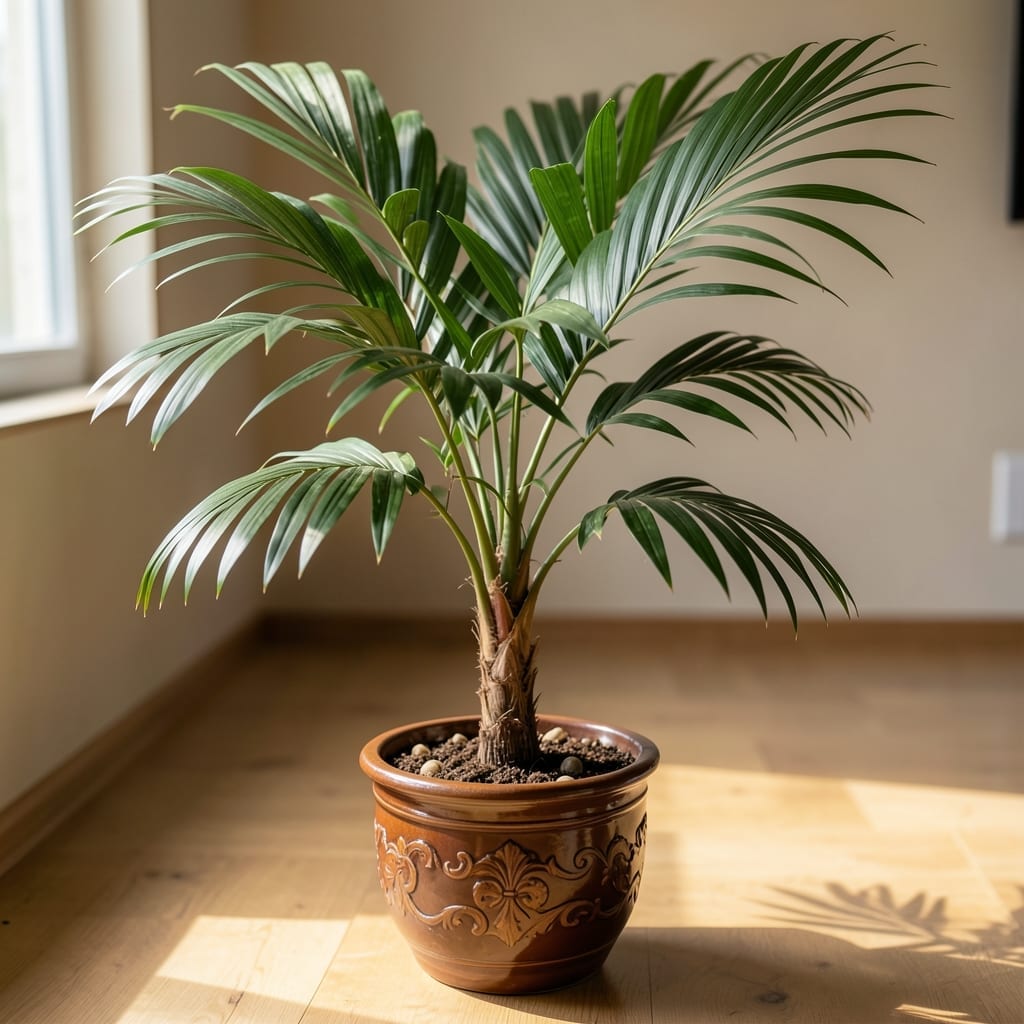
This palm changed my living room from ordinary to tropical paradise. I was skeptical at first, but the Majesty Palm delivers lush, arching fronds that grow surprisingly fast with the right care.
It thrives in bright, indirect light and handles typical household humidity better than most tropical plants. The reward is a statement piece that grows 6-10 feet tall indoors with proper conditions and minimal fuss.
📚 In This Guide
Here’s the method I rely on to keep this tropical beauty thriving indoors.
Place your palm in a spot with bright, indirect light—direct sun scorches the fronds. A north or east-facing window works best. I avoid western exposure because the afternoon heat stresses the plant, causing brown leaf tips.
Check the light intensity by holding your hand where the palm sits. If your shadow is soft with no defined edges, the light is ideal. Rotate the pot quarter turn weekly to ensure even growth on all sides.
Water when the top 1-2 inches of soil feel dry to the touch. Majesty palms hate soggy roots, so ensure the pot has drainage holes. I use a moisture meter for precision—it takes the guesswork out of timing.
Use room-temperature water and pour slowly until it runs from the drainage holes. Dump any excess from the saucer after 15 minutes to prevent root rot. Yellowing leaves often signal overwatering, so adjust your schedule if this happens.
This tropical native thrives in 65-80°F with 50-60% humidity. If your home is dry, place the pot on a pebble tray filled with water or use a humidifier. I group my palms together to create a microclimate with higher humidity.
Avoid cold drafts from windows or vents—temperatures below 55°F can damage the foliage. If leaves develop brown edges, boost humidity immediately. A simple hygrometer helps monitor levels accurately.
Feed monthly during spring and summer with a balanced liquid fertilizer diluted to half strength. I switch to a 3-1-2 ratio formula for palms to support frond development. Always water before fertilizing to prevent root burn.
Remove yellow or brown fronds with clean shears, cutting at the base where they meet the stem. Never prune healthy fronds—this stresses the plant and reduces its ability to photosynthesize. A light trimming of dead growth keeps the palm looking tidy.
Repot every 2-3 years or when roots emerge from the drainage holes. Choose a pot only 2 inches larger in diameter to prevent overpotting, which leads to waterlogged soil. I use a well-draining mix of 50% peat, 30% perlite, and 20% orchid bark for optimal aeration.
Spring is the best time for repotting, as the plant enters active growth. Water thoroughly after repotting and keep it in a shaded spot for a week to reduce stress. You’ll see new growth within 4-6 weeks if conditions are right.
Here’s what I’ve learned through trial and error to keep this tropical beauty at its best.
Light Positioning: That 12-18 inch distance from your grow light isn’t arbitrary—it mimics the dappled sunlight of a tropical canopy. Too close and you’ll scorch the fronds; too far and the plant stretches weakly. I mark the spot with tape on the floor to maintain consistency.
Watering Wisdom: The top 1-2 inches of soil test is your best guide, but here’s what nobody tells you—stick your finger in at different spots around the pot. Soil can dry unevenly, especially near heat sources. And always empty that saucer; I’ve lost two palms to root rot from this oversight.
Humidity Hack: Misting 2-3 times weekly works, but for better results, place the pot on a tray filled with pebbles and water. The evaporating water creates a humid microclimate around the plant without risking soil oversaturation. Just ensure the pot itself isn’t sitting in water.
Temperature Vigilance: That 65-80°F range is ideal, but watch for cold drafts near windows in winter. I once placed mine near a frequently opened door, and the repeated temperature drops below 55°F caused irreversible leaf damage. A simple digital thermometer nearby can save you this headache.
Water when the top 1-2 inches of soil feel dry, typically every 7-10 days. Overwatering can cause root rot, so ensure good drainage and adjust based on humidity levels.
Yellow leaves often indicate overwatering or poor drainage. Check the roots for rot, reduce watering, and ensure the pot has drainage holes. Low light or nutrient deficiencies can also be culprits.
Yes, but only in warm climates (USDA zones 10-11). It thrives in partial shade to full sun outdoors. In cooler areas, keep it indoors or move it outside only in summer.
Consider Kentia Palm or Areca Palm, which are also low-maintenance and tropical. Both tolerate similar conditions but may be more forgiving of occasional neglect.
Wipe leaves with a damp cloth and apply neem oil or insecticidal soap. Increase humidity to deter mites, and isolate the plant to prevent spreading to others.