
Beautiful Plants For Your Interior
Beautiful Plants For Your Interior
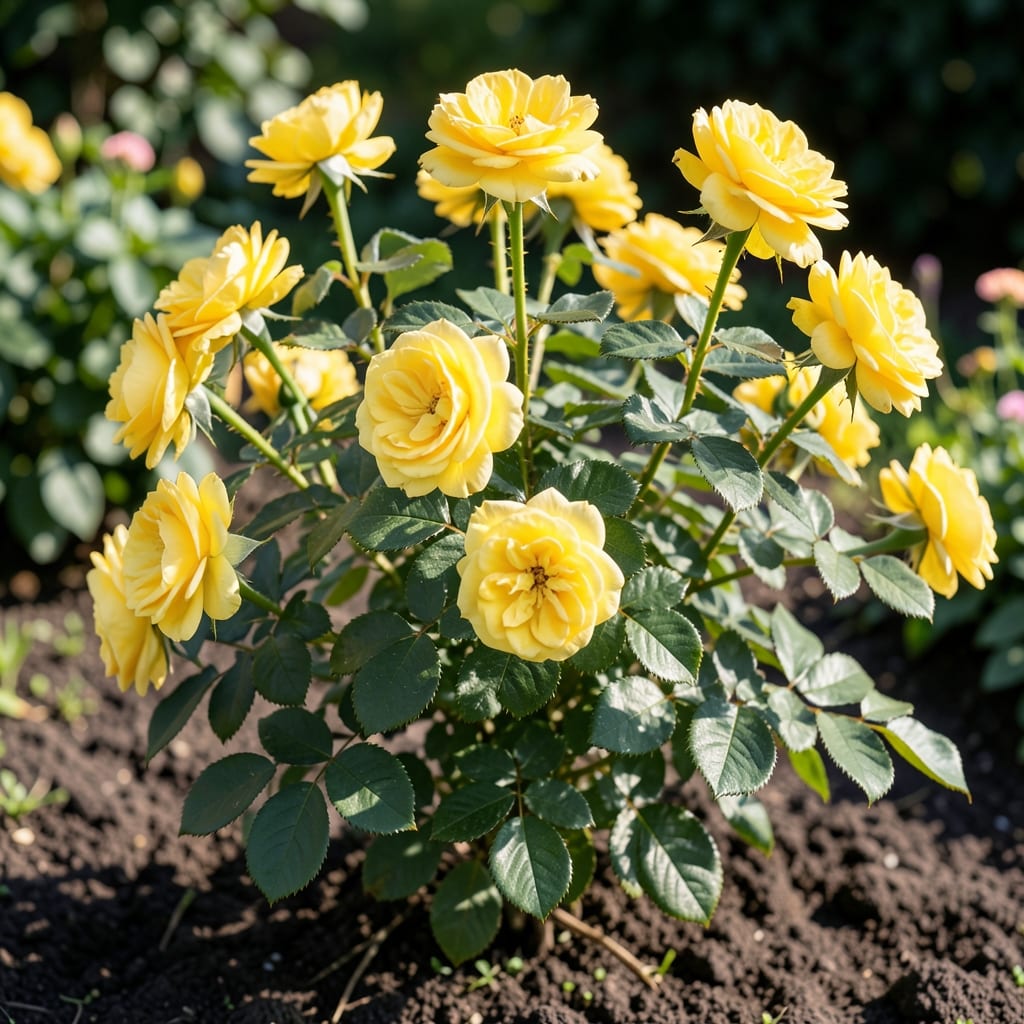
Sunny yellow roses bring instant joy to any landscape. I’ve designed entire garden beds around their cheerful blooms, and the effect never fails to stop neighbors in their tracks.
Pair them with purple salvia for a bold contrast, or let them shine solo along a fence line. These flowers thrive in full sun and ask for little more than regular watering and occasional pruning to stay vibrant all season.
📚 In This Guide
This simple method ensures vibrant blooms and healthy growth in your garden.
Select a spot with full sun exposure—at least 6-8 hours of direct sunlight daily. Yellow roses thrive in well-draining soil, so test drainage by digging a 12-inch hole and filling it with water. If it drains within 1 hour, you’re good to go.
Amend the soil with organic compost to improve fertility. I always mix in a generous amount to give the roots a nutrient-rich start. Loosen the soil to a depth of 18 inches to encourage deep root growth, which helps the plant establish quickly.
Dig a hole twice as wide as the root ball but no deeper. Place the rose bush in the hole, ensuring the graft union (the swollen area near the base) sits 1-2 inches above soil level. This protects it from rot and encourages strong growth.
Backfill with soil, gently pressing it down to eliminate air pockets. Water thoroughly with 1-2 gallons of water to settle the soil around the roots. I’ve found that a deep watering at planting helps prevent transplant shock.
Water your roses deeply 2-3 times per week, especially during the first few weeks after planting. The goal is to keep the soil consistently moist but not soggy. You’ll know it’s time to water when the top inch of soil feels dry.
Apply a 2-3 inch layer of mulch around the base of the plant, keeping it a few inches away from the stem to prevent rot. Mulch helps retain moisture, suppress weeds, and regulate soil temperature—key for vibrant blooms.
Prune your roses in early spring, removing any dead, diseased, or crossing branches. This improves air circulation and directs energy toward new growth. Use clean, sharp pruners to make cuts at a 45-degree angle just above a bud.
Fertilize with a balanced rose fertilizer every 4-6 weeks during the growing season. Follow the package instructions for application rates. You’ll see stronger stems and more abundant blooms within a few weeks of consistent feeding.
Small details in planting make a big difference for vibrant, long-lasting blooms.
Sunlight Strategy: The 6-8 hours of full sun isn’t just a suggestion—it’s critical for those bright yellow blooms. I learned the hard way that even a few hours less results in weak stems and pale flowers. If your garden has partial shade, position your roses where they’ll get morning sun, which is gentler than harsh afternoon rays.
Drainage Test Insight: That 1-hour drainage test in Step 1 is your best insurance against root rot. If water sits longer, amend the soil with more compost or consider raised beds. I once skipped this and lost two bushes to waterlogged roots within a month.
Planting Depth Detail: In Step 2, getting the graft union 1-2 inches above soil level prevents suffocation. Plant too deep and the bush struggles; too shallow and roots dry out. Use a ruler if you’re unsure—I did for my first few and it saved me from costly mistakes.
Watering Wisdom: The 1-2 gallons at planting might seem like a lot, but it’s essential for eliminating air pockets. After that, the 2-3 times per week schedule in Step 3 works perfectly if you water deeply each time. Shallow watering leads to weak roots that can’t support those gorgeous blooms.
Water them deeply 1-2 times a week, ensuring good drainage. Fertilize every 4-6 weeks with a balanced rose food, and prune dead blooms to encourage new growth. Full sun (6+ hours) keeps them thriving!
Early spring or fall is ideal. Planting in cooler weather helps roots establish before extreme heat or cold. Avoid summer planting unless you can provide consistent watering.
Watch for aphids, black spot, and powdery mildew. Treat pests with neem oil and prevent fungal issues by watering at the base (not leaves) and ensuring airflow.
Yes! Choose a large pot (18+ inches deep) with drainage holes. Use quality potting mix and water frequently, as containers dry out faster. Dwarf varieties work best.