
Beautiful Plants For Your Interior
Beautiful Plants For Your Interior
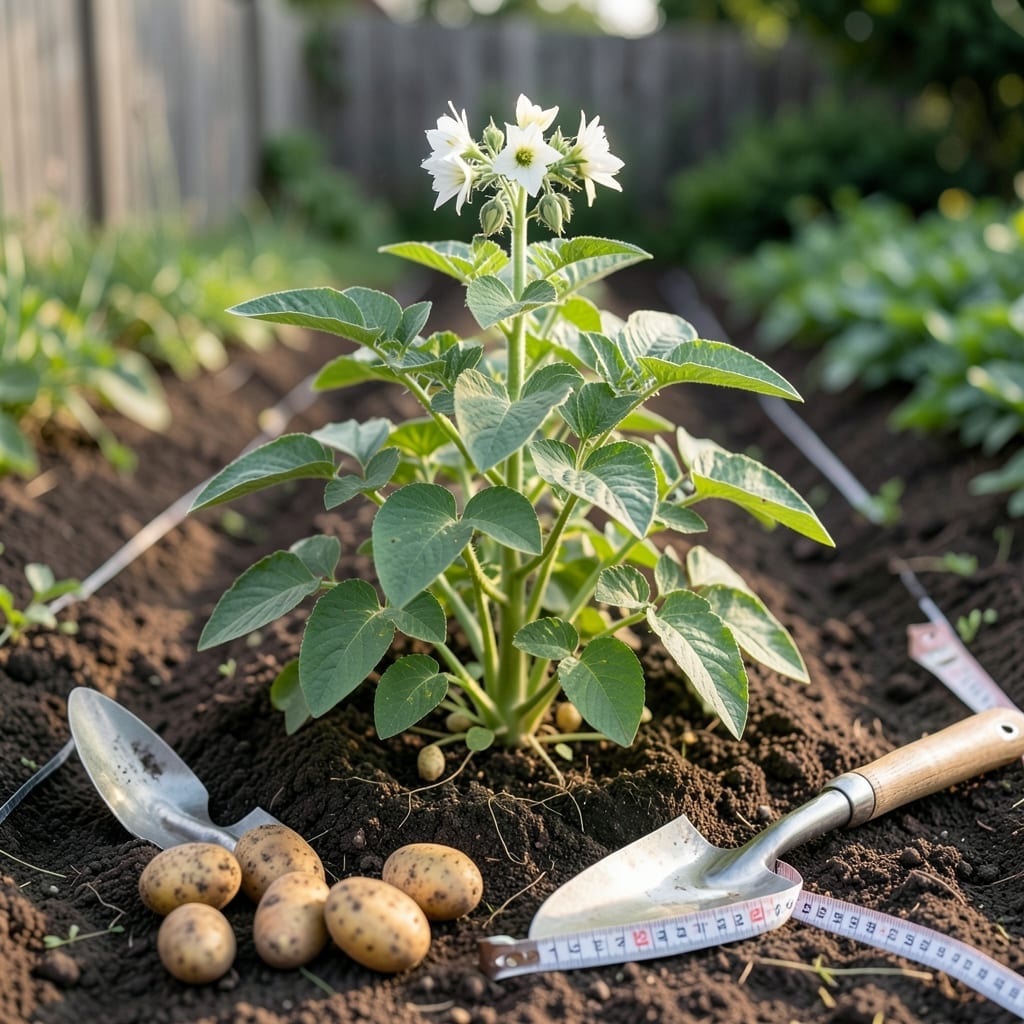
Proper spacing is the hidden key to transforming your potato patch from mediocre to magnificent. I learned this the hard way after my first crowded planting left me with smaller tubers and frustrated plants.
The 🥔 Potato thrives when given room to spread its roots and access nutrients without competition. In my experience, even small adjustments in planting distance can dramatically improve your harvest.
Whether you’re planting in neat rows or raised beds, getting this right makes all the difference. I’ll show you exactly how to space your plants for the best results.
Let’s dig into the details that will help you grow bigger, healthier potatoes this season.
I’ve learned that proper potato spacing isn’t just about neat rows—it’s the foundation for strong root systems and maximum tuber production. When plants are too close, they compete for water and nutrients, stunting growth. 🌱
In my garden, I’ve seen firsthand how crowded potatoes produce smaller, misshapen tubers. The ideal spacing allows each plant to develop a full canopy of leaves that photosynthesizes efficiently, leading to bigger harvests.
I always remind fellow gardeners that air circulation is another critical benefit of proper spacing. When potato plants have room to breathe, the risk of fungal diseases like late blight drops significantly. This is especially important in humid climates where moisture lingers. 🌿
For root development, I’ve found that potatoes need at least 12 inches of space in all directions. This gives the tuber clusters room to expand without bumping into neighboring plants. In my raised beds, I measure this carefully to avoid any guesswork.
The science behind spacing is fascinating. Each potato plant develops a network of roots that can extend up to 2 feet in ideal conditions. When plants are too close, these root systems compete aggressively for the same resources, leading to stressed plants.
I’ve also noticed that proper spacing makes harvesting easier. When plants have room to grow, the tubers are more evenly distributed and less likely to be misshapen. This means fewer broken potatoes when it’s time to dig them up. ✂️
For disease prevention, I can’t stress enough how important good air flow is. Potatoes are susceptible to several foliar diseases, and crowded plants create the perfect environment for these issues to spread. Proper spacing is your first line of defense.
In my experience, the yield difference between properly spaced and crowded potatoes can be dramatic. With the right spacing, I consistently get larger tubers and more of them per plant. This is why I always take the time to measure my planting layout. 🌱
Finally, remember that soil health benefits from proper spacing too. When plants aren’t competing, they don’t deplete the soil as quickly. This means your garden stays more fertile and productive season after season.
Getting your potato planting distance right starts with knowing your variety. Early potatoes need less room than maincrop types, but all require space to thrive. I always check the seed packet for exact specs.
For most gardeners, 12-inch spacing between plants in a row works well. But rows should be 30-36 inches apart to allow for hilling and easy access. This prevents disease spread and promotes airflow.
| Potato Type | In-Row Spacing | Row Spacing |
|---|---|---|
| Early Varieties | 10-12 inches | 24-30 inches |
| Maincrop | 12-15 inches | 30-36 inches |
| Fingerling | 8-10 inches | 24 inches |
In raised beds, I tighten spacing slightly to 8-10 inches between plants, but never crowd them. Container growing requires at least 5-gallon pots per plant for proper tuber development.
For organic gardeners, wider spacing of 15 inches helps with weed control and reduces competition. I’ve found this especially useful in dry climates where water is limited.
Remember that soil type affects spacing too. Sandy soil allows closer planting, while clay soil needs more room for root expansion. Test your soil’s drainage before deciding.
No matter the variety, consistent spacing ensures uniform growth. I use a measuring stick for accuracy, and it’s saved me from overcrowding issues more than once. 🌱