
Beautiful Plants For Your Interior
Beautiful Plants For Your Interior
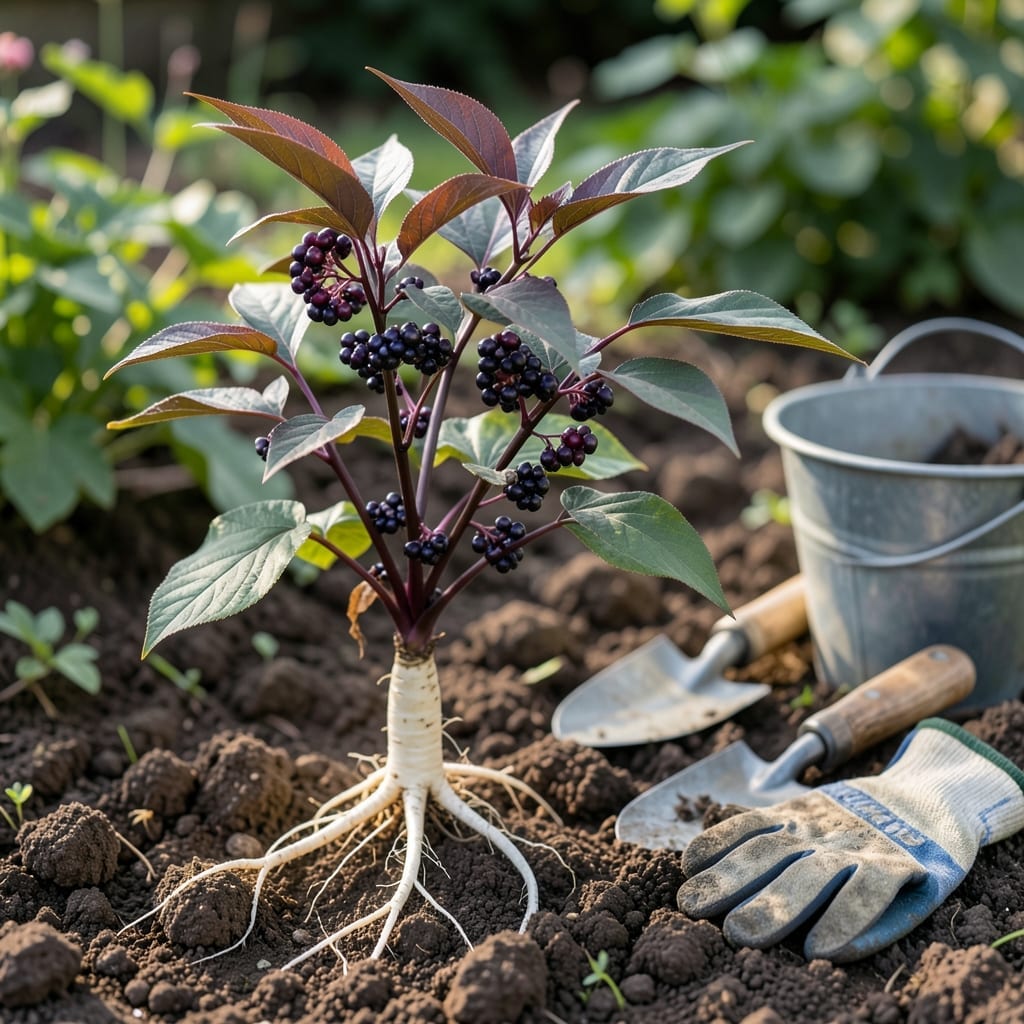
Pokeweed root demands respect before curiosity. I learned the hard way that its vibrant berries and deep roots hide serious toxicity—yet this same plant has a complicated history in traditional medicine.
Handle with caution: every part of the plant contains compounds that can be dangerous if mishandled. The key is knowledge—understanding its growth habits, proper identification, and safe removal techniques to avoid accidental exposure.
📚 In This Guide
This method ensures you can work with the plant without risking exposure to its toxic compounds.
Before handling, verify you’re dealing with pokeweed by its smooth, deep purple stems, lance-shaped leaves, and clusters of dark berries. Young shoots may look harmless, but the root is where toxicity concentrates. I always cross-check with a reliable field guide—mistaking it for elderberry or pokeroot can have serious consequences.
Look for the plant in disturbed soils, fence rows, or wooded edges where it thrives. The root system is deep and extensive, so even small above-ground growth indicates a substantial underground network. Never assume a plant is safe based on appearance alone.
Wear long sleeves, durable gloves (nitrile or rubber, not cloth), and eye protection to prevent sap contact with skin or eyes. The root’s toxins, including phytolaccigenin and phytolaccatoxin, can cause severe irritation or worse if absorbed. I keep a dedicated pair of gloves for toxic plants to avoid cross-contamination.
Work in a well-ventilated area, preferably outdoors, and avoid touching your face or other surfaces until you’ve thoroughly washed up. Even dried root material can retain toxicity, so treat all plant parts as hazardous.
Use a trowel or shovel to dig 8-12 inches deep around the base, as the taproot extends vertically. Loosen the soil gradually to avoid breaking the root, which can release more toxins into the air. I’ve found that wetting the soil slightly the day before makes extraction easier without increasing risk.
Place the root in a sealed, labeled container immediately—never leave it exposed. If you’re removing the plant for eradication, bag the entire specimen, roots and all, to prevent regrowth or accidental contact.
After handling, remove gloves carefully (peel them off inside-out) and wash them with soap and warm water before disposal or reuse. Clean all tools with a 10% bleach solution or rubbing alcohol to neutralize any residual toxins. I scrub my trowel with a stiff brush to ensure no sap lingers in crevices.
Wash your hands, arms, and any exposed skin with cold water first (hot water can open pores and increase absorption) followed by thorough soaping. Clothing worn during handling should be laundered separately in hot water.
Never compost pokeweed roots or any part of the plant—its toxins persist and can leach into future compost batches. Instead, double-bag the material in heavy-duty trash bags and dispose of it with household waste. If burning, do so in a controlled, high-temperature fire (like a metal barrel) to fully incinerate the plant matter.
If you’re preserving the root for traditional uses, dry it in a well-ventilated area away from food, children, and pets. Store the dried root in clearly labeled, airtight containers, and keep it out of reach. Even in dried form, the toxins remain active.
These safety-focused strategies will help you avoid exposure to the plant’s harmful compounds.
Identification Accuracy: Confession: I once nearly confused pokeweed with elderberry. Always verify the smooth, deep purple stems and lance-shaped leaves in Step 1—this is non-negotiable. A reliable field guide is your best defense against dangerous misidentification.
Depth Matters in Extraction: In Step 3, digging 8-12 inches deep isn’t arbitrary. The taproot extends vertically, and shallow digging risks breaking it, which releases more toxins into the air. Wetting the soil slightly the day before makes this easier without compromising safety.
Decontamination Protocol: The order in Step 4 is critical: cold water first, then soap. Hot water opens pores, increasing toxin absorption—a mistake I learned the hard way. Scrub tools with that 10% bleach solution thoroughly; sap lingers in crevices.
Disposal Safety: Never underestimate pokeweed’s persistence. In Step 5, double-bagging and household waste disposal (not compost) prevents toxins from leaching. If burning, a controlled, high-temperature fire is essential—open burning risks incomplete incineration.
No, poke weed root is toxic and should never be consumed. It contains harmful compounds like phytolaccatoxin and phytolaccigenin, which can cause severe poisoning, vomiting, or even respiratory failure. Always avoid ingestion.
Wear protective gloves and long sleeves to avoid skin contact. Use a shovel or gardening tool to dig deep and remove the entire root system. Dispose of it in a sealed bag to prevent regrowth or accidental exposure.
Symptoms may include nausea, vomiting, diarrhea, stomach cramps, or difficulty breathing. In severe cases, it can lead to low blood pressure or seizures. Seek medical help immediately if ingestion occurs.
Yes! Consider edible plants like dandelions, lambsquarters, or purslane. Always verify plant identification with a trusted guide or expert before foraging to avoid toxic look-alikes.