
Beautiful Plants For Your Interior
Beautiful Plants For Your Interior
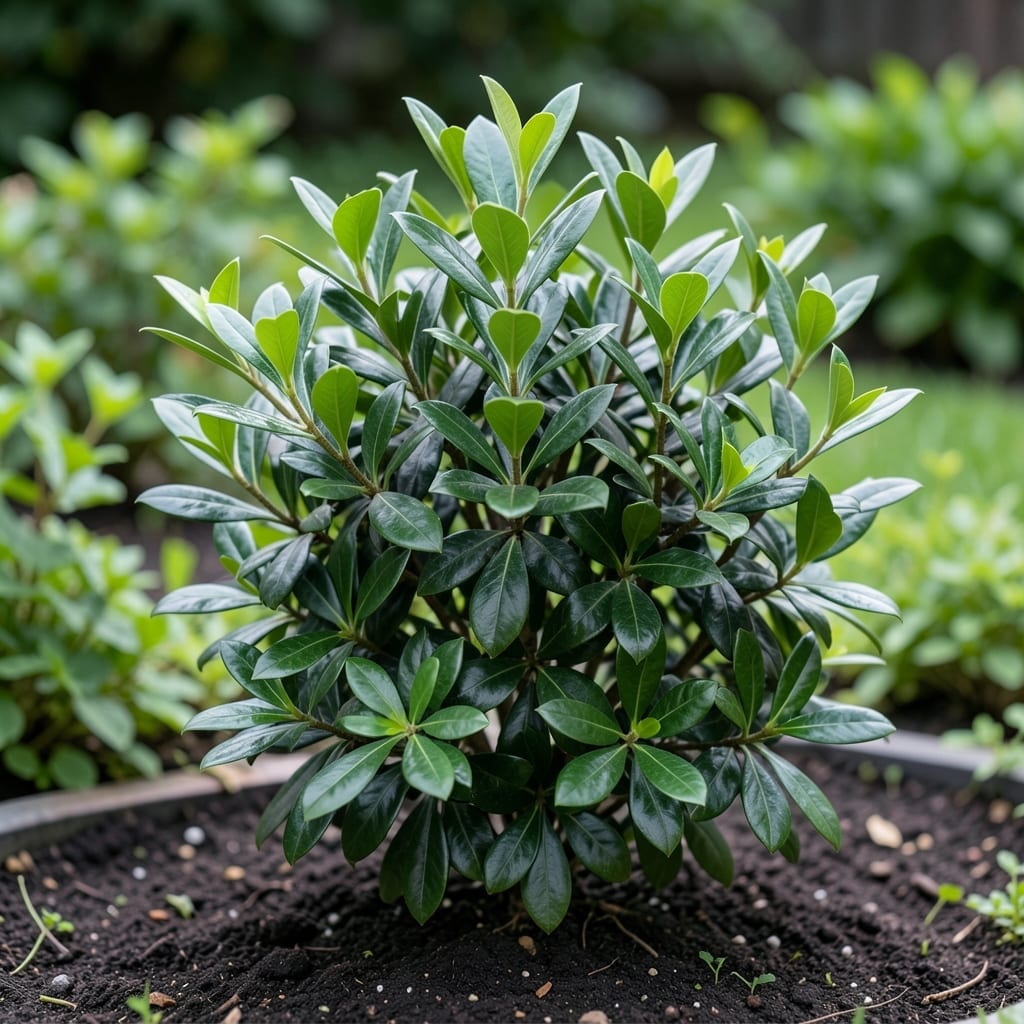
Podocarpus macrophyllus is commonly known as yew pine, Buddhist pine, or Japanese yew, though it is not a true pine or yew.
This evergreen conifer earns its nicknames from its pine-like needles and compact growth habit, making it popular in gardens and bonsai. 🌟 I love how its resilience and elegant foliage set it apart from true pines, which belong to a different plant family entirely.
Its cultural significance in Asia adds to the naming diversity, with Buddhist pine often used in temple gardens for its symbolic meaning.
💡 In This Article
The naming confusion starts with its visual resemblance to true pines. Its long, narrow, dark green leaves spiral around the stems just like pine needles, creating that familiar evergreen silhouette.
The 1-3 inch leaves have a leathery texture that feels remarkably similar to pine foliage, which explains why “yew pine” became such a widespread nickname in English-speaking regions.
In Asia, the cultural significance runs deeper. Japanese gardeners have cultivated this species for centuries, particularly around Buddhist temples where its evergreen nature symbolizes eternity. This led to the name “Buddhist pine” becoming common in Japan and China.
The tree’s compact, dense growth makes it ideal for formal temple gardens and bonsai, where its slow growth rate (6-12 inches per year) allows for precise shaping over decades. 🌟
The “Japanese yew” moniker comes from its superficial similarity to true yew trees (Taxus genus). Both produce red, fleshy seed cones instead of typical pine cones, and both have dark green foliage. However, true yews are highly toxic, while Podocarpus macrophyllus is non-toxic to humans—a critical distinction for gardeners with children or pets.
Regional variations add another layer. In the southern United States, it’s often called “yew pine” due to its popularity as a hedge plant. In Australia, it’s sometimes marketed as “fern pine” because its soft, fern-like new growth contrasts with the stiffer mature needles.
This adaptability to different climates (USDA zones 7-10) has helped spread its various common names across continents.
The botanical reality is more fascinating: it’s actually more closely related to the ancient conifer families that dominated Earth’s forests 200 million years ago than to modern pines or yews. This living fossil status makes its multiple names a testament to both human observation and botanical evolution. ✨
Its pine-like needles and yew-like cones create visual confusion with true pines and yews. Cultural significance in Asia adds names like Buddhist pine, while regional uses create terms like yew pine or fern pine.
Yes! Unlike true yews, this species is non-toxic to humans and animals. Its similarity to toxic yews is purely visual, making it a safer choice for gardens with children or pets.
It grows slowly, typically 6-12 inches per year. This slow growth makes it perfect for hedges, topiary, and bonsai, as it holds its shape well with minimal pruning.
Use a large pot with good drainage and quality potting mix. Its slow growth and tolerance for pruning make it ideal for patio containers or indoor bonsai cultivation.