
Beautiful Plants For Your Interior
Beautiful Plants For Your Interior
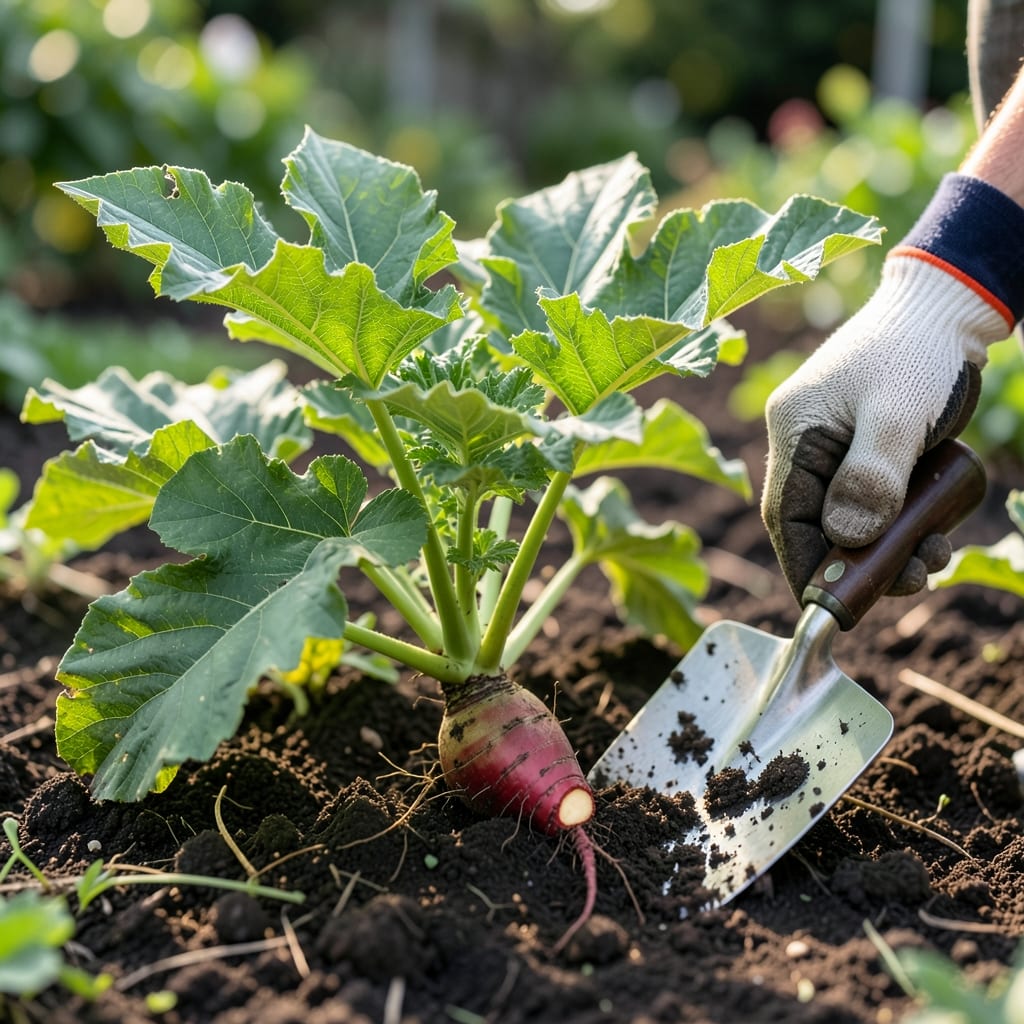
I planted my first horseradish root three years ago, and it’s still producing. This project rewards patience with bold flavors and minimal effort once established.
Get the soil right—loose, deep, and free-draining—and you’ll avoid the woody roots that plague most first-timers. Within 8-10 months, you’ll dig up roots ready for that signature kick.
📚 In This Guide
Here’s the method I’ve perfected for establishing vigorous horseradish that returns year after year.
Choose a healthy 8-10 inch section of horseradish root with a diameter of about ½ inch. The top end should have visible bud nodes (you’ll see small bumps or eyes along the upper portion). I always select the thickest, most robust roots from my previous harvest for propagation.
Cut the root at a 45-degree angle at the top just below a bud node and straight across at the bottom. This angled cut prevents moisture from pooling on the flat surface and encourages proper growth orientation. Soak the cutting in lukewarm water for 2-3 hours to rehydrate before planting.
Horseradish thrives in full sun but tolerates partial shade, especially in hotter climates. Select a location with loose, well-draining soil—this prevents the taproot from becoming stunted or forked. I’ve found that working the soil to a depth of 12-15 inches removes obstacles that might deform the root.
Amend the soil with 2-3 inches of aged compost to provide nutrients without over-fertilizing (too much nitrogen produces excessive leaf growth at the expense of root development). The soil pH should be between 6.0 and 7.5 for optimal growth.
Dig a planting hole 3-4 inches deep and place the root cutting vertically with the angled (bud) end facing upward. The top of the cutting should sit 1-2 inches below the soil surface. This depth protects the emerging shoots from temperature fluctuations.
Space multiple plantings 18-24 inches apart to give each plant adequate room to develop its extensive root system. I plant mine in a dedicated bed rather than mixing with other crops, as horseradish can become invasive if not contained.
Water thoroughly after planting until the soil is evenly moist but not waterlogged. Maintain consistent moisture during the first 2-3 weeks as the plant establishes. You should see green shoots emerging within 10-14 days if the root was healthy.
Once shoots appear, reduce watering frequency but increase depth to encourage deep root growth. Horseradish is drought-tolerant once established, but the first month of consistent moisture is critical for root development. Watch for the first true leaves to confirm successful establishment.
Horseradish requires minimal maintenance once established. Remove any weeds that appear near the base, as they compete for nutrients during the root’s rapid growth phase. I apply a 2-inch layer of organic mulch around plants to retain moisture and suppress weeds.
Avoid fertilizing after the initial planting—excess nutrients produce lush foliage but weak roots. The plant will reach 2-3 feet tall with large, dock-like leaves. By late fall, the tops will die back naturally, signaling that the root is ready for harvest or overwintering.
These insights will help you avoid the pitfalls I encountered when first learning to grow horseradish.
Selection Tip: In Step 1, when choosing your root cutting, look for sections that are 8-10 inches long with a ½ inch diameter—thicker roots establish more reliably. The bud nodes at the top are critical, as they’re where new growth will emerge. Confession: I skipped checking for these nodes once and ended up with a cutting that never sprouted.
Soaking Strategy: The 2-3 hour soak in lukewarm water in Step 1 rehydrates the cutting and kickstarts root development. Don’t rush this step—cuttings soaked for less than 2 hours often struggle to take root. I like to use room-temperature water to avoid shocking the plant tissue.
Planting Depth: In Step 3, planting the cutting 3-4 inches deep with the top 1-2 inches below the soil surface protects the emerging shoots from temperature swings. If you plant too shallow, the shoots can dry out or get damaged by frost. Too deep, and the cutting may rot before sprouting.
Spacing Wisdom: The 18-24 inch spacing in Step 3 isn’t just a suggestion—horseradish roots spread aggressively. I learned this the hard way when my first bed became a tangled mess of competing roots. A dedicated bed or container is ideal to keep it from overtaking your garden.
Yes! Horseradish thrives when planted directly in well-drained soil. Set the root cuttings at a 45-degree angle, with the top bud about 2 inches below the surface. Space them 12–18 inches apart for room to grow.
Early spring or late fall is ideal, as horseradish prefers cool temperatures. Aim for soil temps between 50–70°F. Avoid planting in peak summer heat, which can stress the roots.
Absolutely! Choose a deep container (at least 12–18 inches) with drainage holes. Use loose, fertile soil, and ensure the pot gets full sun. Container-grown horseradish may need more frequent watering.
Wilting often signals underwatering or poor drainage, while yellowing leaves may indicate overwatering or nutrient deficiency. Check soil moisture and ensure the plant isn’t sitting in soggy conditions.