
Beautiful Plants For Your Interior
Beautiful Plants For Your Interior
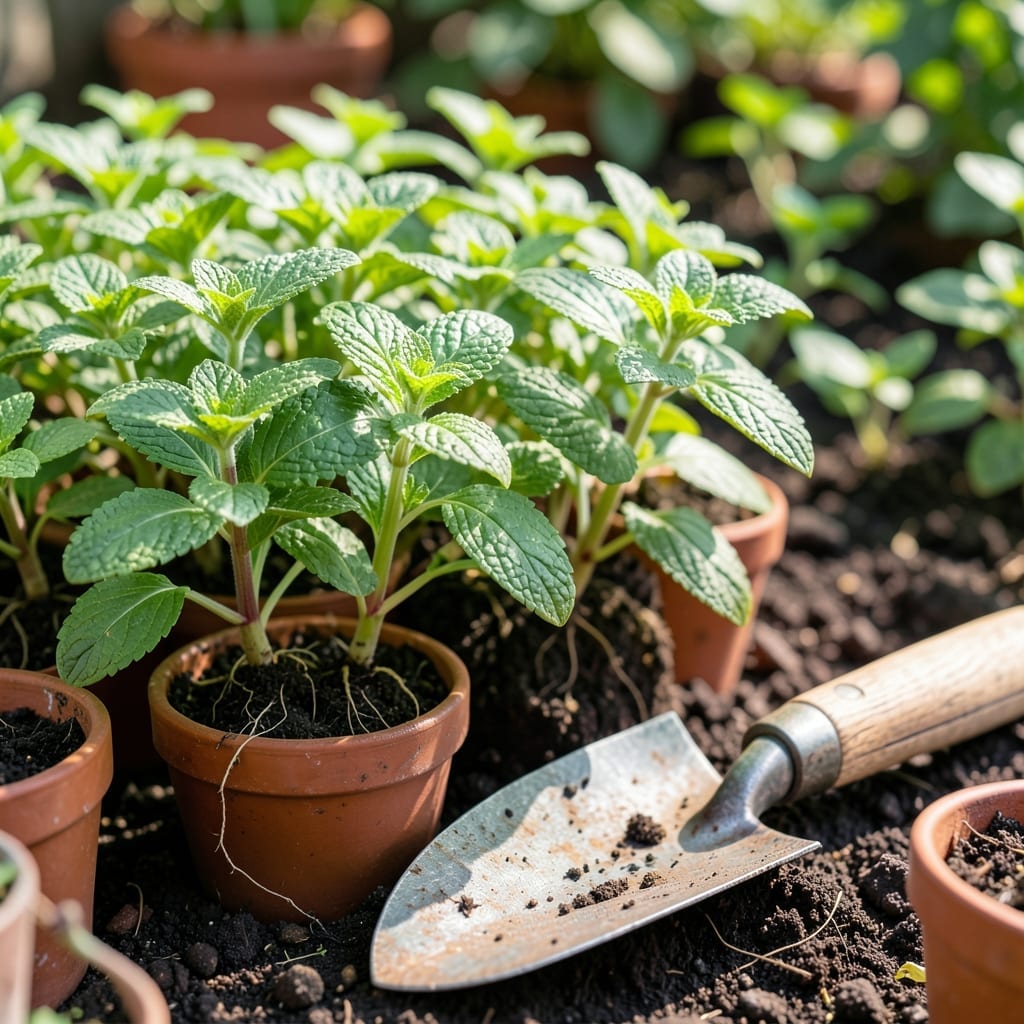
I killed my first three mint plants before discovering root cuttings. This method gives you healthy new growth every time with zero guesswork.
Select plump roots, snip into 2-3 inch sections, and plant in moist soil. You’ll see new shoots within 2 weeks—no green thumb required.
📚 In This Guide
Here’s the tested method I use every spring to multiply my mint stock quickly.
Choose an established mint plant with vigorous, disease-free growth and a well-developed root system. I look for stems that are at least 6 inches tall with multiple sets of leaves, as these indicate a mature root structure beneath the soil. The best time to take cuttings is in early spring when the plant is just beginning active growth.
Water the parent plant thoroughly the day before taking cuttings. This ensures the roots are plump with moisture and more likely to survive the transition. You’ll know the plant is properly hydrated when the soil feels damp 1-2 inches down.
Carefully dig up the entire plant, using a trowel to lift from the base while preserving as much of the root ball as possible. Shake off loose soil to expose the root network. Healthy roots appear white to light tan and feel firm to the touch.
Using clean, sharp scissors or pruning shears, cut the root mass into 2-3 inch sections, ensuring each piece has at least one visible growth node (those small bumps where new shoots emerge). Discard any dark, mushy, or foul-smelling roots—these won’t propagate and could introduce disease to your new plants.
Fill small pots or a seed tray with a well-draining potting mix. I prefer a blend with added perlite for extra aeration. Plant each root cutting horizontally just beneath the soil surface, covering with only about ½ inch of mix—any deeper and the emerging shoots may rot before reaching light.
Space cuttings 1 inch apart to give each room to develop without immediate competition. Gently firm the soil around each cutting to eliminate air pockets, which can dry out the delicate root tissue.
Place the planted cuttings in a warm location with bright, indirect light. A temperature range of 65-75°F is ideal for root development. I use a seedling heat mat to maintain consistent warmth, which speeds up the process significantly.
Keep the soil consistently moist but not waterlogged. Mist the surface daily with a spray bottle to prevent the top layer from drying out. You should see new green shoots emerging from the nodes within 10-14 days.
Once shoots reach 2-3 inches tall and display several sets of true leaves, the cuttings have established themselves. At this point, you can transplant them into individual 4-inch pots or directly into the garden.
Gradually acclimate the new plants to their permanent location over 5-7 days. Start with a few hours of direct sun and increase daily, watching for any signs of wilting. This hardening-off process ensures your propagated mint transitions smoothly without shock.
These insights will help you avoid pitfalls and ensure strong, healthy propagation every time.
The Selection Factor: In Step 1, choosing stems at least 6 inches tall isn’t arbitrary—this height ensures the root system below is mature enough to handle division. Confession: I skipped this once and my cuttings struggled to establish. Always verify the plant is disease-free by checking for spots or discoloration on leaves.
Depth Precision: In Step 3, covering root cuttings with only ½ inch of potting mix is critical. Any deeper and the emerging shoots may rot before breaking the soil surface. I learned this after losing an entire batch to over-enthusiastic planting. Gently firm the soil to remove air pockets, which can desiccate delicate root tissue.
Temperature Control: The 65-75°F range in Step 4 isn’t just ideal—it’s non-negotiable for consistent results. Below 65°F, root development slows dramatically. Above 75°F, you risk heat stress. A seedling heat mat helps maintain this range, especially in cooler spring conditions when natural warmth is inconsistent.
Hardening-Off Wisdom: In Step 5, that 5-7 day acclimation period prevents transplant shock. Start with 2-3 hours of morning sun, gradually increasing exposure. Watch for wilting as your cue to scale back—this is your plants’ way of saying they need more time to adjust.
Yes! While soil is ideal, mint roots can sprout in water. Place cuttings in a jar, submerge the bottom half, and change water every 2-3 days. Transfer to soil once roots reach 1-2 inches.
Early spring or fall is perfect, as plants are in active growth. Avoid extreme heat or cold, which can stress cuttings and hinder root development.
Roots typically form in 2-4 weeks, with new foliage appearing soon after. Keep soil moist and warm (65–75°F) to speed up growth.
Check for rot or dryness. Ensure cuttings have nodes, use fresh soil, and avoid overwatering. If mold appears, trim affected areas and repot in clean mix.