
Beautiful Plants For Your Interior
Beautiful Plants For Your Interior
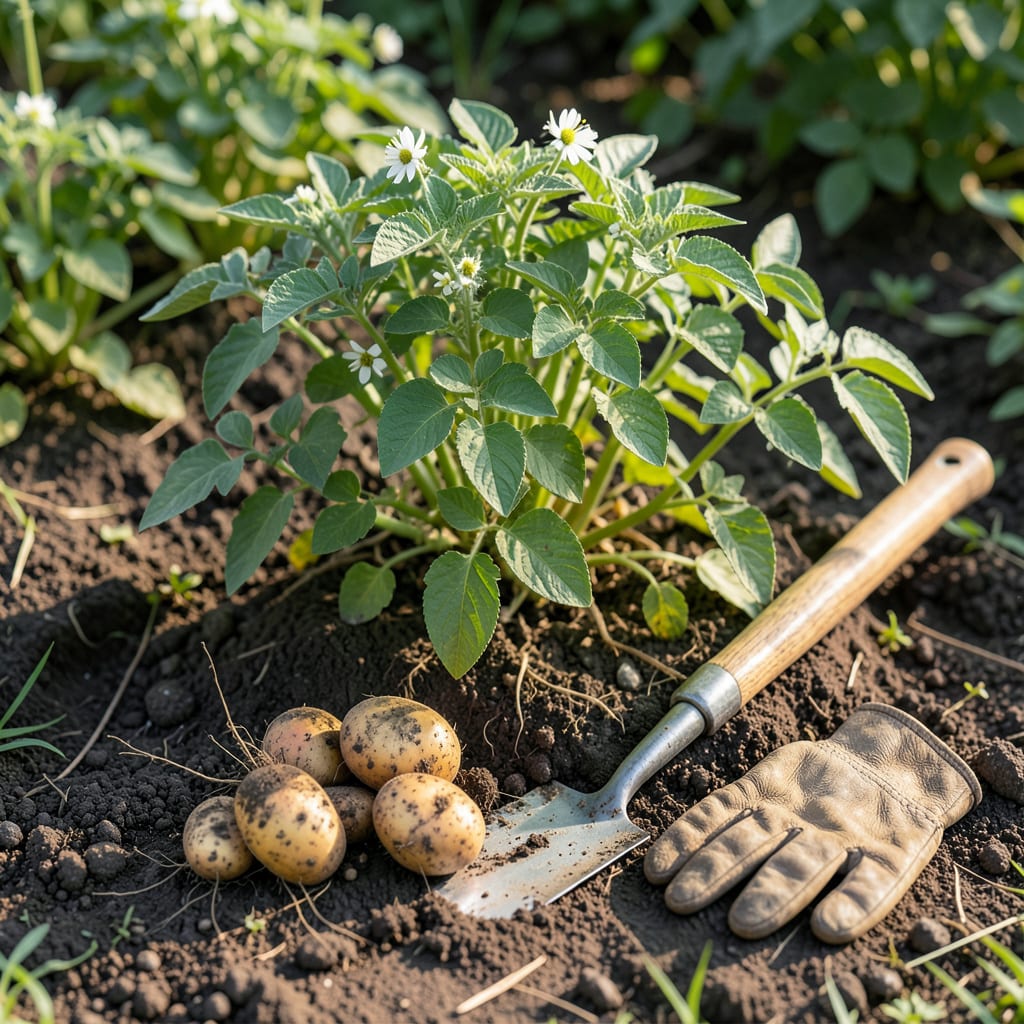
Knowing when your 🥔 Potato crop is ready can make or break your harvest. Dig too soon, and you’ll miss out on full-sized spuds.
I’ll show you the clear signs to watch for and the perfect timing to pull them from the soil for the best results.


I always watch for yellowing foliage as the first clue my planted potatoes are nearing harvest time. This natural die-back signals the plant is redirecting energy to the tubers below.
The flower stage also gives important hints. When potato plants flower, it typically means tubers are forming underground. For new potatoes, you can harvest a few 2-3 weeks after flowering begins.
Another reliable test is the skin set test. Gently rub a potato’s surface with your finger. If the skin doesn’t scrape off easily, it’s developed enough for storage.
For size verification, I carefully dig near the plant base with my hands. When I feel golf ball-sized tubers, I know they’re approaching harvest readiness. Smaller ones can be left to grow larger.
Weather plays a role too. I avoid harvesting during wet conditions as damp soil can cause rot. A dry, sunny day is ideal for digging and curing potatoes properly.
The variety matters significantly. Early types like Yukon Gold may be ready in 60-90 days, while storage varieties like Russet often need 100-135 days to mature fully.
I also monitor the plant’s life cycle. When the top growth collapses completely, it’s nature’s signal that the tubers have reached their full size and the plant is done growing.
For the most accurate check, I use the gentle dig method. With a hand trowel, I carefully uncover the top of a hill to inspect a few potatoes without disturbing the rest of the plant.
Remember that new potatoes can be harvested earlier for immediate use, while storage potatoes should stay in the ground until fully mature for best keeping quality 🌱
Timing your potato harvest perfectly depends largely on the variety planted. Early types mature faster than storage varieties, so knowing your seed potato type is crucial for best results.
For example, new potatoes like Red Norland can be ready in 60-70 days, while maincrop types like Kennebec typically need 90-110 days to fully mature.
| Variety | Days to Harvest | Best Use |
|---|---|---|
| Yukon Gold | 70-90 days | All-purpose |
| Russet | 100-135 days | Baking |
| Red Pontiac | 80-100 days | Boiling |
| Fingerling | 90-110 days | Roasting |
I always mark my planting date on the calendar to track maturity. This helps me anticipate when to start checking for harvest readiness based on the variety’s expected timeline.
For early varieties, I begin gentle checks at 60 days. If the plants are still green, I wait another week or two before testing again. The skin set test works well at this stage.
Late season potatoes need more patience. I watch for complete foliage dieback before harvesting, as this indicates the tubers have reached their maximum size and developed thick skins for storage.
Remember that growing conditions affect maturity times. Cooler temperatures may extend the growing period, while warm soil can speed it up. I adjust my expectations based on the season’s weather patterns 🌱
I’ve learned the hard way that some common harvesting mistakes can ruin your potato crop. Using sharp tools like shovels can slice through tubers, so I always opt for a hand trowel or gentle digging with my hands.
Another critical error is harvesting in wet soil. Damp conditions make potatoes prone to rot and diseases, so I always wait for a dry, sunny day to dig them up.
Avoid these common errors to protect your crop:
I also watch for pest signs before harvesting. If I notice tunnel holes or chewed foliage, I inspect the tubers carefully to avoid spreading issues to my stored crop.
Timing mistakes are just as harmful. Digging too early can yield underdeveloped spuds, while waiting too long might lead to overmature potatoes that split or rot in the ground.
Finally, I never pull plants by the stems. This can damage tubers still attached underground. Instead, I loosen soil around the plant first, then gently lift from the base to reveal the harvest 🌱
Watch for yellowing foliage and wilting plants as the first signs. When the tops die back completely, your potatoes are likely ready for harvest
Yes, for new potatoes you can gently dig a few 2-3 weeks after flowering. These will be smaller but perfect for immediate use with thin, tender skins.
Avoid sharp tools that can cut tubers. Use a hand trowel or your hands to gently loosen soil around the plants. This prevents damage to your crop
Once fully mature, potatoes can stay in dry soil for 2-3 weeks without harm. However, don’t leave them too long as they may rot or attract pests.
