
Beautiful Plants For Your Interior
Beautiful Plants For Your Interior
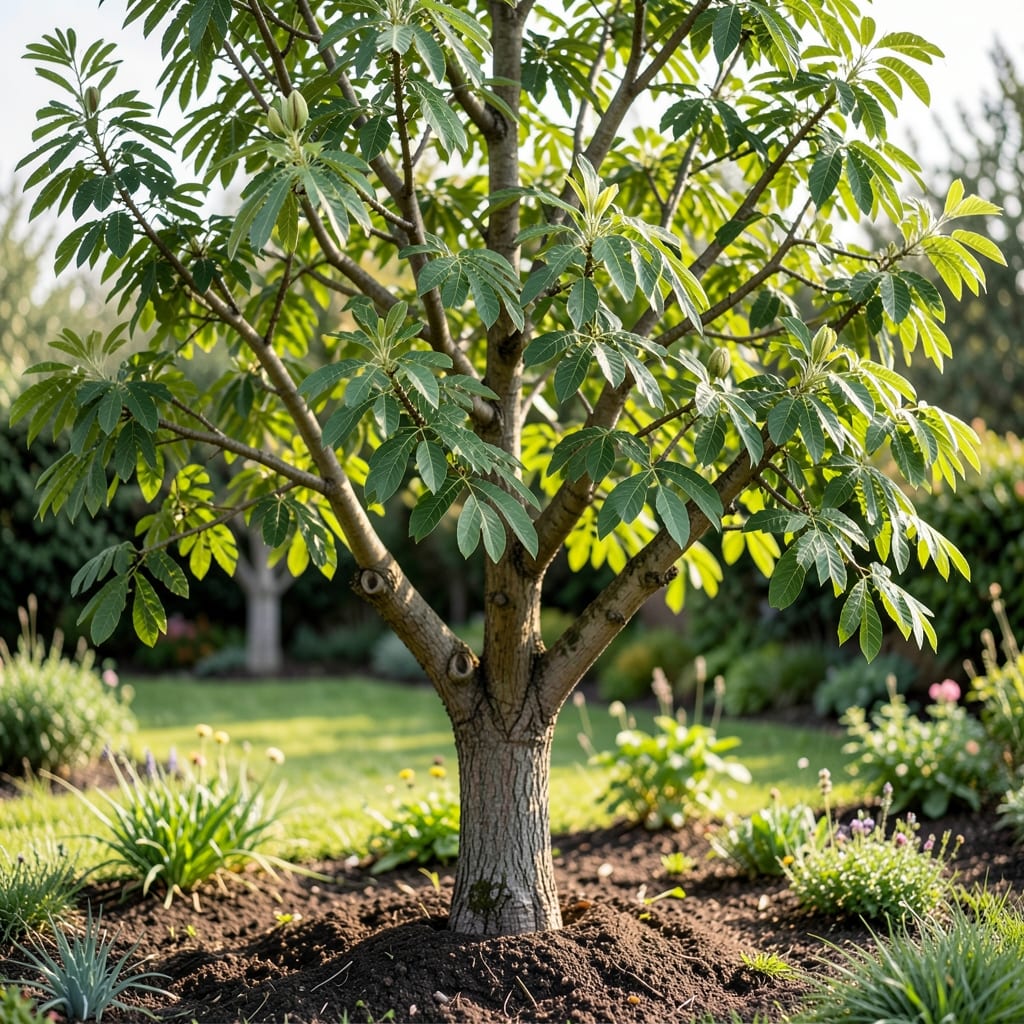
Pistache tree leaves reveal the plant’s true health. I’ve learned to read their color, shape, and texture like a living barometer of my tree’s needs.
Bright green leaves mean you’re on track, while yellowing or brown edges signal trouble. The right care keeps foliage vibrant and the tree thriving through every season.
📚 In This Guide
Here’s the straightforward method I use to keep pistache tree foliage lush and healthy all season long.
Check the soil around your tree weekly by pressing your finger 1-2 inches below the surface. Pistache trees prefer soil that stays slightly moist but never soggy. If the soil feels dry at that depth, it’s time to water deeply.
I water my trees at the base in the early morning, allowing the moisture to soak 12-18 inches deep into the root zone. This encourages deep root growth, which makes the tree more drought-resistant over time. Avoid wetting the leaves, as this can promote fungal issues that damage foliage.
During the first year after planting, keep the soil consistently moist. Established trees can tolerate some drought, but you’ll see the most vibrant leaves with regular, deep watering.
Spread a 2-3 inch layer of organic mulch, like wood chips or bark, around the base of the tree. Keep the mulch 6 inches away from the trunk to prevent rot and pest issues. Mulch helps retain soil moisture, regulate temperature, and suppress weeds that compete for nutrients.
Replenish the mulch every spring as it breaks down. This simple step drastically reduces water stress on the tree, which directly impacts leaf health. You’ll notice the soil stays damp longer after watering, and the leaves maintain a richer green color.
Apply a balanced, slow-release fertilizer in early spring, just as new growth begins. I use a 10-10-10 or 20-20-20 formula and follow the package instructions for the amount based on tree size. Scatter the fertilizer evenly over the soil beneath the tree’s canopy, then water it in thoroughly.
Avoid over-fertilizing, as this can lead to excessive leafy growth that’s more susceptible to pests and diseases. You’ll know the fertilizer is working when the leaves appear deep green and full, rather than pale or sparse.
If the leaves start to yellow between feedings, it might be a sign of nutrient deficiency—usually nitrogen. A light mid-summer application can help correct this.
Prune your pistache tree in late winter or early spring before new growth starts. Remove any dead, diseased, or crossing branches first. Then, thin out the canopy to allow light and air to reach the inner leaves. This prevents fungal problems and encourages even, vibrant foliage.
Use clean, sharp pruning shears and make cuts at a 45-degree angle just above a bud or branch. Never remove more than 25% of the canopy in a single year, as excessive pruning can stress the tree and reduce leaf vitality.
After pruning, step back and check the tree’s shape. The goal is an open, balanced structure that lets sunlight reach all the leaves, ensuring they stay healthy and colorful.
Inspect the leaves regularly for signs of trouble, such as holes, spots, or discoloration. Common pests like aphids or scale insects can weaken the tree and cause leaf drop. If you spot pests, a strong blast of water or insecticidal soap usually does the trick.
Fungal diseases, such as leaf spot, often appear as brown or black spots on the leaves. Improve airflow around the tree and avoid overhead watering to prevent these issues. If you notice fungal symptoms, remove the affected leaves and dispose of them away from the tree.
Early intervention is key. The healthier your tree, the better it can resist pests and diseases on its own, keeping those leaves vibrant and full.
Here’s how to keep your tree thriving with minimal effort.
Watering Wisdom: Stick to that 7-10 day watering schedule during the first growing season. I check the soil at 2-3 inches down—if it’s dry, it’s time to water. A slow trickle prevents runoff, and early morning watering reduces evaporation. Overwatering is the fastest way to yellow leaves, so when in doubt, wait an extra day.
Sunlight Strategy: Pistache trees need 6-8 hours of direct sunlight daily. If your tree is in partial shade, watch for sparse or pale leaves. Adjust its position to maximize sun exposure, especially if you notice thinner foliage that’s vulnerable to wind damage.
Pruning Precision: In late winter or early spring, remove dead or crossing branches first to improve airflow. Thin out 20-30% of the inner branches to let light penetrate the canopy. This step prevents fungal issues and keeps leaves vibrant. Always use sharp, clean tools for precise cuts.
Fertilizer Focus: Apply that 10-10-10 fertilizer in early spring as new growth starts. Avoid late summer or fall applications, as this can lead to tender growth that won’t survive winter. If you see yellowing leaves in summer, a nitrogen-rich fertilizer can help, but always water thoroughly afterward.
Yellowing leaves often signal overwatering, nutrient deficiencies, or poor drainage. Check soil moisture and ensure proper fertilization with nitrogen-rich products. If the issue persists, test soil pH (ideal: 6.0-7.5).
Prune in late winter or early spring before new growth starts. This helps shape the tree and removes dead or damaged branches. Avoid heavy pruning in fall, as it can stimulate tender growth vulnerable to frost.
Yes! Pistache leaves decompose well and add organic matter to compost. Shred them first to speed up the process. Avoid using leaves with signs of disease to prevent spreading pathogens.
Young trees need deep watering 1-2 times per week. Mature trees are drought-tolerant and thrive with weekly watering in dry spells. Always let the top 2-3 inches of soil dry out between waterings.
Watch for aphids, scale insects, and mites. Treat infestations with insecticidal soap or neem oil. Regularly inspect leaves for sticky residue (honeydew) or webbing, which indicate pest activity.