
Beautiful Plants For Your Interior
Beautiful Plants For Your Interior
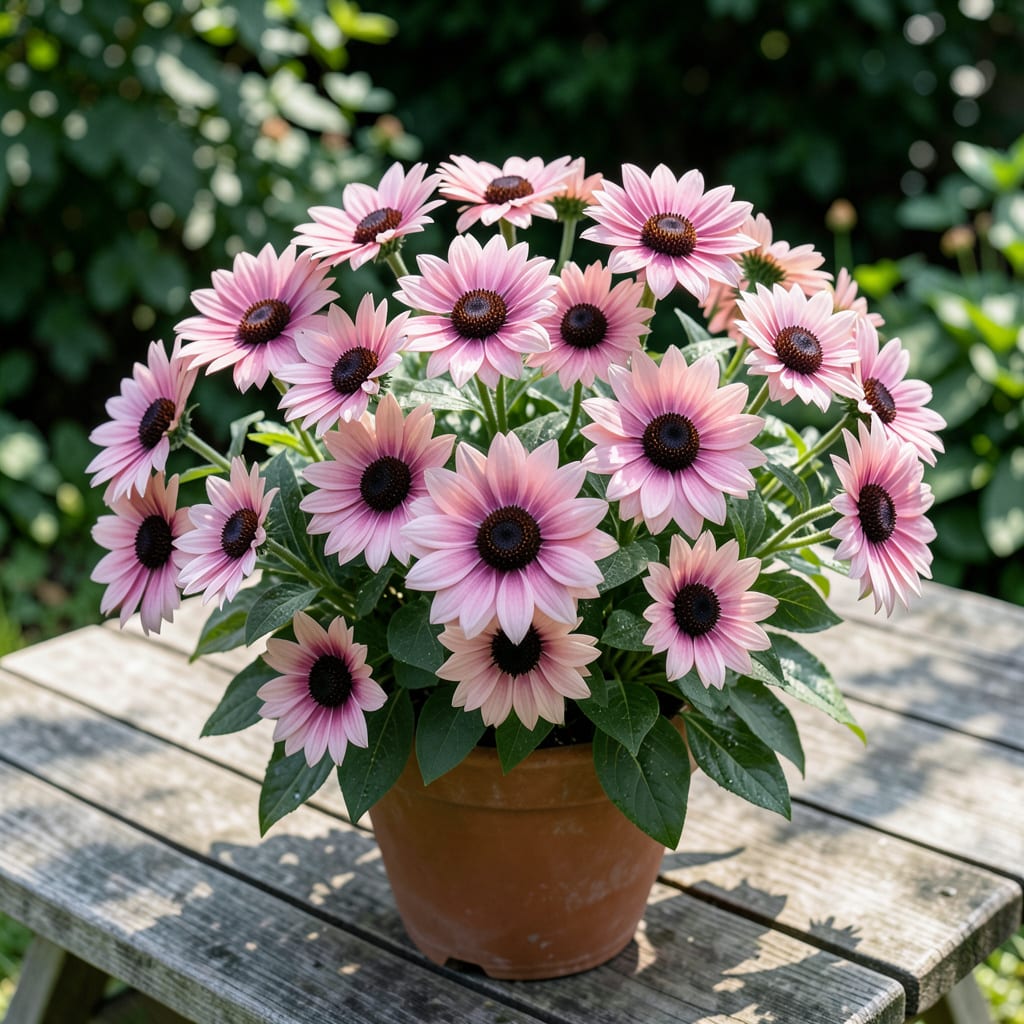
I fell for Pink Black Eyed Susan the first time I saw its vibrant pink petals surrounding that classic dark center. It’s the kind of flower that stops you mid-stride.
This hardy perennial thrives in full sun with minimal fuss. It brings bold contrast to garden beds and keeps blooming from summer through fall, asking only for well-drained soil and occasional water.
📚 In This Guide
Here’s the method I trust for establishing these colorful perennials in any garden setting.
Choose a spot that receives full sun to partial shade, as these plants thrive best with at least 6 hours of direct sunlight daily. The soil should drain well—pink black eyed susans tolerate a range of soil types but perform poorly in waterlogged conditions.
Test drainage by digging a 1-foot deep hole and filling it with water. If it drains completely within 2-3 hours, the location is suitable. Avoid low-lying areas where water pools after rain, as this leads to root rot and stunted growth.
Loosen the soil to a depth of 12-15 inches using a garden fork or tiller, breaking up any compacted areas. This encourages deep root penetration and improves overall plant vitality.
Amend the soil with a 2-3 inch layer of organic matter like compost or well-rotted manure. Mix it thoroughly into the top 6 inches of soil. This step enhances fertility and provides the nutrients needed for vibrant blooms and healthy foliage.
Real talk: skipping soil prep often results in weak plants that struggle to establish. The initial effort pays off with stronger, more resilient specimens.
Dig a hole that is twice as wide and just as deep as the root ball of your pink black eyed susan. Gently remove the plant from its container and loosen any circling roots to encourage outward growth.
Place the plant in the hole so the top of the root ball sits level with the surrounding soil. Backfill with the amended soil, pressing lightly to remove air pockets. Space plants 18-24 inches apart to allow for proper air circulation and future growth.
Water thoroughly after planting to settle the soil and eliminate air gaps around the roots. You’ll see the soil level drop slightly—this is normal and ensures good root-to-soil contact.
Water deeply 1-2 times per week for the first 4-6 weeks after planting, ensuring the soil stays consistently moist but not soggy. After establishment, these plants are drought-tolerant and require supplemental watering only during prolonged dry spells.
Apply a 2-3 inch layer of mulch around the base of the plants to retain moisture and suppress weeds. Keep the mulch 2-3 inches away from the stems to prevent rot. This also helps maintain a consistent soil temperature, which pink black eyed susans appreciate.
Deadhead spent blooms regularly to encourage continuous flowering throughout the growing season. This simple step extends the visual impact of your garden beds significantly.
The details that separate thriving plants from struggling ones often come down to these simple adjustments.
Sunlight Essentials: That 6 hours of direct sunlight daily isn’t just a suggestion—it’s critical for vibrant blooms and strong stems. I’ve seen plants in shadier spots produce fewer, paler flowers that flop over. If your garden has partial shade, prioritize morning sun over afternoon, as it’s gentler on the plants during hot weather.
Drainage Test: The 2-3 hours drainage test in Step 1 is your best insurance against root rot. I learned this the hard way after losing three plants in a low spot that stayed soggy. If your test hole doesn’t drain within that timeframe, consider raising the bed or amending with coarse sand to improve drainage.
Soil Preparation: When loosening soil to 12-15 inches in Step 2, don’t rush this process. Compacted soil restricts root growth, and I’ve noticed plants in well-prepared beds establish twice as fast. The 2-3 inch layer of organic matter isn’t just for nutrients—it also improves soil structure, which helps with that critical drainage.
Spacing Matters: Those 18-24 inches apart in Step 3 might seem like a lot, but pink black eyed susans spread enthusiastically. Crowding leads to poor air circulation, which invites fungal issues. I started with 12 inches apart my first year and spent the next season dividing and replanting—save yourself the work and give them room to grow.
Plant them in well-draining soil with full sun to partial shade. Water regularly until established, then reduce to moderate watering. They thrive in USDA zones 4-9 and bloom from mid-summer to fall.
Sow seeds indoors 6-8 weeks before the last frost or directly outdoors after the frost has passed. For best results, plant in early spring or fall to allow roots to establish before extreme temperatures.
Yes! Consider Echinacea (coneflowers) in pink or purple, Rudbeckia hirta (traditional black-eyed Susan), or Cosmos for bright, daisy-like blooms with a pop of color.
Brown or wilting leaves often signal overwatering, poor drainage, or fungal diseases like powdery mildew. Ensure good airflow, avoid overhead watering, and check soil moisture levels.
