
Beautiful Plants For Your Interior
Beautiful Plants For Your Interior
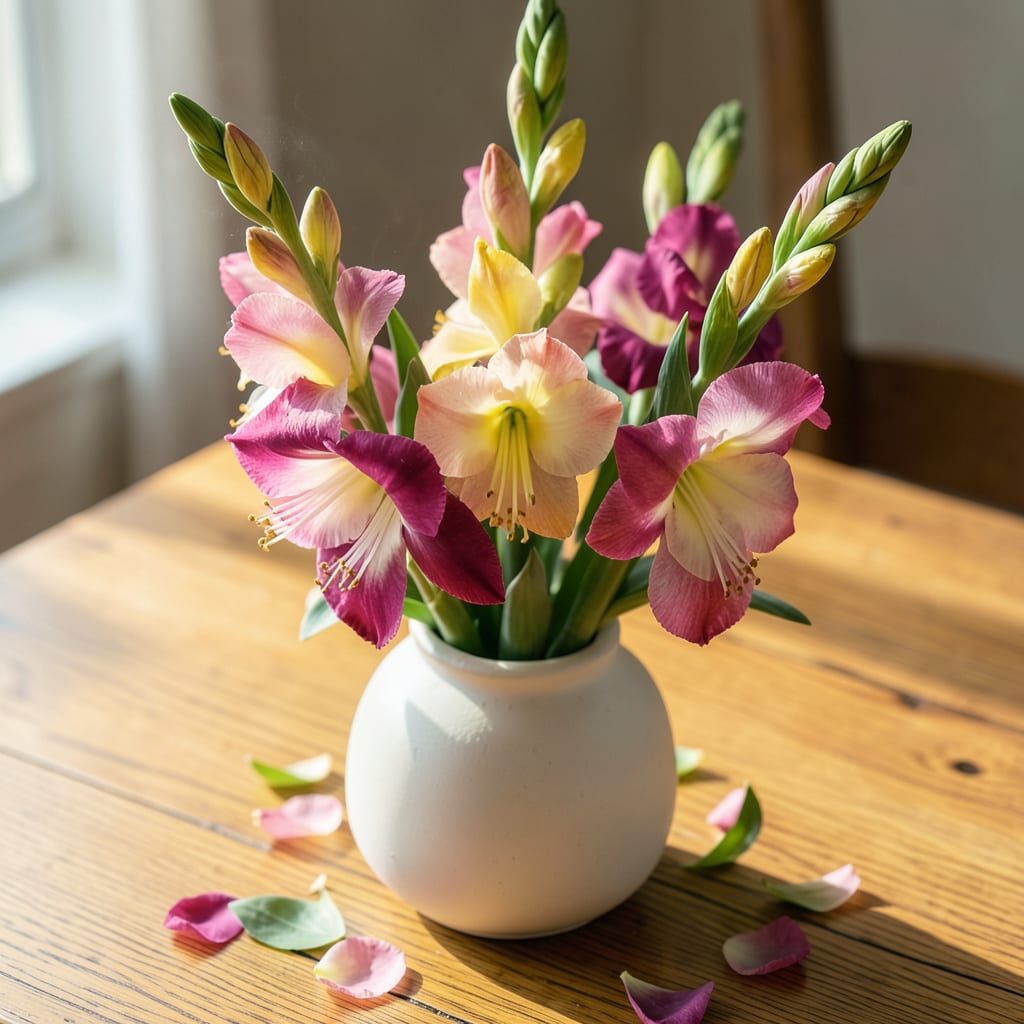
These tall, dramatic blooms bring vibrant color to any garden bed. I fell for pink and yellow gladiolus the first time I saw their bold spikes swaying in the breeze.
They’re surprisingly low-maintenance once established, thriving in full sun with well-draining soil. With proper care, you’ll get waves of stunning flowers perfect for cutting and bouquets.
📚 In This Guide
Here’s the method I use to cultivate these striking flowers for a garden full of color.
Choose a location with full sun—gladiolus thrives in at least 6-8 hours of direct sunlight daily. The soil should be well-draining, as waterlogged roots will rot. I test drainage by digging a 12-inch hole and filling it with water; if it drains within 1 hour, you’re good to go.
Work the soil to a depth of 12-15 inches, breaking up clumps and removing rocks. Mix in a 2-inch layer of compost to improve fertility. Gladiolus prefers slightly acidic to neutral soil (pH 6.0-7.0). If your soil is heavy clay, consider planting in raised beds for better drainage.
Plant corms in spring, after the last frost when soil temperatures reach 55-60°F. Space corms 4-6 inches apart in rows 12-18 inches apart. This spacing ensures good air circulation, reducing the risk of fungal diseases.
Set each corm 4-6 inches deep, with the pointed end facing upward. Cover with soil and press gently to remove air pockets. Water lightly after planting to settle the soil. I avoid heavy watering at this stage to prevent rot. Mark the planting area—gladiolus can take 2-3 weeks to emerge, and it’s easy to forget their location.
Keep the soil consistently moist but not soggy, especially during the first 3-4 weeks after planting. Once foliage appears, water deeply once a week, providing 1-1.5 inches of water per week. Use a soaker hose or drip irrigation to keep foliage dry and prevent disease.
Fertilize when shoots reach 6 inches tall with a balanced, low-nitrogen fertilizer (e.g., 5-10-10). Apply again when flower spikes appear. Avoid high-nitrogen fertilizers, which promote leafy growth at the expense of blooms. I also mulch with a 2-inch layer of straw to retain moisture and suppress weeds.
Gladiolus stems can grow 3-5 feet tall and may require staking, especially in windy areas. Install stakes or a low trellis when plants are 12-18 inches tall to avoid damaging corms. Tie stems loosely with soft twine or garden tape as they grow.
Remove spent blooms promptly to encourage more flowers, but leave the foliage intact until it yellows and dies back naturally. This allows the corm to store energy for next year’s growth. Watch for pests like thrips or aphids—treat with insecticidal soap if necessary. In colder climates, dig up corms after the first frost, dry, and store in a cool, dry place for replanting next spring.
Here’s what I’ve learned through years of growing these beauties successfully.
Sunlight Essentials: Those 6-8 hours of direct sunlight daily are non-negotiable for vibrant blooms. If your garden has partial shade, prioritize morning sun which is less intense. I’ve found that east-facing beds work better than west-facing ones in hotter climates where afternoon sun can scorch the foliage.
Drainage Test: That 1-hour drainage test from Step 1 is your best insurance against rot. If water sits longer, consider amending with coarse sand or planting in raised beds. In my clay-heavy soil, I had to create 18-inch mounds to achieve proper drainage before seeing consistent success.
Planting Depth Matters: The 4-6 inch planting depth in Step 2 isn’t arbitrary—it protects corms from temperature fluctuations while allowing for proper anchoring. Shallower planting leads to toppling stems, while deeper planting can delay emergence beyond the 2-3 weeks mentioned. Always plant with the pointed end up, as the flat side contains the basal plate where roots emerge.
Staking Strategy: Don’t wait until stems are 3-5 feet tall to install support as mentioned in Step 4. By then, it’s often too late without risking corm damage. I start setting up my trellis system when plants reach about 12 inches, using soft ties that allow for growth. This preemptive approach prevents the heartbreak of snapped stems during summer storms.
Plant gladiolus corms in spring after the last frost when soil temps reach 60°F. This ensures strong growth and vibrant blooms by mid-summer.
Water deeply once a week, stake tall stems, and fertilize monthly with balanced plant food. Remove faded blooms to encourage more flowers.
Yes! Choose a deep pot (12+ inches) with good drainage. Plant corms 4-6 inches apart and ensure full sun exposure for best results.
Common causes include overcrowding, poor soil, or insufficient sunlight. Ensure proper spacing, well-draining soil, and 6+ hours of daily sunlight.
Try dahlias, lilies, or snapdragons for similar height and color. These also thrive in gardens and cut arrangements.
