
Beautiful Plants For Your Interior
Beautiful Plants For Your Interior
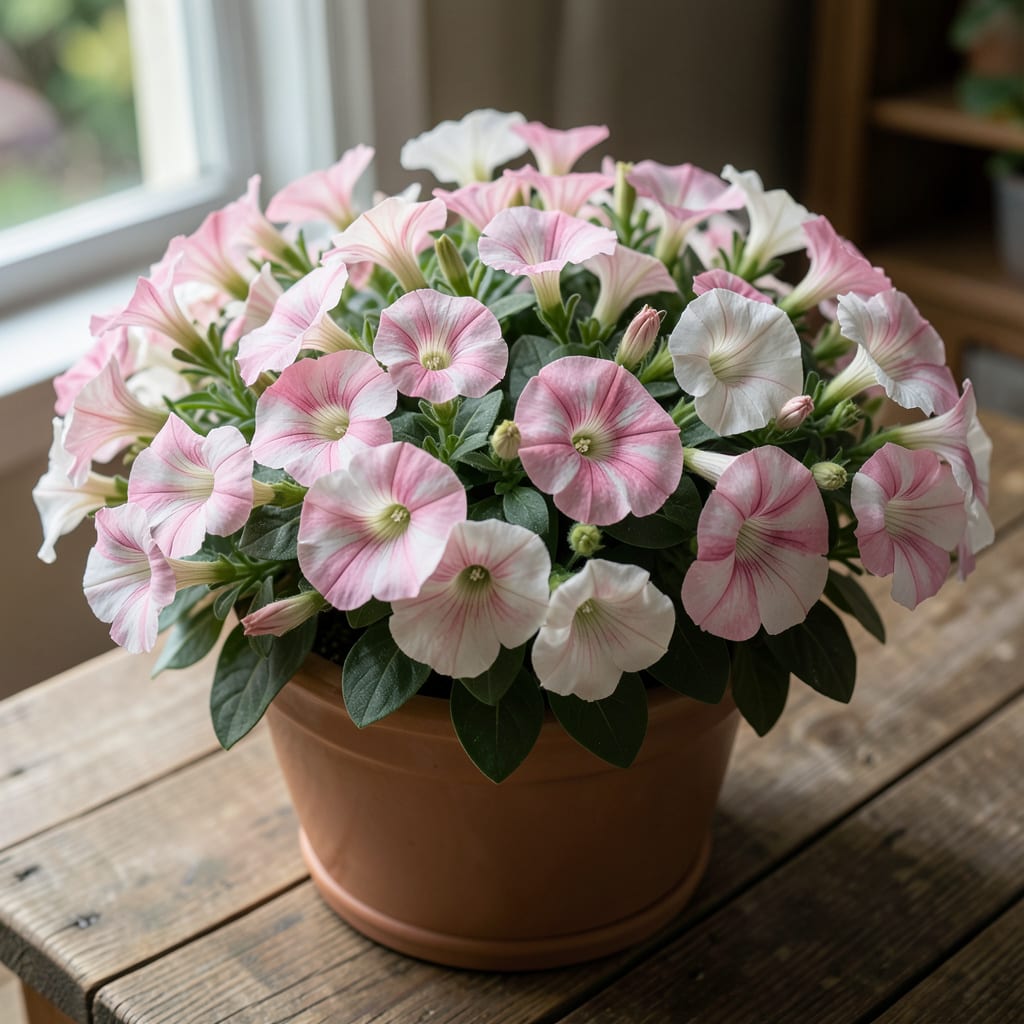
These striped beauties stopped me in my tracks at the garden center last spring. The bold pink and white patterns create a vibrant contrast that catches the eye from across the yard.
They thrive in full sun with well-draining soil, blooming nonstop from late spring through first frost. Deadhead regularly and they’ll reward you with wave after wave of color.
📚 In This Guide
Here’s the straightforward method I use to grow these striking blooms with consistent color patterns.
Choose compact, bushy petunias with multiple flower buds but few open blooms. Look for plants where the stripes are already clearly visible on the buds—this ensures the pattern will carry through as they mature. Avoid leggy specimens or those with yellowing leaves, as these often struggle to establish.
I always inspect the roots by gently sliding the plant from its pot. Healthy roots should be white and firm, not brown or mushy. If the soil smells sour, it’s a sign of root rot—skip that plant entirely. Four sturdy starts will give you a vibrant display without overcrowding.
Petunias thrive in full sun (at least 6-8 hours daily), so pick a spot that gets direct morning and afternoon light. The soil should drain well—if water pools after a rain, amend with compost or sand to improve drainage. I work the soil to a depth of 12 inches, breaking up clumps for better root penetration.
Space the plants 12-15 inches apart to allow for air circulation. This prevents fungal issues and gives each plant room to spread. If you’re using containers, ensure they have drainage holes and are at least 10 inches deep. A light application of balanced fertilizer mixed into the soil at planting gives them a strong start.
Dig a hole slightly larger than the root ball, place the plant in, and backfill with soil, pressing gently to remove air pockets. Water immediately after planting to settle the soil around the roots. I use a watering can with a fine rose to avoid dislodging the soil or damaging the stems.
For the first week, keep the soil consistently moist but not soggy. After that, water when the top inch of soil feels dry to the touch. Petunias are somewhat drought-tolerant once established, but consistent moisture encourages continuous blooming. Always water at the base to keep the foliage dry and prevent disease.
Deadhead spent flowers weekly to encourage new blooms. Simply pinch off the faded flower at the base of the stem. This redirects the plant’s energy into producing more striped blooms rather than seeds. I do this in the early morning when the plants are hydrated and less stressed.
Feed your petunias with a liquid fertilizer every 2-3 weeks to sustain their vibrant color and stripe definition. If the stripes begin to fade, it’s often a sign of nutrient deficiency. A light pruning mid-season, cutting back by one-third, rejuvenates leggy plants and promotes bushier growth with more flowers.
These practical insights will help you grow vibrant, healthy petunias with those beautiful stripes.
Selection Secret: In Step 1, choosing plants with visible stripes on the buds guarantees the pattern will continue as they grow. I learned this the hard way after buying plants with solid-colored buds that never developed stripes. Always check the roots too—white and firm means healthy.
Sunlight Strategy: The 6-8 hours of daily full sun mentioned in Step 2 isn’t just a suggestion. Petunias grown in partial shade often lose their stripe definition and produce fewer blooms. If your garden doesn’t get enough sun, consider containers you can move to follow the sunlight.
Watering Wisdom: That first week of consistent moisture after planting is critical for establishment. After that, the top inch of soil rule from Step 3 works perfectly. I use my finger to test—if it feels dry at my first knuckle, it’s time to water. Morning watering prevents fungal issues.
Maintenance Tip: The weekly deadheading in Step 4 isn’t just about aesthetics. Each spent bloom you remove signals the plant to produce more flowers instead of seeds. I do mine Sunday mornings with my coffee—makes it a pleasant ritual rather than a chore.
Keep them in full sun (6+ hours daily) and water when the top inch of soil is dry. Fertilize weekly with a balanced liquid feed for vibrant blooms. Deadhead spent flowers to encourage continuous blooming.
Plant after the last frost in spring when soil temperatures reach 60°F. In warm climates, you can also plant in early fall for a second bloom cycle.
Try ‘Superbissima’ or ‘Madness’ series petunias for similar striped patterns. Alternatively, calibrachoa (million bells) or striped verbena offer comparable visual appeal.
Fading often occurs due to too much shade or nutrient deficiencies. Ensure full sun exposure and use a fertilizer rich in phosphorus to maintain vivid stripe contrast.
