
Beautiful Plants For Your Interior
Beautiful Plants For Your Interior
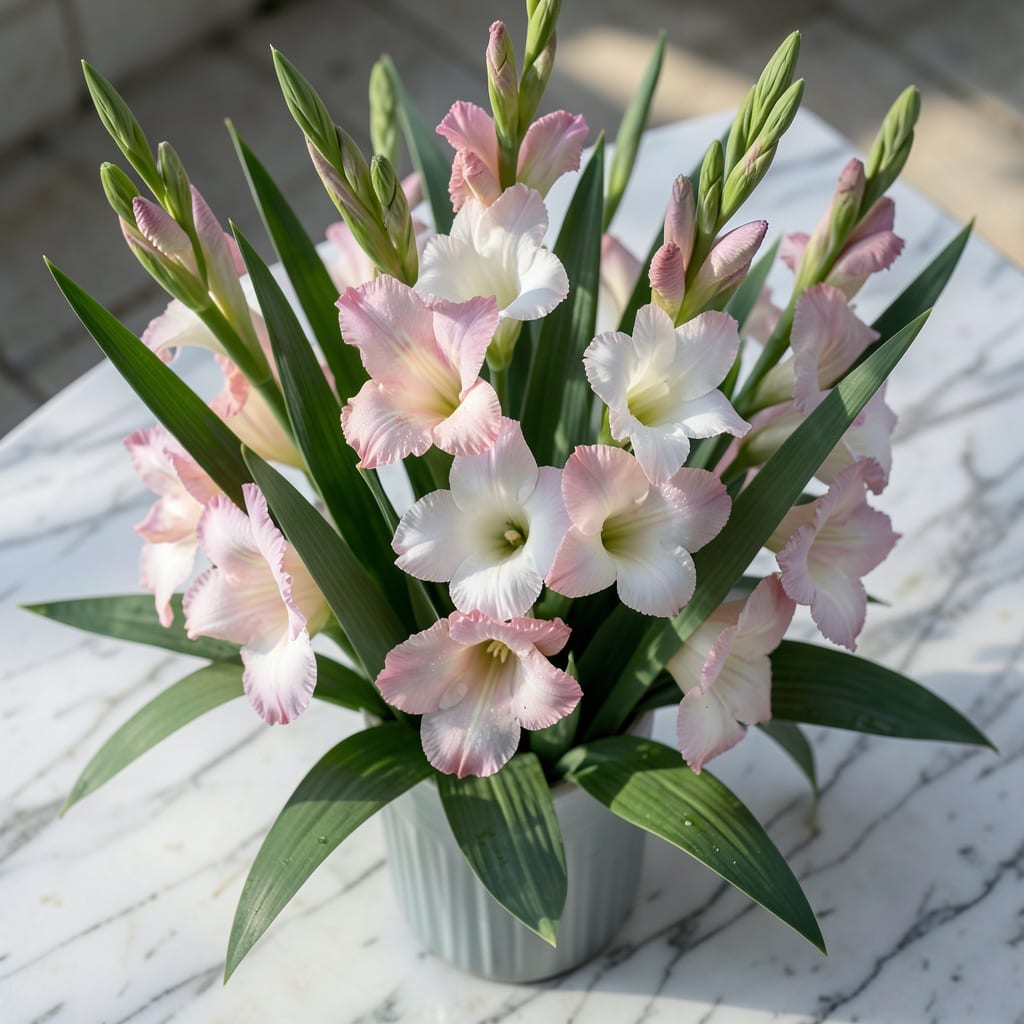
There’s something magical about watching gladiolus corms push up through the soil in spring. I planted my first pink and white varieties three seasons ago, and they’ve become the backbone of my summer garden.
These towering blooms add dramatic height to any border, and with proper care, they’ll return year after year. The key is well-drained soil and full sun—give them that, and you’ll have cut flowers that stop neighbors in their tracks.
📚 In This Guide
Here’s how I get stunning, towering blooms every summer with minimal fuss.
Select a location with full sun—gladiolus need at least 6-8 hours of direct sunlight daily for strong stems and vibrant flowers. Avoid low-lying spots where water pools, as soggy soil causes corms to rot before they even sprout.
Work the soil to a depth of 12 inches, breaking up clumps and removing rocks. Gladiolus prefer well-draining, loose soil, so I mix in a couple inches of compost to improve fertility. A light rake after amending ensures the bed is level and ready for planting.
Set corms 4-6 inches deep and 6 inches apart in rows or clusters. Planting too shallow leads to toppling stems, while too deep delays blooming. Place each corm with the pointed end facing upward—this is where the sprout will emerge.
If your soil is sandy or drains too quickly, plant an inch deeper to keep moisture consistent. After placing the corms, backfill with soil and press down gently to remove air pockets. Water lightly to settle the soil, but don’t soak it yet—excess moisture now can trigger rot.
Keep the soil consistently moist but not waterlogged during the growing season. I water deeply once a week, or more often during dry spells, aiming for 1 inch of water per week. A soaker hose works best to deliver moisture directly to the roots.
Apply a 2-3 inch layer of mulch around the plants to retain moisture and suppress weeds. Straw or shredded leaves work well. Just keep mulch a few inches away from the base of the stems to prevent rot. You’ll see the first sword-like leaves poking through in 10-14 days.
Gladiolus stems can grow 3-5 feet tall and often need staking, especially in windy areas. Install 3-foot stakes near each cluster when the plants reach 12 inches high. Tie stems loosely with soft twine as they grow to prevent bending.
Feed with a balanced, water-soluble fertilizer every 2-3 weeks once the leaves appear. I switch to a low-nitrogen, high-phosphorus formula when flower spikes start forming to encourage bigger, longer-lasting blooms. Stop fertilizing once the top flower on the spike begins to open.
Harvest spikes when the lowest flower on the stem just begins to open. Use sharp shears to cut the stem at a 45-degree angle just above the first set of leaves. This allows the remaining corm to store energy for next year’s growth.
For the longest vase life, cut early in the morning and place stems in lukewarm water immediately. Change the water every 2 days and trim the bottom of the stems to keep them fresh. After blooming, leave the foliage in place until it yellows to nourish the corms for next season.
Small adjustments here make the difference between floppy stems and show-stopping spikes.
Sunlight Strategy: That 6-8 hours of direct sunlight in Step 1 isn’t just a suggestion—it’s essential. I learned the hard way that even partial shade results in weak, leaning stems that can’t support those gorgeous blooms. If your garden has limited sun, consider planting in containers you can move to follow the light.
Planting Depth: In Step 2, sticking to the 4-6 inches deep rule prevents both toppling and delayed blooming. Here’s what nobody tells you—if your soil is sandy, go that extra inch deeper as mentioned. The moisture consistency this provides is worth the slight delay in sprouting.
Watering Wisdom: That 1 inch of water per week from Step 3 needs to be deep, not frequent. I water once weekly with a soaker hose, which encourages those corms to grow deep roots. Shallow watering creates weak plants that flop over at the first strong wind.
Staking Timing: Don’t wait until your gladiolus are already leaning to install those 3-foot stakes mentioned in Step 4. I put mine in when plants hit 12 inches high—any later and you risk damaging the corms while trying to position the supports.
Plant gladiolus corms in spring after the last frost, when soil temperatures reach about 55°F. This ensures strong growth and vibrant blooms in summer!
Water them weekly, ensuring soil stays moist but not soggy. Stake tall stems to prevent toppling, and fertilize lightly every month during the growing season.
Yes! Choose a deep pot (at least 12 inches) with good drainage. Plant corms 4-6 inches apart and ensure the container gets full sun for best results.
Common issues include poor soil, insufficient sunlight, or planting too deep. Ensure they get 6-8 hours of sun and check for pests or overcrowding.
Try snapdragons or dahlias for similar height and color. Both thrive in comparable conditions and add striking vertical interest to gardens!
