
Beautiful Plants For Your Interior
Beautiful Plants For Your Interior
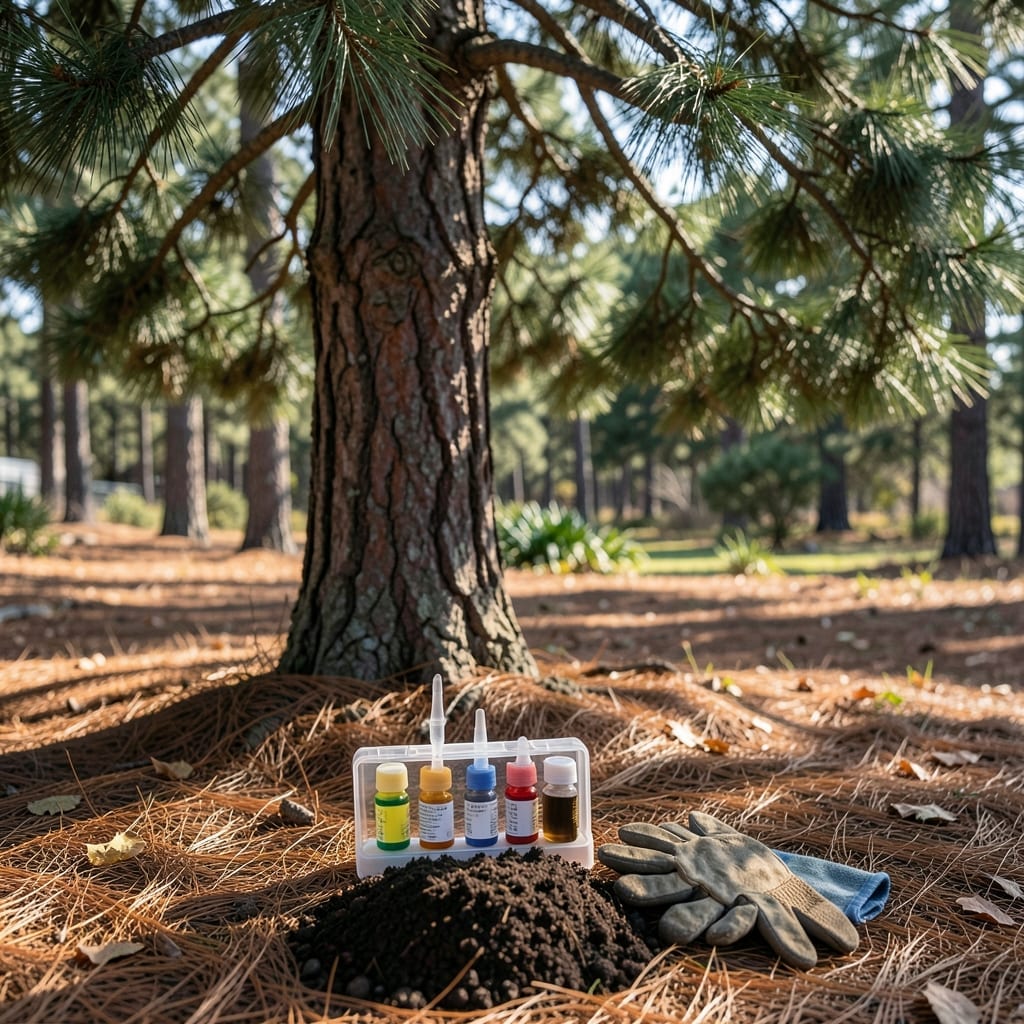
Ever notice how some Pine Trees 🌲 stand tall and vibrant while others struggle to grow? The secret often lies beneath the surface in your soil’s acidity level.
Getting the pH balance right can transform your tree’s health from surviving to thriving. It’s not just about watering or sunlight – the ground your Pine Tree calls home plays a most important role.
I’ve seen firsthand how adjusting soil conditions can bring remarkable changes. The good news is that testing and modifying your soil’s pH is simpler than you might think.
Let me walk you through the easier methods to create the perfect environment for your evergreen to flourish for years to come.
Pine trees are acid-loving plants that thrive in slightly acidic soil. The ideal soil pH range for most pine species is 4.5 to 6.0, with 5.0 to 5.5 being optimal for nutrient uptake. This acidity helps dissolve essential nutrients like iron and manganese, which pines need for healthy growth.
If the soil pH is too high (alkaline), pines may develop yellowing needles or stunted growth due to nutrient deficiencies. Conversely, extremely low pH (below 4.5) can leach vital minerals from the soil, harming root development. Regional variations matter too—native pine forests often have naturally acidic soil from decaying needles.
| Requirement | Specification |
|---|---|
| Ideal pH Range | 4.5 – 6.0 |
| Optimal pH | 5.0 – 5.5 |
| Signs of High pH | Yellow needles, stunted growth |
| Signs of Low pH | Poor root growth, nutrient leaching |
I’ve found that eastern white pines and ponderosa pines do well at the lower end of this range, while loblolly pines tolerate slightly higher pH. Testing your soil is key—DIY test kits are affordable and easy to use. For the most accurate results, send a sample to your local cooperative extension service for lab analysis.
Soil texture also influences pH. Sandy soils tend to be more acidic, while clay soils often skew alkaline. If your soil is too alkaline, amending with organic matter like pine needles or peat moss can help lower pH naturally over time. Avoid adding wood ash or lime, as these can raise pH further.
In my experience, mulching with pine bark is a great way to maintain acidity. As the bark breaks down, it releases tannins and organic acids that gradually lower soil pH. Just be sure to replenish the mulch every year, as it decomposes and loses its effectiveness.
Another tip: Rainwater can affect pH over time. In areas with hard water (high in calcium and magnesium), the soil may become more alkaline. If this is a concern, consider using rain barrels to collect water for irrigation, or amend your soil with sulfur to counteract the effect.
For container-grown pines, use a well-draining potting mix formulated for acid-loving plants. These mixes often include peat moss, perlite, and pine bark fines to create the ideal growing environment. Be sure to monitor pH regularly, as potted soils can become depleted or imbalanced more quickly.
Remember, pH adjustment takes time. If you need to lower pH, elemental sulfur is a common amendment, but it can take several months to see results. For a quicker fix, aluminum sulfate works faster but should be used sparingly to avoid aluminum toxicity in plants. 🌲
Finally, keep in mind that young pines are more sensitive to pH imbalances than mature trees. If you’re planting a new pine, take extra care to ensure the soil pH is within the ideal range before transplanting. This will give your tree the best start for healthy, long-term growth.
Testing your soil is the first step to ensuring your pine trees thrive. I recommend using a DIY soil pH test kit for quick results or sending a sample to a lab for precision. Both methods will reveal if your soil is too alkaline or acidic.
For accurate results, collect soil from multiple spots around the tree’s root zone. Test in spring or fall when the soil is most stable. This timing helps you plan amendments before the growing season.
Steps to Test and Adjust Soil pH:
If your soil pH is too high, adding elemental sulfur can help acidify it. For a more organic approach, I’ve had great success with pine needle mulch or peat moss. These slowly lower pH while improving soil structure.
Conversely, if the pH is too low, garden lime is a reliable choice. Apply it in early spring and water thoroughly to help it penetrate the soil. Always follow package instructions for the correct dosage.
Remember, gradual changes are safer for your pine trees. Avoid drastic adjustments, as sudden pH shifts can stress the roots. Monitor your tree’s health and retest the soil periodically.
Finally, keep in mind that rainfall and irrigation can affect soil pH over time. If you live in an area with hard water, you may need to adjust pH more frequently to maintain the ideal range.
🌲