
Beautiful Plants For Your Interior
Beautiful Plants For Your Interior
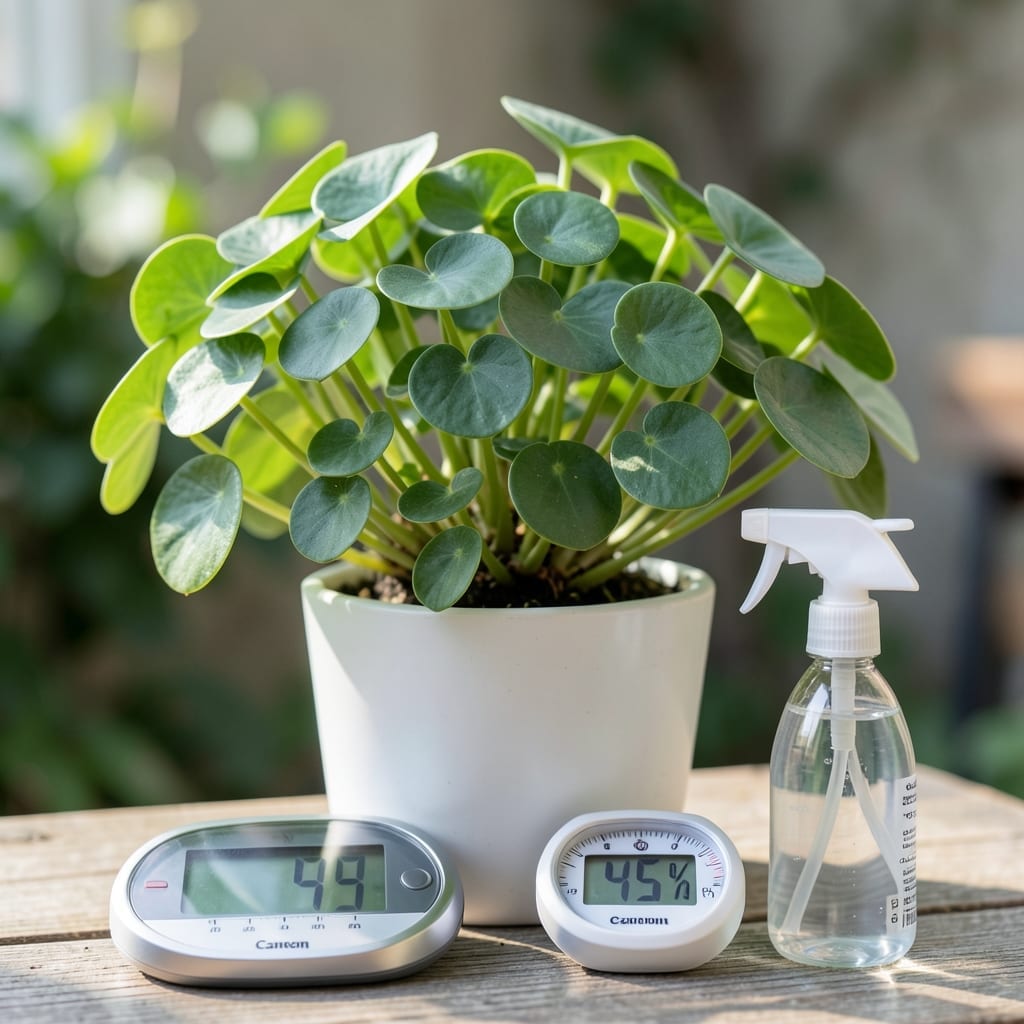
Your Chinese Money Plant 🌿 thrives when humidity levels are just right—too little and its leaves brown, too much and you risk root rot. Getting this balance is the key to lush growth.
As a tropical native, this plant expects more moisture in the air than most homes provide. Without it, you’ll notice crispy edges or drooping stems signaling distress.
I’ve learned through trial and error that maintaining 40-60% humidity creates the perfect environment. The good news? You don’t need expensive equipment to achieve this.
Discover simple, effective methods to keep your Chinese Money Plant happy and healthy. Let’s transform your space into its ideal habitat.
As a tropical native, your Pilea Peperomioides craves consistent air moisture. I’ve found that 40-60% humidity is the sweet spot for vibrant, healthy growth in most homes. 🌿
Below this range, you’ll notice brown leaf tips and crispy edges—classic signs your Chinese Money Plant is thirsting for more moisture in the air.
| Requirement | Specification |
|---|---|
| Ideal Humidity | 40-60% |
| Minimum Tolerated | 30% |
| Maximum Tolerated | 70% |
| Seasonal Adjustment | Increase in winter |
Above 70% humidity, you risk fungal issues or root rot, especially if airflow is poor. I always recommend a hygrometer to monitor levels accurately.
This plant’s natural habitat in Yunnan Province has consistently moist air, which explains its preference. In my experience, homes in dry climates need extra effort to hit that 40% minimum. ✂️
Watch for drooping leaves or yellowing—these can signal humidity stress. I’ve seen plants recover within days after adjusting their environment.
For winter months, when indoor air dries out, aim for the higher end of the range. A pebble tray with water can add that extra 5-10% boost.
Regional differences matter too. Coastal areas often have ideal ambient humidity, while desert climates may require daily interventions. I’ve successfully grown Pileas in both!
Remember, consistency is key. Sudden humidity drops from heating systems or air conditioners stress the plant more than steady levels slightly outside the ideal range. 🌱
If you notice new growth is smaller or leaves feel papery, it’s likely a humidity issue. I always check this before adjusting watering schedules.
I’ve found that Pilea peperomioides thrives when humidity mimics its tropical origins. Aim for 40-60% for vibrant, healthy growth without overcomplicating your routine.
In my experience, consistent moisture in the air prevents brown leaf tips and crispy edges, common signs of low humidity stress in this plant.
Use a humidifier near your Chinese Money Plant for steady, effortless control.
Pebble trays with water create localized humidity as water evaporates around the plant.
Group plants together to share moisture through transpiration.
Mist leaves lightly with room-temperature water every few days.
DIY terrarium or glass cloche traps humidity for a mini tropical environment.
I recommend starting with a pebble tray—it’s the simplest way to test your plant’s response before investing in a humidifier. Just ensure the pot isn’t sitting directly in water to avoid root rot. 🌿
Grouping plants is my go-to low-maintenance trick. It works especially well in dry winter months when indoor air tends to be drier. Plus, it creates a lush, jungle-like display in your home.
If you notice yellowing leaves, you might be overdoing the misting. Remember, Pilea peperomioides prefers gentle moisture, not soggy conditions. A hygrometer can help you monitor levels accurately.
For a quick fix, place your Pilea in the bathroom during showers—just be sure it gets enough indirect light afterward. 🪴