
Beautiful Plants For Your Interior
Beautiful Plants For Your Interior
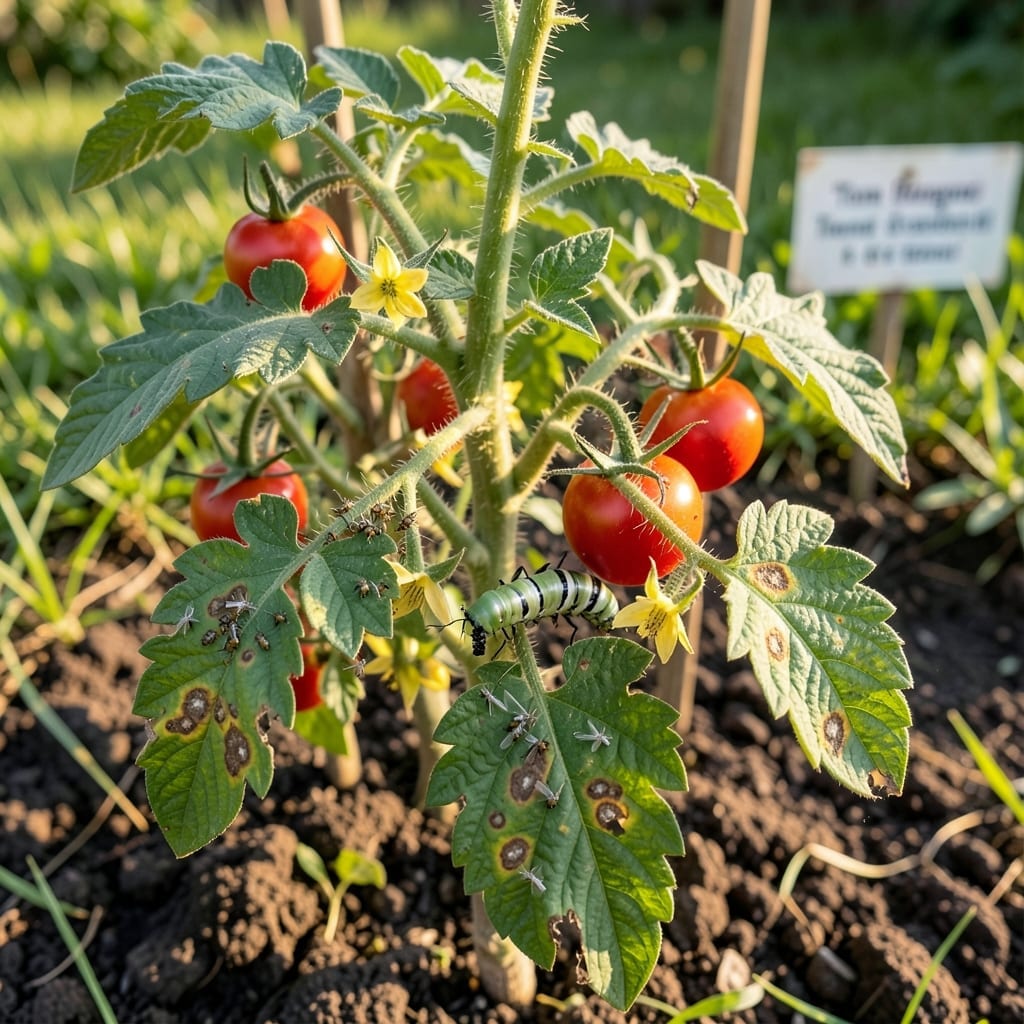
Early pest detection saves tomato crops. I’ve lost entire plants overnight to unseen invaders, but recognizing the culprits early changes everything.
These images help you spot aphids clustering on new growth, hornworms stripping leaves, and whiteflies creating sticky residue. Each pest leaves distinct damage patterns you can catch before spreading.
Once identified, targeted solutions work better than broad treatments. Neem oil handles soft-bodied pests while hand-picking removes larger invaders like tomato hornworms.
Prevention starts with healthy plants and regular inspections. The 5-minute daily check that stops problems before they start.
Understanding why tomato pests appear is the first step in preventing infestations. Below are the primary causes, explained with actionable insights.
Tomatoes thrive in well-draining, nutrient-rich soil. When soil lacks essential minerals like nitrogen, phosphorus, or potassium, plants become stressed and more susceptible to pests like aphids and whiteflies. Overwatering or compacted soil can also create anaerobic conditions, attracting root-feeding pests such as nematodes.
Extreme weather—drought, excessive rain, or temperature swings—weakens tomato plants. Stressed plants produce fewer defensive compounds, making them easy targets for hornworms and spider mites. High humidity, for example, fosters fungal growth, which can attract secondary pests like fungus gnats.
Monoculture planting (growing only tomatoes) disrupts natural predator-prey balances. Without beneficial insects like ladybugs or lacewings, pest populations explode. Even nearby weeds can harbor pests, so maintaining a diverse garden ecosystem is key.
Over-reliance on synthetic pesticides can backfire by killing beneficial insects and fostering pesticide-resistant pests. For instance, repeated use of broad-spectrum sprays may eliminate parasitic wasps that naturally control tomato hornworms, leading to larger infestations.
Dealing with pests on your tomato plants? Here’s how to tackle each common invader with targeted, easy-to-follow fixes and prevention tips.
Use a strong stream of water to knock aphids off leaves. For severe infestations, apply insecticidal soap or neem oil every 5-7 days. Prevention tip: 💡 Introduce ladybugs or lacewings, their natural predators.
Spider mites thrive in dry conditions. Mist plants regularly or use a humidifier nearby. Wipe leaves with a damp cloth to remove mites and webs. Prevention tip: 🌡️ Avoid over-fertilizing, which attracts mites.
Create a copper tape barrier around pots or beds—slugs dislike the electric charge. Alternatively, place beer traps (shallow dishes of beer) to lure and drown them. Prevention tip: ✨ Remove hiding spots like mulch or debris near plants.
Check plants daily for these large, green caterpillars and remove them by hand. Drop them into soapy water or relocate them far from your garden. Prevention tip: 🎯 Attract parasitic wasps by planting dill or basil nearby.
Hang yellow sticky traps near plants to catch adult whiteflies. For larvae, spray with insecticidal soap or neem oil. Prevention tip: 💡 Avoid overcrowding plants to improve airflow.
Act early, stay consistent, and your tomatoes will thrive pest-free! Regular inspections are key to catching problems before they spread.
Look for holes in leaves, sticky residue on stems, or wilting foliage. Chewed edges often indicate caterpillars while tiny dots suggest spider mites.
A 5-minute daily check is ideal, especially under leaves where pests hide. Early morning or late evening are best times to spot activity.
Yes! A mix of 1 tablespoon dish soap and 1 quart water works well for soft-bodied pests. Always test on a small area first.
Pests may hide in soil or nearby plants. Rotate treatments and improve garden hygiene by removing debris where they breed.