
Beautiful Plants For Your Interior
Beautiful Plants For Your Interior
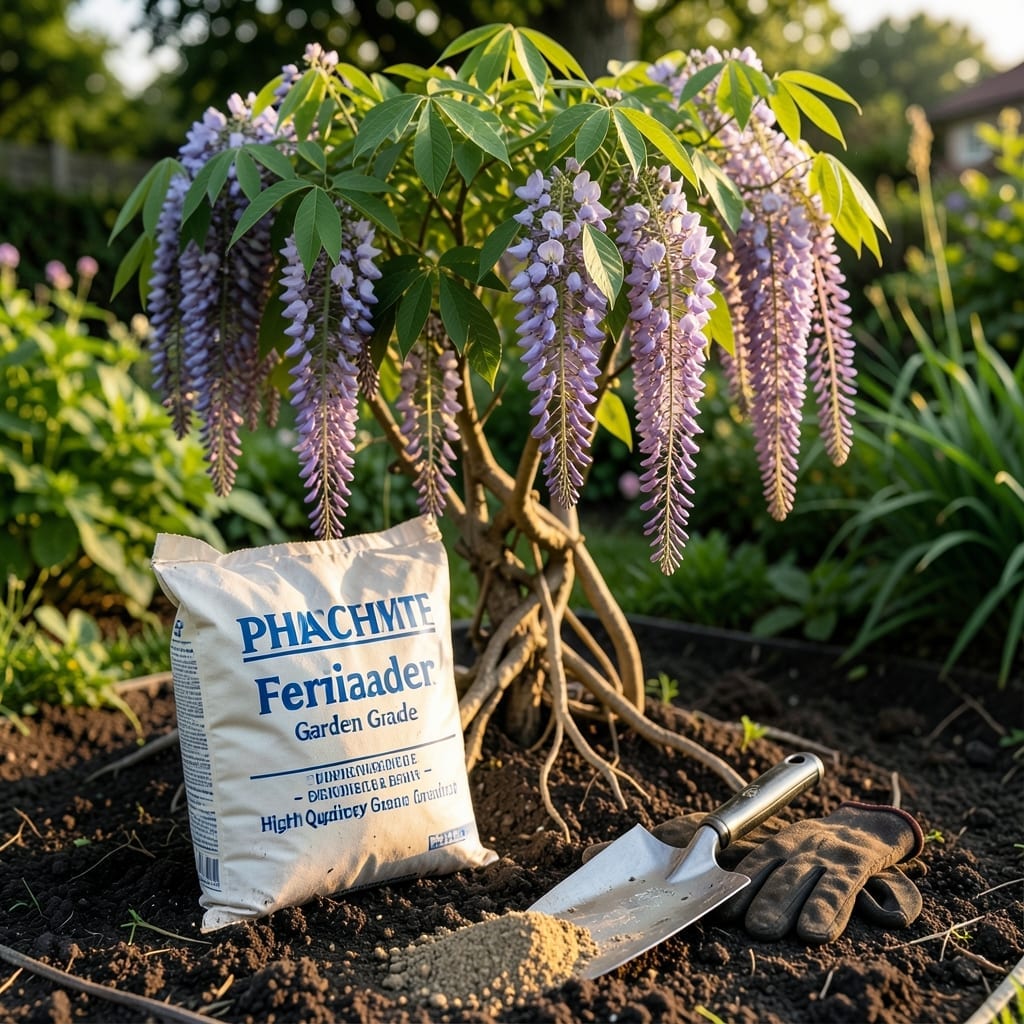
There’s nothing quite like the sight of a 🌸 Wisteria in full bloom, its cascading flowers painting your garden with vibrant purples and whites. But what happens when those blooms start to fade or fail to appear at all?
Often, the missing piece is phosphate, a nutrient that plays a crucial role in flowering and root development. Without it, your Wisteria might struggle to reach its full potential, leaving you with lackluster growth and sparse blooms.
I’ve seen firsthand how the right approach to fertilizing can transform a Wisteria from ordinary to extraordinary. The good news? It’s simpler than you might think to give your plant the boost it needs.
Discover how to use phosphate fertilizer effectively to bring your 🌸 Wisteria back to life, ensuring vibrant flowers and vigorous growth season after season.
I’ve found that phosphate fertilizer is the game-changer for wisteria plants struggling to bloom. Phosphorus, the key nutrient in phosphate, fuels root development and flower production, which are critical for wisteria’s iconic cascades. 🌸
Without enough phosphorus, your wisteria may show stunted growth, weak stems, or sparse blooms. This nutrient also helps the plant store and transfer energy, ensuring vibrant, long-lasting flowers each season.
| Benefit | Impact on Wisteria |
|---|---|
| Root Development | Stronger, deeper roots for stability |
| Flower Production | More abundant, vibrant blooms |
| Energy Transfer | Efficient nutrient distribution |
| Disease Resistance | Healthier plants, fewer issues |
In my experience, wisteria thrives in well-draining soil with a pH of 6.0-7.0. If your soil is too acidic or alkaline, phosphorus becomes less accessible to the plant. A simple soil test can reveal if adjustments are needed.
I always recommend adding organic matter like compost to improve soil structure. This helps phosphate fertilizer work more effectively by enhancing root uptake. Think of it as giving your wisteria a nutrient boost with a side of better digestion. ✂️
Another sign of phosphate deficiency is dark green leaves with purple or red tinges. If you notice this, it’s time to act. Applying a high-phosphorus fertilizer like 10-20-10 can quickly correct the issue.
For best results, I apply phosphate fertilizer in early spring, just as new growth begins. This timing ensures the plant has the nutrients it needs for root expansion and bud formation before the blooming season.
Don’t forget that over-fertilizing can be just as harmful as under-fertilizing. Stick to the recommended dosage on the product label, and always water thoroughly after application to prevent root burn.
I’ve seen wisteria transform from a lackluster vine to a garden showstopper with the right care. Consistency is key—regular feeding, proper pruning, and attentive monitoring will keep your wisteria healthy and blooming beautifully year after year. 🌿
If your wisteria isn’t blooming despite your efforts, check for other stressors like poor sunlight or inadequate support. Wisteria needs full sun and a sturdy structure to climb and thrive.
Choosing the right phosphate fertilizer can transform your wisteria’s blooms from dull to spectacular. I’ve found that bone meal and rock phosphate work wonders for promoting vibrant flowers and strong roots. These organic options release nutrients slowly, which is ideal for wisteria’s long-term growth.
For faster results, superphosphate is a synthetic alternative that delivers a quick phosphorus boost. However, I recommend using it sparingly to avoid over-fertilization. The key is matching the fertilizer type to your soil’s needs and your wisteria’s growth stage.
| Fertilizer Type | Phosphorus Content | Release Speed | Best For |
|---|---|---|---|
| Bone Meal | High (20-30%) | Slow | Established plants, organic gardens |
| Rock Phosphate | Moderate (15-20%) | Very Slow | Long-term soil enrichment |
| Superphosphate | Very High (45-50%) | Fast | Quick phosphorus boost, new plantings |
When applying phosphate fertilizer, timing is everything. I apply bone meal in early spring, just as new growth begins. This gives the wisteria a strong start. For superphosphate, I use it in late winter or early spring, but only if a soil test shows a phosphorus deficiency.
The application rate matters too. For bone meal, I use about 1-2 tablespoons per plant, worked into the soil around the base. With superphosphate, I stick to 1 tablespoon per plant to avoid burning the roots. Always water thoroughly after applying to help the nutrients soak in.
Remember, wisteria thrives in well-draining soil, so avoid compacted areas. I also mix fertilizer into the top 6 inches of soil for best results. If you’re unsure, a soil test can guide your fertilizer choices and prevent over-application.
With the right approach, you’ll see more vibrant blooms and healthier growth in no time 🌸