
Beautiful Plants For Your Interior
Beautiful Plants For Your Interior
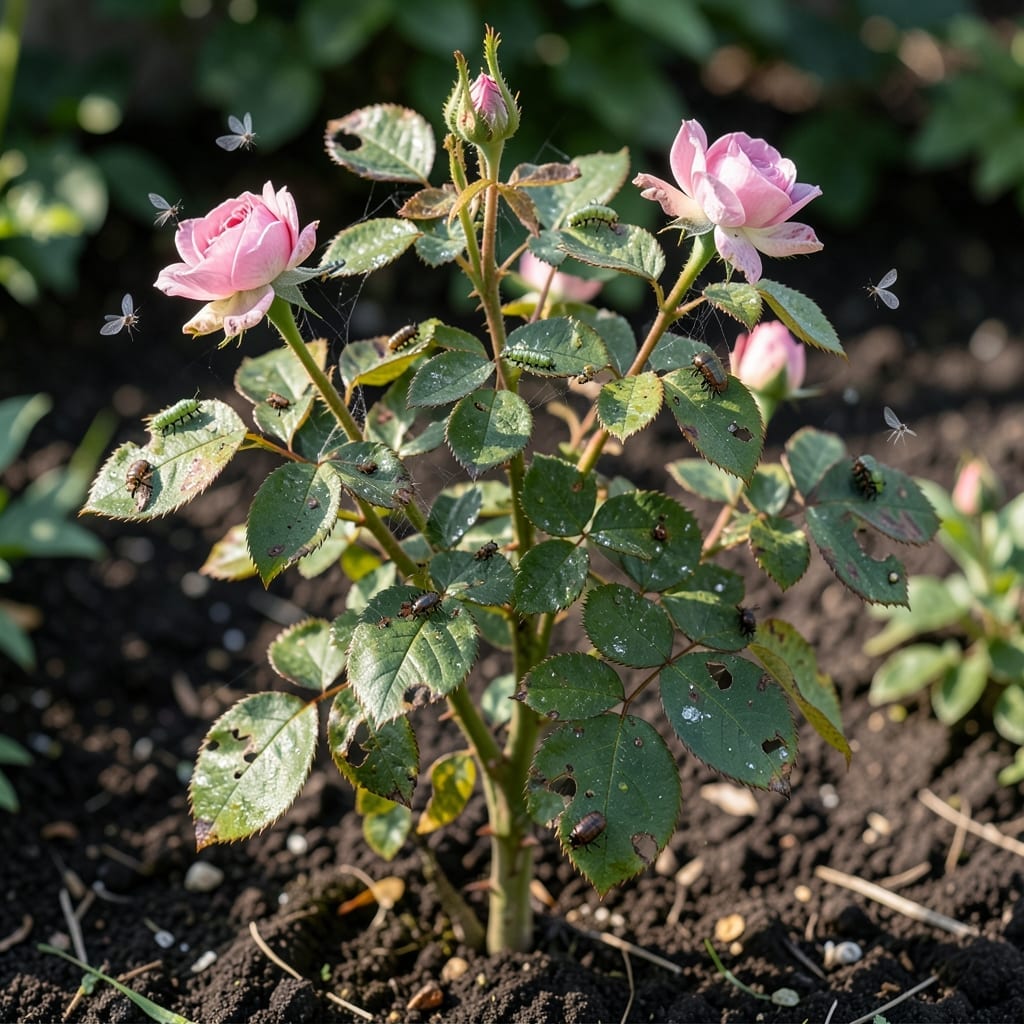
Spotted my first rose pest last June—tiny green invaders on my prized climber. Early detection saved the blooms, and I’ve since learned every rose grower faces this battle.
These bugs don’t just mar leaves; they weaken plants, stunting growth and stealing vibrant blooms. Aphids, beetles, and mites are the usual suspects, but the solution starts with knowing what to look for.
Natural prevention works best: healthy soil, proper spacing, and companion plants that repel invaders. A little vigilance keeps your roses thriving without harsh chemicals.
With the right approach, your garden can stay pest-free and full of color all season long. Here’s how to keep them protected.
Roses attract pests for several reasons, often tied to environmental, biological, or cultural factors. Understanding these causes helps prevent infestations before they start. Here’s why your roses might be under attack:
Overwatering, improper pruning, or neglecting garden hygiene creates ideal conditions for pests. Excess moisture (especially on foliage) fosters fungal growth and soft-bodied insects like aphids. Pruning at the wrong time (e.g., late fall) can leave wounds vulnerable to overwintering pests. Always water at the base, prune in early spring, and remove fallen leaves to disrupt pest life cycles.
Monoculture gardens (only roses) lack natural predators that keep pest populations in check. Beneficial insects like ladybugs, lacewings, and parasitic wasps thrive in diverse plantings. Interplant roses with companion plants such as marigolds, lavender, or garlic to repel pests and attract allies.
Roses under stress (drought, extreme heat, or poor soil) emit chemical signals that attract pests. Weakened plants produce higher levels of nitrogen in their sap, which aphids and mites find irresistible. Ensure consistent watering, mulch to retain moisture, and amend soil with compost to boost resilience.
Ironically, synthetic pesticides can worsen pest problems. They kill natural predators (e.g., spiders, ground beetles) faster than pests, leading to rebounds in pest populations. Opt for targeted treatments like neem oil or insecticidal soap, and introduce beneficial nematodes for soil-dwelling larvae.
Addressing these root causes creates an inhospitable environment for pests—naturally.
Dealing with pests on your roses doesn’t have to mean reaching for harsh chemicals. Here’s how to tackle common invaders with simple, effective fixes—and keep them from coming back.
Use a strong spray of water from your garden hose to dislodge aphids. For stubborn infestations, mix 1 teaspoon of mild dish soap with 1 quart of water and spray directly on the pests. Reapply every few days until they’re gone.
Prevention tip: 💡 Attract natural predators like ladybugs by planting dill, fennel, or marigolds nearby.
These tiny pests thrive in dry conditions. Spray plants with water to increase humidity, and apply neem oil (mixed per package instructions) to disrupt their lifecycle. Repeat weekly for best results.
Prevention tip: 🌡️ Keep roses well-watered, especially during hot, dry spells, to deter mites.
Pluck beetles off by hand (drop them in soapy water) or use pheromone traps placed away from your roses to lure them elsewhere. For severe cases, apply kaolin clay as a barrier spray.
Prevention tip: ✨ Cover young roses with floating row covers in early summer to block beetles.
Create a copper tape barrier around pots or beds—these pests dislike the electric charge. Alternatively, set out beer traps (bury a shallow dish filled with beer; they’ll crawl in and drown).
Prevention tip: 🎯 Remove debris and mulch where slugs hide, and water in the morning so soil dries by evening.
For all pests, inspect roses regularly (especially undersides of leaves) and act at the first sign of trouble. Consistent care keeps your blooms thriving without harmful chemicals!
Look for distorted leaves, sticky residue (honeydew), or tiny holes. Aphids often cluster on new growth, while mites cause yellow stippling on foliage.
Yes! A mix of 1 teaspoon dish soap and 1 quart water works against aphids. Neem oil is another safe option for many pests.
Inspect early morning or late evening when pests are most active. Focus on leaf undersides and bud clusters.
Synthetic pesticides often kill ladybugs and bees. Stick to targeted sprays like neem oil to protect pollinators.