
Beautiful Plants For Your Interior
Beautiful Plants For Your Interior
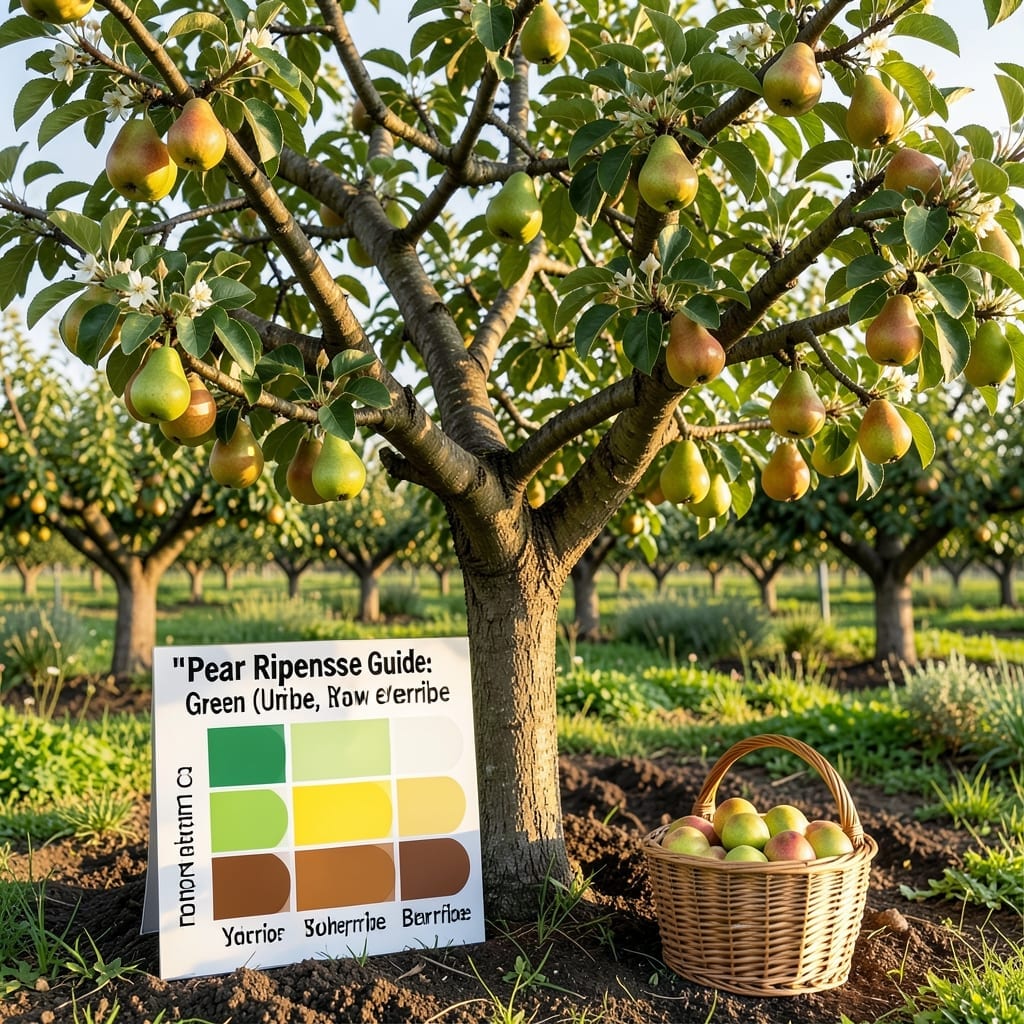
Nothing beats the taste of a perfectly ripe 🍐 Pear, but knowing when to pick or buy one can be tricky. The difference between a firm, unripe pear and one that’s sweet and juicy is all in the timing.
With a little know-how, you can learn how to spot the subtle signs that signal readiness. A simple chart becomes your guide to making the most important decision for the best flavor.
Whether you’re growing your own or selecting from the store, understanding these stages ensures you never bite into a disappointing fruit again. I’ll show you exactly what to look for.
From color shifts to texture changes, these cues are easier to master than you might think. Let’s unlock the secrets to enjoying pears at their peak.
I’ve found that pear ripening stages can be confusing, especially for new gardeners. Pears don’t ripen well on the tree, so you need to pick them at the right maturity stage and let them ripen indoors. This makes a pear ripening chart an essential tool.
Using a visual chart helps you track changes in color, texture, and aroma as the fruit progresses from hard and green to soft and fragrant. I rely on mine every harvest season to avoid picking too early or too late.
| Stage | Texture | Color | Aroma |
|---|---|---|---|
| Hard | Very firm | Green | None |
| Firm | Slight give | Green-yellow | Faint |
| Slightly Soft | Yields to pressure | Yellow/brown | Sweet |
| Ripe | Soft | Golden/red | Strong |
| Overripe | Mushy | Brown | Fermented |
I always check the neck of the pear first—it softens before the body. A gentle squeeze near the stem should give slightly when ripe. If it’s rock hard, it needs more time indoors.
The color shift is another telltale sign. Most pears transition from deep green to yellow or brown, depending on the variety. I’ve noticed Bartlett pears turn bright yellow, while Bosc pears develop a reddish-brown hue.
For aroma, a ripe pear will have a sweet scent at the stem. If you don’t smell anything, it’s not ready. Overripe pears often emit a fermented odor, which means they’ve passed their peak.
I use the paper bag method to speed up ripening. Place pears in a brown paper bag with a banana or apple—the ethylene gas they release accelerates the process. Check daily to avoid overripening.
If you need to slow down ripening, store pears in the refrigerator. This pauses the process, giving you more time to enjoy them. I’ve kept pears fresh for weeks this way.
Remember, pears ripen from the inside out. Even if the skin feels firm, the core may already be soft. That’s why I always test a few to gauge the batch.
With a pear ripening chart, you’ll never guess wrong again. It’s my go-to tool for harvesting at peak flavor every time. 🌳
Controlling pear ripeness is easier than you think. I use paper bags to trap ethylene gas, which speeds up the process. Just place unripe pears in a bag with a banana and check daily for softness. ☀️
To slow ripening, I move pears to the refrigerator. Cold temperatures pause ethylene production, keeping them firm for up to 3 weeks. This works great for bulk harvests or store-bought batches. 🌿
Use paper bags to accelerate ripening with ethylene gas.
Store near bananas or apples for faster results.
Refrigerate at 32°F to 40°F to slow ripening.
Keep at room temperature for gradual ripening.
For a faster method, I place pears in a warm spot like near a sunny window. The heat boosts ethylene, but check often to avoid overripening. This works well for underripe fruit. 🌱
If pears are almost ripe but you need to pause the process, I suggest separating them from other fruits. Ethylene from apples or bananas can push them over the edge too quickly.
I’ve found that Bartlett pears respond fastest to these methods, while Bosc pears take a bit longer. Always check daily for the perfect slight give near the stem.
Remember, once pears reach peak ripeness, they’ll only last 2-3 days at room temperature. Plan accordingly to enjoy them at their best. ✂️