
Beautiful Plants For Your Interior
Beautiful Plants For Your Interior
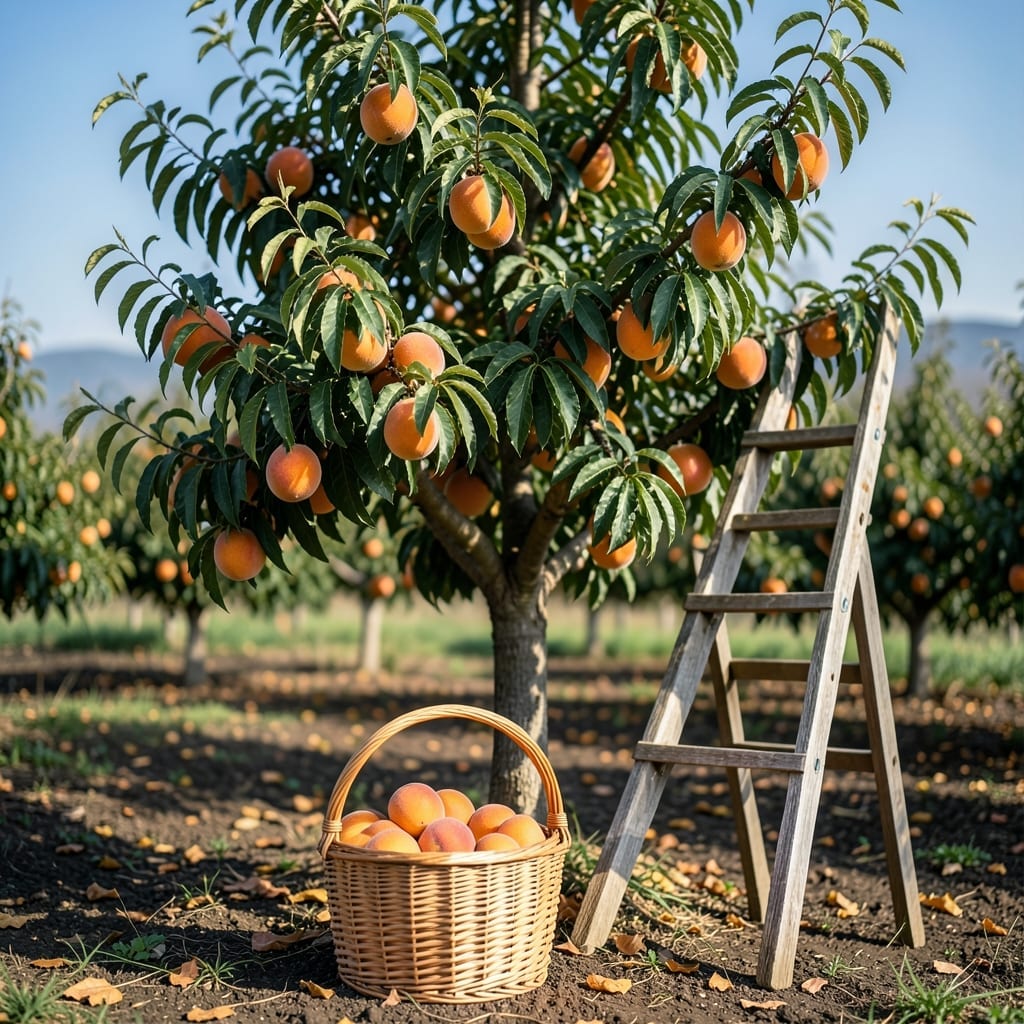
Nothing beats the sweet, juicy crunch of a perfectly ripe 🍑 peach fresh from your own tree. But knowing the exact moment to pick can feel like guessing game.
Miss that perfect window, and you risk mealy fruit or overripe mush. I’ve learned the hard way that timing is everything with these delicate summer treasures.
This July through August, your trees are likely loaded with potential. The good news? There are clear signals your peaches are ready—if you know what to look for.
Let me walk you through the stem slip test, aroma cues, and other foolproof signs that say it’s time to harvest. Your taste buds will thank you.


I always check the stem slip test first—if the peach separates easily from its stem with a gentle twist, it’s ready. This is the most reliable sign for most peach varieties in home gardens.
The aroma at the stem end is another giveaway. When I smell a strong, sweet fragrance, I know the fruit is at peak ripeness and packed with natural sugars. ☀️
| Sign | What to Look For |
|---|---|
| Stem Slip | Fruit detaches easily from stem |
| Aroma | Sweet scent at stem end |
| Color | Deep, rich hue for variety |
| Texture | Slight give when gently pressed |
For color indicators, I watch as peaches transition from green to their mature hue—yellow, red, or a blend depending on the variety. A uniform, vibrant color means the fruit is nearing ripeness.
The texture test is simple but effective. I apply gentle pressure with my palm, and if the peach yields slightly, it’s ready. Avoid squeezing too hard, as this can bruise the fruit.
I’ve found that climatic conditions affect ripening. In hot, dry weather, peaches may ripen faster, so I check daily. Cooler temperatures slow the process, giving me more time to harvest.
For early varieties, I start checking for ripeness around 90 days after bloom. Mid-season types often take 120 days, while late varieties can take up to 150 days to mature.
I also pay attention to the leaf canopy. Peaches ripen best with full sun exposure, so I ensure my trees aren’t shaded by nearby structures or other plants. 🌳
If I’m unsure, I pick a test peach and let it sit at room temperature for a day. If it softens and develops a stronger aroma, the rest are likely ready for harvest.
Finally, I always use sharp pruners or my hands to harvest, twisting the fruit gently to avoid damaging the tree or the peach. This keeps my harvest bruise-free and ready for storage. ✂️
Harvesting ripe peaches at the wrong time is a common mistake that affects flavor and texture. Picking too early results in hard, mealy fruit, while waiting too long leads to overripe, mushy peaches. 🌳
Another error is ignoring weather conditions. Harvesting wet peaches after rain can cause rot or bruising. Always check for dry fruit and cool mornings for the best results.
⚠️ Avoid These Harvesting Errors
Picking too early or too late ruins texture and taste.
Never harvest wet fruit—wait for dry conditions.
Handle gently to prevent bruising.
Improper handling techniques can also damage your harvest. Always use two hands—one to hold the branch and one to twist the peach gently. This prevents stem damage to the tree.
Don’t overlook the stem slip test. If the peach doesn’t separate easily, it’s not ready. Forcing it off can harm the fruit and the tree’s next harvest. ✂️
Finally, storage mistakes shorten shelf life. Avoid refrigerating unripe peaches—they won’t ripen further. Instead, store at room temperature until fully ripe, then refrigerate.
By avoiding these common pitfalls, you’ll enjoy perfectly ripe peaches every time. Timing, technique, and careful handling make all the difference. 🌿