
Beautiful Plants For Your Interior
Beautiful Plants For Your Interior
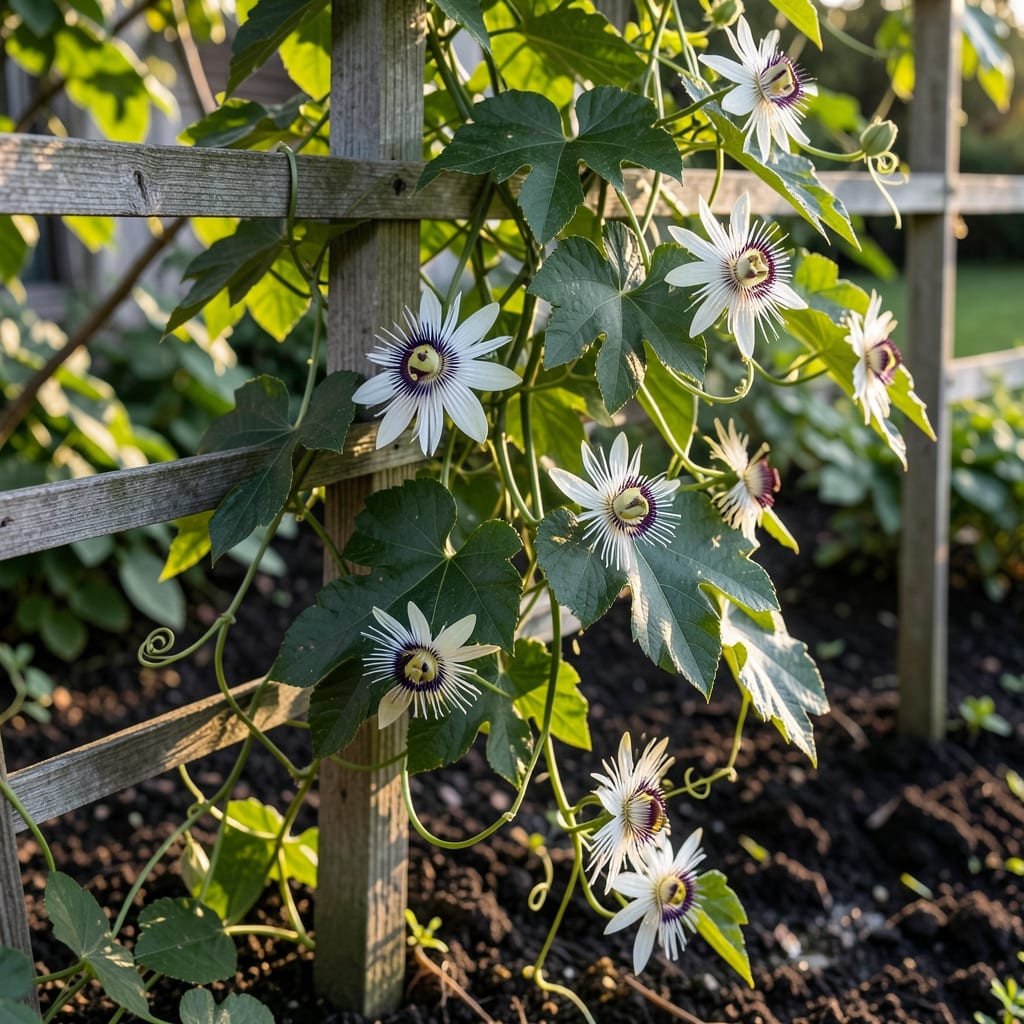
Passiflora ‘White Passion’ changed my garden forever. The first time I saw its intricate white blooms, I knew I had to figure out how to make them thrive.
It’s not as finicky as it looks—just needs the right mix of sunlight, well-draining soil, and consistent moisture. By mid-summer, you’ll have vines covered in stunning flowers that stop neighbors in their tracks.
📚 In This Guide
Here’s the method I trust for coaxing stunning white blooms from these vigorous vines every season.
Choose a location with full sun to partial shade, ideally receiving at least 6-8 hours of direct sunlight daily. Passiflora thrives in warm, sheltered spots, so avoid areas with harsh afternoon winds or frost pockets. The soil should be well-draining, as waterlogged roots will quickly lead to rot.
I always test the soil pH first—these plants prefer a slightly acidic to neutral range, around 6.0-7.0. If your soil is too alkaline, amend it with compost or sulfur before planting. A south-facing wall or trellis provides both support and added warmth for the vines.
Dig a hole twice as wide and just as deep as the root ball. Loosen the soil at the bottom and sides to encourage root spread. Mix in a generous amount of organic matter, like compost or well-rotted manure, to improve fertility and drainage.
If your soil is heavy clay, add perlite or coarse sand to prevent compaction. Place the plant in the hole so the crown sits slightly above soil level—this prevents water from pooling around the base. Backfill with the amended soil, pressing lightly to remove air pockets.
Water deeply immediately after planting, ensuring the soil is thoroughly saturated. For the first 2-3 weeks, keep the soil consistently moist but not soggy. A 2-3 inch layer of organic mulch (like bark or straw) helps retain moisture and suppress weeds.
I’ve found that mulching also keeps the roots cooler during hot spells, which is critical for young plants. Avoid piling mulch directly against the stem, as this can invite pests or rot. Once established, Passiflora is moderately drought-tolerant but blooms best with regular watering.
Passiflora White Passion is a vigorous climber, so provide a sturdy trellis, fence, or arbor for support. Train the vines early by gently tying them to the structure with soft plant ties or twine. As they grow, weave the stems through the support to encourage upward growth.
Prune back any unruly growth to maintain shape and direct energy toward flowering. I prune mine in early spring to remove dead or weak wood, which stimulates new growth and more blooms. Regular pruning also improves air circulation, reducing the risk of fungal diseases.
Feed your Passiflora with a balanced, water-soluble fertilizer every 4-6 weeks during the growing season. Switch to a low-nitrogen, high-phosphorus formula just before flowering to encourage bud formation. Always follow the package instructions for dilution rates.
I’ve had great success with organic options like fish emulsion or compost tea, which provide gentle, steady nutrition. Over-fertilizing can lead to excessive foliage at the expense of flowers, so resist the urge to overdo it. Yellowing leaves often signal a nutrient deficiency or overwatering.
Small details in planting and care make all the difference in achieving those stunning blooms.
Sunlight Optimization: The 6-8 hours of direct sunlight specified in Step 1 is non-negotiable for prolific flowering. I’ve noticed plants in partial shade produce fewer blooms and weaker vines. If your garden has limited sun, consider a south-facing wall to maximize exposure.
Soil Preparation Insight: In Step 2, when amending heavy clay soil, the perlite or coarse sand isn’t just for drainage—it creates microscopic air pockets that encourage root respiration. I learned this the hard way after losing several plants to root rot in compacted soil.
Watering Wisdom: During those critical 2-3 weeks after planting mentioned in Step 3, check soil moisture daily by inserting your finger 2 inches deep. The surface may look dry while the root zone remains moist, which is exactly what you want.
Pruning Strategy: The early spring pruning in Step 4 should remove no more than one-third of the plant. This aggressive approach might seem counterintuitive, but it stimulates the most vigorous new growth and abundant flowering.
Keep it in well-draining soil with full sun to partial shade. Water regularly but avoid soggy roots. Prune in early spring to encourage vibrant blooms.
This vine typically blooms from late spring to early fall, producing stunning white flowers. The exact timing depends on your climate and care routine.
Try Passiflora incarnata (Maypop) or Passiflora caerulea (Blue Passionflower) for similar beauty with different colors. Both are hardy and attractive to pollinators.
Lack of sunlight, over-fertilizing, or improper pruning can delay blooms. Ensure it gets 6+ hours of sun and use a balanced fertilizer sparingly.
No, it’s sensitive to frost. In colder zones, grow it in containers and bring it indoors during winter or provide protective mulch.