
Beautiful Plants For Your Interior
Beautiful Plants For Your Interior
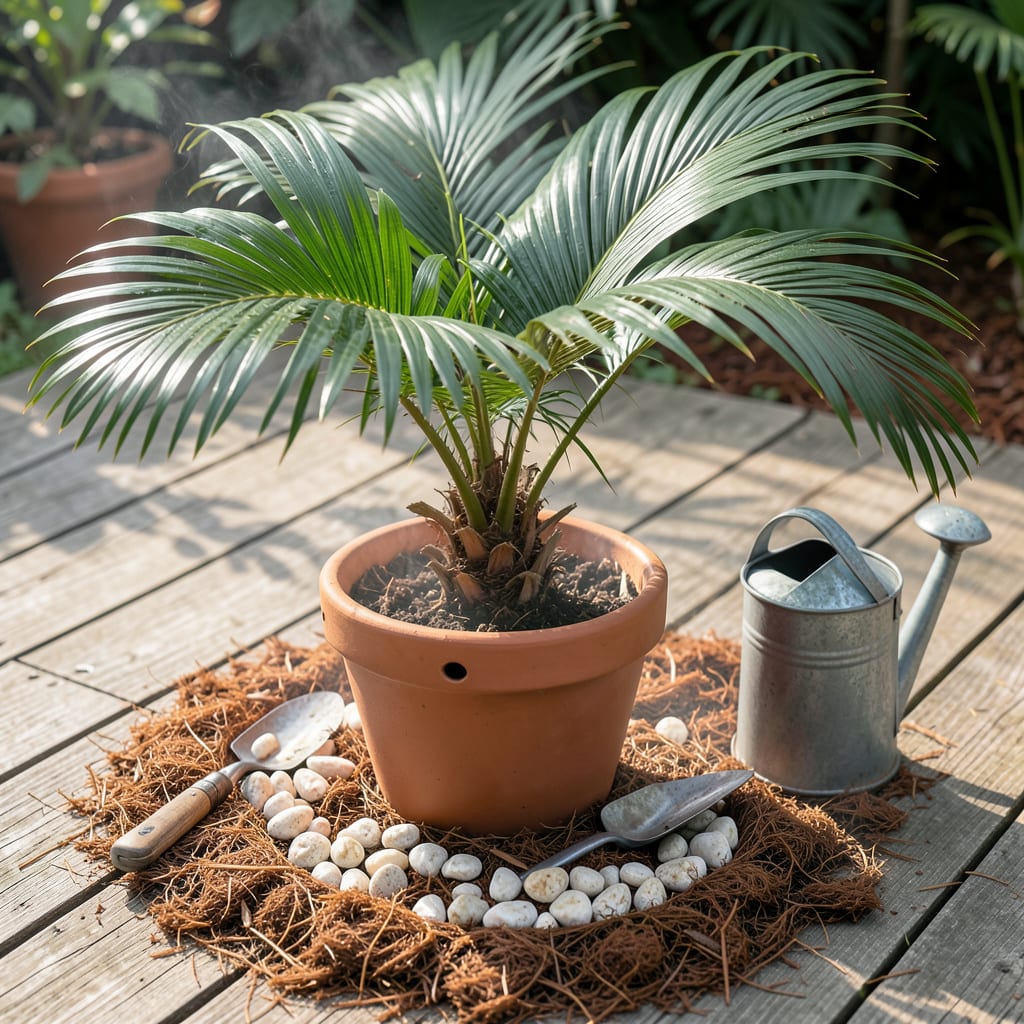
Palm trees bring that tropical vibe to any space. I’ve learned the hard way that their care isn’t as hands-off as they look—healthy growth starts with getting the basics right.
Too much water, the wrong soil, or ignoring light needs can turn your dream palm into a brown, crispy mess. With the right approach, you’ll see lush fronds and steady growth without the guesswork.
📚 In This Guide
Here’s the method I use to keep palms thriving with that lush, tropical look in any climate.
Water deeply but infrequently—palms hate soggy roots. I soak the soil until water runs out the drainage holes, then wait until the top 1-2 inches of soil feels dry before watering again. This encourages deep root growth.
In hot weather, this might mean watering 2-3 times weekly. In cooler months, cut back to once every 10-14 days. Always check the soil first. Overwatering is the fastest way to kill a palm—yellowing fronds are your first warning sign.
Use room-temperature water to avoid shocking the roots. If your tap water is high in salts or chlorine, let it sit out overnight before using.
Most palms need bright, indirect light for 6-8 hours daily. A south or west-facing window works perfectly indoors. Outdoors, position them where they get morning sun and afternoon shade to prevent leaf scorch.
If leaves start turning brown at the tips, your palm is likely getting too much direct sun. Move it back a few feet from the window or provide dappled shade. Leggy growth with small leaves means it needs more light—rotate the pot a quarter turn weekly for even exposure.
Use a balanced, water-soluble fertilizer (like 10-10-10) every 2-3 months during the growing season. I dilute it to half-strength to avoid burning the roots. Palms are sensitive to salt buildup, so always water thoroughly after fertilizing to flush out excess salts.
Stop fertilizing in fall and winter when growth slows. You’ll see new fronds emerging from the center—that’s your sign the fertilizer is working. If fronds turn yellow, you might be over-fertilizing; flush the soil with plain water and hold off for a month.
Remove brown or yellow fronds with clean, sharp pruners, cutting as close to the base as possible without damaging the trunk. Never prune green fronds—even if they’re a little ragged—because they’re still photosynthesizing and feeding the plant.
I wait until a frond is completely brown before removing it. Pruning too early stresses the palm and slows growth. If you see webbing or sticky residue on the fronds, check for pests like spider mites or scale before reaching for the pruners.
Inspect your palm weekly for common pests like spider mites, mealybugs, or scale. I look under the fronds and along the stems where pests love to hide. A strong spray of water can dislodge many pests, but for stubborn infestations, use neem oil or insecticidal soap.
Prevent fungal issues by ensuring good air circulation around the plant. If you notice black or brown spots on the fronds, reduce watering and increase airflow. Healthy palms have deep green, firm fronds—anything else is your palm asking for help.
Small adjustments in your routine can make a big difference in keeping your palm thriving.
The Watering Sweet Spot: In Step 1, the top 1-2 inches of soil check is non-negotiable. I learned the hard way that guessing leads to root rot or drought stress. Stick your finger in the soil—if it feels dry at that depth, it’s time to water deeply. In summer, you’ll likely hit that 2-3 times weekly mark, but always let the soil guide you rather than the calendar.
Light Exposure Hack: For Step 2, that quarter turn weekly prevents lopsided growth. Here’s what nobody tells you—palms stretch toward light, so without rotation, you’ll end up with a plant that looks like it’s leaning for a better view. If you notice pale new fronds, that’s your cue to increase light exposure gradually.
Fertilizer Wisdom: Step 3’s every 2-3 months schedule works because palms are slow growers. I dilute to half-strength as mentioned, but also recommend fertilizing in the early morning when temperatures are cooler. This prevents root burn and gives the plant time to absorb nutrients before the heat of the day.
Pruning Patience: In Step 4, resist the urge to tidy up green fronds. I wait until they’re completely brown because even slightly green fronds are still contributing to the plant’s health. Clean your pruners with rubbing alcohol between cuts to prevent spreading disease to healthy tissue.
Water young palms 2-3 times a week for the first 6 months, then reduce to weekly once established. Mature palms thrive with deep, infrequent watering—about every 1-2 weeks, depending on climate. Always check soil moisture 2 inches down; if dry, it’s time to water!
Use a slow-release, palm-specific fertilizer (8-2-12 or similar) with micronutrients like magnesium and iron. Apply every 2-3 months during growing season (spring to fall). Avoid high-nitrogen fertilizers, as they can harm palms.
Yellow fronds often signal nutrient deficiencies (commonly magnesium or potassium), overwatering, or poor drainage. Check soil conditions and adjust care. If only older leaves yellow, it’s natural shedding—just trim them!
Yes! Dwarf varieties like Areca, Kentia, or Parlor palms thrive indoors with bright, indirect light. Keep them near a sunny window, maintain humidity, and water when the topsoil feels dry. Rotate occasionally for even growth.
Prune only when fronds are completely brown or dead—never remove green ones! The best time is late winter or early spring before new growth starts. Use clean, sharp tools to avoid damaging the trunk.
